Quick definition
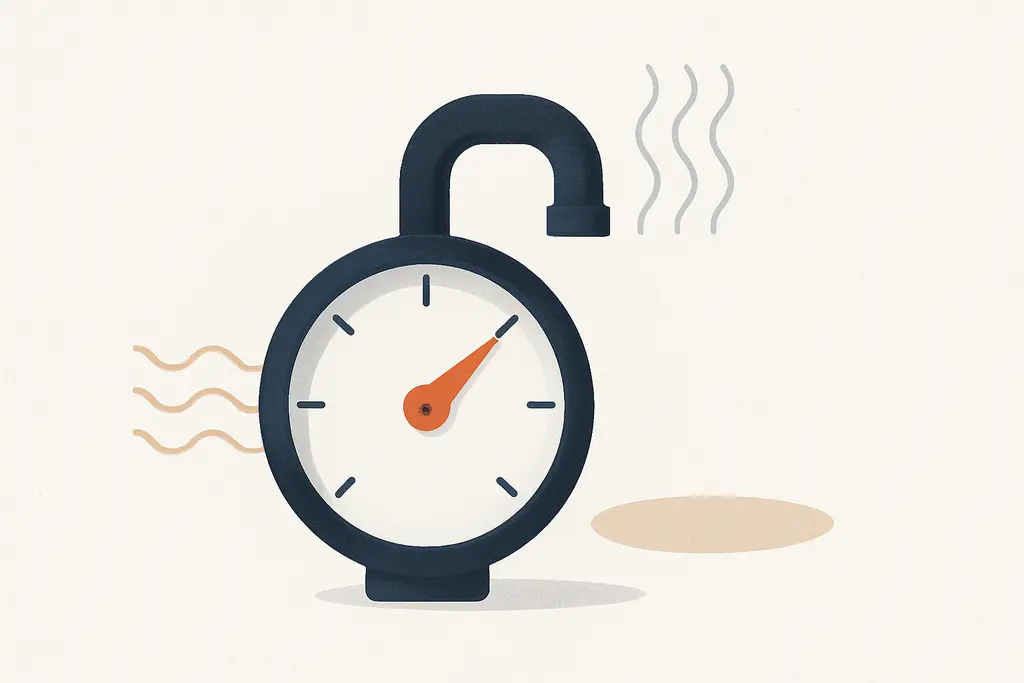
Always-on availability stress is the experience of sustained pressure—real or perceived—to answer messages, join calls, or make decisions outside normal work windows. It is not a single event but a recurring state where the boundaries between on-duty and off-duty are blurred by expectations, tools, or reward structures.
This pattern is often sustained by a mix of technology, social signaling, and organizational habits rather than by urgent operational need. It can affect work quality and team coordination long before it shows up as overt exhaustion.
Key characteristics
These features make the issue visible in routine coordination, hiring choices, and how teams define availability norms.
Underlying drivers
These drivers interact: technology lowers friction, social cues set norms, and incentives lock behaviors in. Taken together they create an ecosystem where being continuously reachable feels necessary even when it isn’t operationally required.
**Communication tech:** Ubiquitous messaging and mobile devices make immediate contact easy and expected.
**Social pressure:** Colleagues model rapid responses; silence is interpreted as disengagement.
**Performance metrics:** Quick turnaround is visible and rewarded, while delayed responses are penalized indirectly.
**Role ambiguity:** Unclear decision rights cause people to stay available to avoid blocking work.
**Workload distribution:** Uneven task allocation forces some individuals into always-on modes to keep projects moving.
**Crisis culture:** Organizations that celebrate last-minute heroics normalize constant readiness.
Observable signals
These patterns affect scheduling, predictability, and who gets included in fast-moving discussions. Over time they shape working norms that are hard to reverse without deliberate changes.
Teams exchange messages late at night with an expectation of next-morning action.
Decision threads stall until someone who responds quickly signs off.
Meeting invites target narrow windows to catch people immediately available.
People report unclear handoff points, so they keep monitoring channels during off hours.
Calendar blocks for focused work are repeatedly overridden or ignored.
High responsiveness becomes a visible signal used in performance conversations.
Informal leaders set norms by responding outside hours; others follow suit.
On-call language leaks into day-to-day tasks (e.g., “be available if needed”).
A quick workplace scenario (4–6 lines)
A product team is near a launch. One contributor consistently answers messages at 10pm; approvals flow faster through them. The team starts timing reviews to that person’s availability, shortening review windows and pushing others to check messages late. Planning meetings become centered on quick turnarounds rather than steady, asynchronous workflows.
High-friction conditions
High-stakes deadlines or launches that reward rapid responses.
New communication tools introduced without agreed norms.
Distributed teams across time zones with no documented overlap windows.
Vague role definitions where many people feel responsible for the same deliverable.
Public praise for individuals who “saved” a project by being available off-hours.
Performance indicators that highlight responsiveness (e.g., response time dashboards).
Small teams where a single person is a bottleneck for approvals.
Leadership modeling immediate replies in evenings or weekends.
Practical responses
Applying a few concrete changes—like documented decision rights and clear channel expectations—reduces ambiguity and makes it easier for people to disconnect without blocking work.
Set explicit response-time expectations by channel (e.g., email = 24 hours, chat = same business day).
Create and document handoff points and decision owners so availability isn’t the only way to unblock work.
Establish core collaboration hours for overlapping time zones and protect focus blocks for deep work.
Use scheduled async updates (daily notes, status boards) to reduce interruption-driven catch-ups.
Model off-hour boundaries: pause notifications and avoid sending non-urgent messages during protected times.
Rotate on-call responsibilities with clear scopes so availability is intentional and limited.
Audit metrics and incentives that unintentionally reward immediacy; adjust review criteria accordingly.
Train teams on effective asynchronous communication (clear ask, context, and desired response time).
Introduce a visible “no-need-to-reply” tag or channel for information that doesn’t require immediate action.
Often confused with
Psychological safety: connected because silence about boundary preferences can be due to fear; differs in that psychological safety covers willingness to speak up beyond availability norms.
Boundary management: directly related; focuses on how individuals manage work/non-work lines while always-on stress describes pressure to keep those lines open.
Asynchronous work practices: a practical counterpoint that replaces instant replies with documented workflows; relates as an alternative approach.
On-call culture: similar in form when availability is formally required; differs because on-call is usually scoped and compensated, while always-on stress is often informal.
Decision ownership: connected because clear owners reduce the need for constant availability; differs by focusing specifically on who can act.
Digital presenteeism: overlaps where being online is treated as proof of commitment; differs by emphasizing visibility over actual responsiveness.
Time-zone friction: a driver that explains some availability pressure in distributed teams, but it’s only one environmental factor among social and incentive drivers.
When outside support matters
Discuss concerns with an appropriate qualified professional (e.g., workplace counselor or occupational health specialist) when stress is persistent and significantly disruptive.
- If recurring availability pressure causes significant interference with daily functioning or job performance.
- If team members report persistent distress, sleep disruption, or an inability to disengage despite organizational changes.
- If attempts to change norms create conflict or escalate interpersonal problems that affect wellbeing.
Related topics worth exploring
These suggestions are picked from nearby themes and article context, not just a flat alphabetical list.
Adaptive stress vs toxic stress at work
How to tell when pressure at work fuels growth (adaptive) versus when it becomes chronic harm (toxic), what creates each, and practical steps leaders can take.
Perpetual On-Call Stress
Chronic expectation of immediate responsiveness at work that blurs boundaries, harms planning, and hides capacity issues — how it shows up and what managers can do.
Quiet stress at work: sustained low-level strain
Sustained low-level pressure at work that quietly drains focus and quality—how it forms, how it shows up day-to-day, common misreads, and practical manager actions to reduce it.
Rest guilt
Rest guilt is the anxious feeling that downtime is undeserved; it shows up as skipped breaks, constant connectivity, and over-justifying time off, and can be reduced by clearer handoffs and visible bo
Chronic Task Diffusion
Persistent loss of clear ownership where tasks repeatedly stall between people and processes — how it looks, why it happens, and practical fixes managers can apply.
Busy badge culture
When visible busyness becomes a status signal at work, outcomes suffer. Learn how it forms, how to spot it, and practical steps leaders can take to shift incentives toward impact.