Quick definition
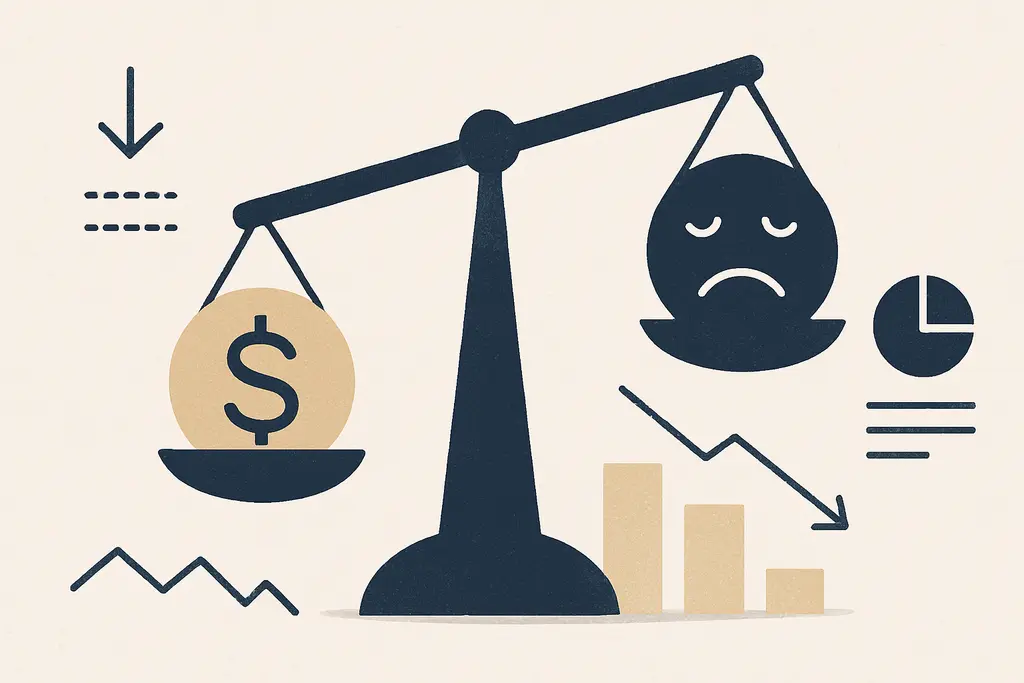
Bonus Blues is a workplace pattern where monetary recognition fails to produce the expected sustained boost and sometimes produces negative reactions instead. Rather than simply celebrating a payout, people focus on fairness, comparisons, unmet expectations or the way the reward was presented.
This pattern is not about the size of the check alone; it is about expectations, social context and process. A well-designed bonus can reinforce desired behavior, but a poorly managed process can amplify resentment, confusion or disengagement.
Key characteristics include:
These characteristics mean leaders should treat bonuses as part of a broader people process, not a one-off transaction.
Underlying drivers
Anchored expectations: past payouts or verbal promises set a reference point that shapes reactions
Social comparison: employees infer fairness by comparing peers rather than by absolute value
Perceived unfairness: opaque rules or inconsistent application generate distrust
Loss aversion and entitlement: people feel losses relative to expected gains more strongly than equivalent gains
Mixed signals from performance feedback: if annual reviews and bonuses don't align, credibility suffers
Salience of timing: delayed or last-minute changes make rewards feel arbitrary
Budget framing: presenting bonuses as limited or exceptional can make them seem less earned
Manager behavior: lack of manager involvement or awkward delivery undermines the intended message
Observable signals
These observable signs let people in leadership roles detect Bonus Blues early and intervene before it becomes entrenched.
**Immediate dip in engagement:** energy and focus fall shortly after payout or announcement
**Public comparison:** casual hallway conversations or chat threads focus on amounts and fairness
**Questioning credibility:** employees ask why some roles got more or why the rules changed
**Defensive behaviors:** increased territoriality or reluctance to help peers after payouts
**Performance plateau:** short-term productivity spike followed by a return to baseline or decline
**Increased turnover intent:** key contributors express dissatisfaction or explore other options
**Withdrawal from discretionary effort:** people stop volunteering for stretch tasks or mentoring
**Feedback mismatch:** performance conversations feel hollow or contradicted by reward decisions
High-friction conditions
Late or surprise changes to bonus structure or timing
Senior leadership referencing a fixed pot without explaining allocations
Public announcements that reveal individual differences in amounts
Discrepancies between performance ratings and bonus outcomes
Perceived favoritism or special treatments for some employees
Sudden budget cuts announced alongside prior expectations
Poorly framed communications that emphasize scarcity rather than recognition
Managers who avoid one-on-one conversations about payout rationale
Team layoffs or restructuring immediately before or after bonuses
Practical responses
Applying these steps consistently reduces surprises and restores credibility when reactions are negative. The focus is on predictable, transparent processes and manager-led conversations rather than one-off fixes.
Explain criteria early: share how bonuses are calculated and what behaviors drive outcomes
Set realistic ranges: communicate typical ranges or percentages rather than single-point promises
Use manager conversations: ensure direct managers discuss individual results before public announcements
Provide a breakdown: offer a simple explanation of components (company, team, individual) without detailed financial advice
Align feedback and pay: ensure performance reviews and bonus outcomes tell a coherent story
Normalize variability: prepare teams for good years and lean years so expectations stay anchored
Pair money with meaning: connect payouts to specific achievements and future priorities
Offer recognition rituals: use team gatherings or personal notes to reinforce appreciation beyond the check
Train leaders in framing: give managers scripts for explaining both positive and smaller-than-expected outcomes
Gather quick feedback: run short post-payout pulse checks to spot misperceptions
Create transparent escalation: allow employees to ask for clarifications and have a clear process to review allocation concerns
Consider mix of rewards: combine monetary and non-monetary recognition to reduce sole focus on sums
A quick workplace scenario (4–6 lines, concrete situation)
A mid-sized team receives a year-end bonus email listing amounts. Several high-performers feel their numbers are lower than expected and start comparing notes in a chat channel. The manager schedules one-on-one meetings, explains the allocation drivers, and follows up with a team forum that outlines the calculation and next year’s goals.
Often confused with
Expectation gap — shows how promised versus delivered rewards differ; Bonus Blues centers on the emotional fallout of that gap
Equity theory — focuses on perceived fairness between people; Bonus Blues is often a practical outcome of perceived inequity
Motivation crowding out — where external rewards reduce intrinsic motivation; Bonus Blues can include this but also covers communication and social effects
Social comparison — explains the mechanism of comparison; Bonus Blues is the pattern that emerges when comparisons go negative
Pay transparency — a policy that affects Bonus Blues; greater transparency can reduce or shift how Bonus Blues appears
Performance appraisal bias — biased reviews feed into unexpected bonuses and thus into Bonus Blues
Recognition rituals — non-monetary practices that can counteract Bonus Blues by reinforcing appreciation in other ways
When outside support matters
- If widespread morale issues persist across teams despite transparent communications, consult HR or organizational development specialists
- When disputes about allocations escalate and require formal investigation, involve employee relations or legal counsel as appropriate
- If managers consistently report difficulty explaining outcomes, arrange external training or coaching for leadership
Related topics worth exploring
These suggestions are picked from nearby themes and article context, not just a flat alphabetical list.
Year-end bonus spending remorse
Why employees feel regret after spending year-end bonuses, how it shows up at work, what sustains it, and practical organizational steps to reduce its impact.
Bonus-driven Risk Behavior
When bonuses change payoff math, people take bigger, riskier actions—this explains why it happens at work, how to spot it, and what organizational fixes reduce it.
Salary negotiation fear
Fear of asking about pay that leads people to accept offers or stay silent; explains causes, everyday signs, misreads, and practical workplace fixes.
Lifestyle Creep Trap
How small pay and perk increases become permanent workplace expectations, why incentives and social signals fuel them, and practical steps leaders can use to stop rising baseline costs.
Investment paralysis
Investment paralysis is the habit of repeatedly postponing resource commitments at work, causing stalled projects, lost momentum, and missed learning opportunities.
Frugality guilt
Frugality guilt is feeling ashamed to spend workplace money; it delays purchases, hides needs, and can be reduced by clearer rules, visible budgets, and reframed leadership signals.