emotional contagion in meetings in the workplace — Business Psychology Explained
Category: Communication & Conflict
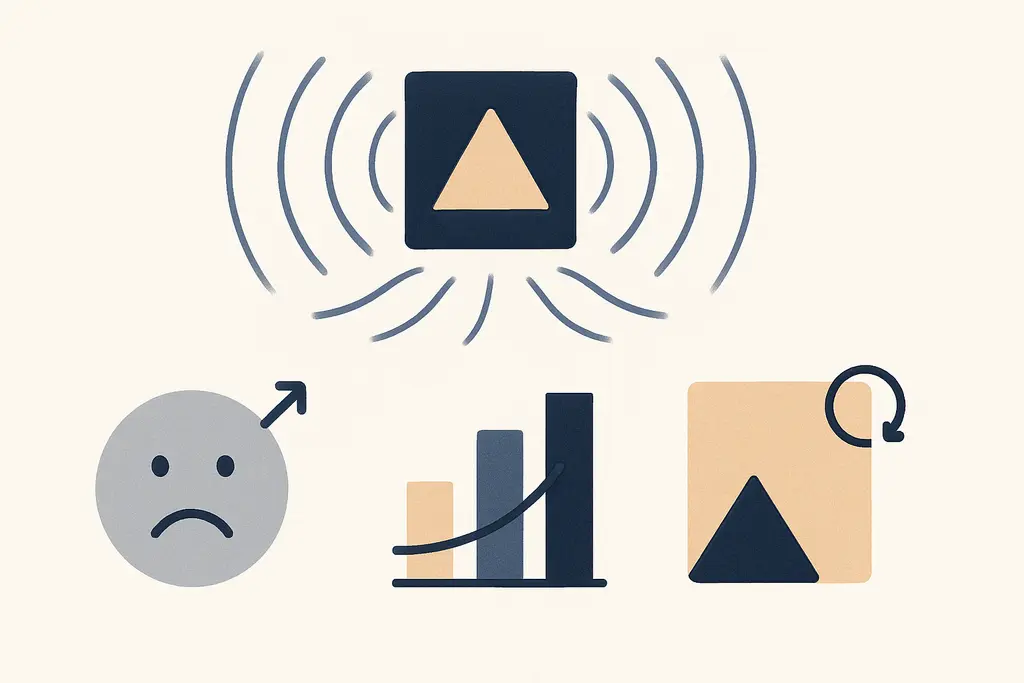
Emotional contagion in meetings in the workplace means emotions — mood, energy, worry or enthusiasm — spreading from person to person during group interactions. In meetings this often alters focus, tone and decisions, so leaders who notice and steer those emotional currents can keep conversations productive and inclusive.
Definition (plain English)
When emotional contagion happens in a meeting, one person’s affect (expression, tone, posture) influences others so the group begins to share a similar feeling. It is a social process, usually fast and partly automatic, that changes how people listen, speak and make choices together.
Leaders see it as a collective shift rather than an individual problem: the mood becomes part of the meeting’s environment and affects participation and outcomes. It is not about blaming individuals but recognizing how signals—verbal or nonverbal—shape group behavior.
Key characteristics:
- Rapid spread: emotions can shift the room within minutes.
- Nonverbal channels: facial expressions, tone and posture often carry the effect.
- Amplification: a meeting context can magnify small signals into widespread mood changes.
- Bidirectional: both leaders and participants can start or dampen the spread.
Recognizing these characteristics helps managers separate the emotional current from the substantive agenda. That makes it easier to choose targeted responses (e.g., pausing, reframing, or calling for structured input) instead of reacting to the mood as if it were the only reality.
Why it happens (common causes)
- Social alignment: people align emotionally to fit group norms and maintain rapport.
- Attention bias: high-arousal emotions capture attention and pull the meeting’s focus.
- Status signals: cues from senior participants or visible experts carry extra weight.
- Emotional mimicry: automatic imitation of expressions and tone makes moods contagious.
- Cognitive load: under stress or complexity, people rely more on social cues than facts.
- Environmental pressure: tight deadlines, physical discomfort, or long agendas raise emotional vulnerability.
How it shows up at work (patterns & signs)
- Facial and vocal cues: a few frowns, a sharp tone or forced laughs set the room’s tone.
- Participation shifts: talk time concentrates in one emotional register (e.g., anxious, defensive, upbeat).
- Decision speed changes: decisions speed up under excitement or stall under uncertainty.
- Body language clustering: closed postures or leaning-in occur together across several people.
- Agenda drift: conversation moves from planned topics to emotional reactions.
- Polarization: the group splits into factions echoing different emotions.
- Silent alignment: people stop contributing but visibly mirror a leader’s mood.
- Escalation loops: one person’s frustration triggers rebuttals that heighten tension.
A quick workplace scenario (4–6 lines, concrete situation)
A product update meeting begins with a senior manager expressing urgent frustration about delays. Within ten minutes, several team members speak more defensively, questions stop, and the meeting focuses on assigning blame rather than fixing the issue. The manager pauses, names the shift, and asks for one concrete next step—restoring focus.
Common triggers
- A strong emotional reaction from a visible leader or influencer.
- Unexpected bad news (bugs, budget cuts, customer complaints).
- Ambiguous decisions or unclear ownership.
- Time pressure and back-to-back meetings.
- Technical problems in remote calls (audio lag, frozen video).
- Public criticism or harsh feedback in the meeting.
- Overcrowded agendas that increase cognitive stress.
- Lack of psychological safety, leading to guarded emotional displays.
Practical ways to handle it (non-medical)
- Set a short meeting norm at the start (e.g., raise hand to speak, action-focused language).
- Begin with a one-sentence mood check or quick pulse (e.g., "In one word, how do you feel about this update?").
- Model steady tone: senior participants keep volume and pace neutral when possible.
- Name the observation calmly (e.g., "I notice tension—let’s pause and clarify the next step").
- Use structured turns or a timed check-in to distribute speaking time.
- Pause and reframe: restate facts and desired outcomes before reacting to emotion.
- Break large issues into smaller, time-boxed tasks to reduce overload.
- Call for specific evidence or examples when a discussion turns speculative.
- Offer a short break or move a contentious issue to a separate working session.
- Rotate facilitation so emotional labor does not fall on one person.
- Follow up with a clear summary and next steps to reduce lingering uncertainty.
- Track meeting tone over time (quick anonymous pulse surveys) to spot patterns.
Practical interventions are tested and adjusted like any meeting technique: try one or two measures, note effects on participation and outcomes, and tweak. Small procedural changes often reduce automatic emotional spread and keep meetings decision-focused.
Related concepts
- Groupthink — related because both involve collective alignment; differs in that groupthink is about conformity to ideas and risk-taking, while emotional contagion is specifically about shared affect.
- Emotional intelligence — connects as a skill set managers use to detect and modulate mood; differs because emotional intelligence is an individual competency, not the group-level spread.
- Psychological safety — linked: a safe climate reduces defensive emotional spirals; differs because psychological safety is the environment that allows candid exchange, not the mechanism of contagion itself.
- Affective tone — directly connected; affective tone is the meeting’s overall mood measure, while contagion describes how that tone forms and spreads.
- Nonverbal communication — overlaps: nonverbal cues are primary channels for contagion; differs because nonverbal communication covers all signaling, not only emotion spread.
- Social proof — connected: people adopt feelings or stances that seem normal for the group; differs because social proof typically refers to actions and beliefs rather than immediate emotional states.
- Facilitation techniques — related as practical countermeasures; differs because facilitation is a set of methods to manage process, whereas contagion is the phenomenon those methods address.
- Remote meeting dynamics — connected: technology changes how cues transmit; differs because remote dynamics create specific triggers like latency and reduced visual feedback.
- Conflict escalation — connected when mood spread increases tension; differs because escalation tracks increasing disagreement and stakes, while contagion focuses on shared affect.
When to seek professional support
- When meeting dynamics produce repeated breakdowns in decision-making or chronic disengagement.
- If escalations create persistent interpersonal conflict beyond normal workplace friction — consult HR or a mediator.
- Consider an organizational psychologist or experienced facilitator for recurring team-culture issues.
- Use Employee Assistance Programs (EAPs) when individual staff report sustained distress affecting work.
Common search variations
- emotional contagion in meetings at work
- Search for basic explanations and workplace examples of mood spread during team meetings.
- how to stop emotional contagion in meetings
- Practical tips and facilitator techniques focused on halting rapid mood shifts.
- signs of emotional contagion in team meetings
- Queries about observable behaviors that indicate emotions are spreading through a group.
- managing mood spread in remote meetings
- Advice specific to video calls, lag-related miscommunication and reduced nonverbal cues.
- leader strategies for emotional contagion in meetings
- Manager-focused tactics for naming, pausing, and redirecting meeting emotions.
- emotional contagion and decision making in meetings
- Searches about how collective mood influences choices and meeting outcomes.
- meeting norms to reduce emotional spillover
- Templates and sample ground rules to prevent affect-driven derailment.
- quick interventions when a meeting gets emotional
- Short scripts and steps leaders can use in-the-moment to calm and reframe.