emotional contagion in meetings vs anxiety — Business Psychology Explained
Category: Communication & Conflict
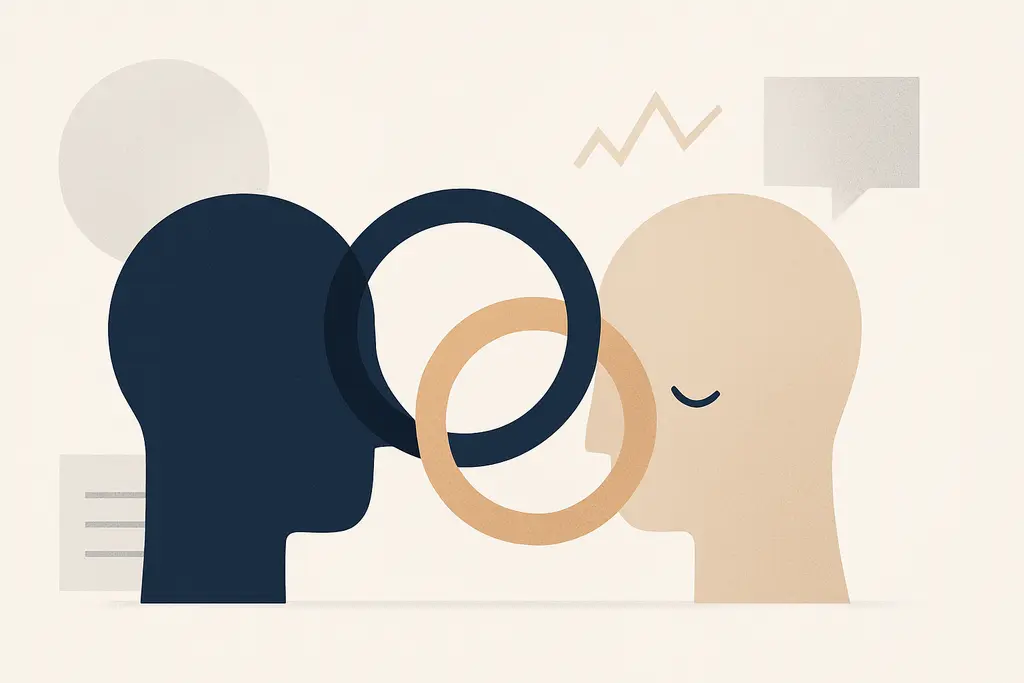
Emotional contagion in meetings vs anxiety is about two different things that can look similar: one is when moods spread between people in a group, the other is when an individual feels worried or tense in meeting settings. Both affect participation, clarity, and decision quality, so spotting which is at work helps fix meetings faster.
Definition (plain English)
Emotional contagion in meetings describes how emotions — excitement, frustration, doubt — move from person to person in a group. It happens through tone of voice, facial expressions, and the rhythm of interaction: one person's mood becomes the room's mood.
Anxiety in meetings refers to an individual's experience of nervousness, worry, or overheating thoughts tied to being observed, evaluated, or making decisions in the group. It may look similar from the outside (tense body language, silence), but it originates within one person rather than from a group dynamic.
Both can occur together: a single anxious person can seed a tense atmosphere, and a contagious mood can amplify many people's discomfort. Distinguishing them helps leaders target the right response — changing the group dynamic versus supporting an individual.
Key characteristics:
- Clear social transmission: emotions shift quickly after a comment or tone change.
- Observable group pattern: multiple people show similar affect within minutes.
- Source may be external (news, bad data) or internal (a team member's reaction).
- Anxiety tends to be consistent for an individual across meetings; contagion changes with context.
- Contagion often reverses when leadership or structure shifts;
- Anxiety may persist without changes to psychological safety or meeting format.
Seeing whether the pattern resets after a short intervention (e.g., a tone shift or agenda change) is a practical test managers can use to tell contagion from persistent individual anxiety.
Why it happens (common causes)
- Group mimicry: people unconsciously mirror facial expressions, posture, and tone.
- Social signals: pauses, laughter, and interruptions tell others whether a response is safe.
- Cognitive load: when people are overloaded, they default to copying clear emotional cues.
- Power dynamics: reactions from senior attendees shape the room faster than others.
- Ambiguous goals: unclear meeting purpose increases sensitivity to emotional cues.
- Time pressure: urgent decisions heighten arousal, making emotions more contagious.
- Physical environment: cramped rooms, poor audio, or long meetings raise tension.
- Past patterns: teams that previously punished dissent expect negative outcomes and transmit that fear.
How it shows up at work (patterns & signs)
- Ripple reactions: a single sigh, joke, or sharp tone produces matching expressions across the room.
- Unified silence: several people withdraw or stop speaking after one person's tentative comment.
- Amplified enthusiasm: positive cues (smiles, energized voice) lift participation quickly.
- Locked posture: multiple attendees lean back, cross arms, or avoid eye contact simultaneously.
- One-person fixation: discussion repeatedly circles around one person's mood or comment.
- Escalation: a raised voice by one attendee leads others to mirror volume and affect.
- Selective engagement: certain people respond warmly while others shut down in the same meeting.
- Agenda derailment: emotional moments shift focus away from planned topics to process complaints.
Managers can use these observable patterns to decide whether to adjust facilitation, check in privately, or change meeting structure.
A quick workplace scenario (4–6 lines)
A project update starts upbeat; one senior manager frowns at a slide and comments sharply. Within two minutes, the team goes quiet, contributors shorten answers, and the remaining discussion becomes risk-averse. The meeting ends with postponed decisions and an uneasy follow-up email from the lead.
Common triggers
- Negative feedback delivered publicly or brusquely
- Surprising bad news (missed deadline, budget cut)
- Dominant participant expressing panic or anger
- Lack of clear agenda or shifting goals mid-meeting
- Tight deadlines or looming reviews
- Remote meeting technical problems that cause frustration
- Performance comparisons or ranking discussions
- Repeated interruptions or side conversations
- Visible stress from leadership (rushed tone, frequent sighs)
Practical ways to handle it (non-medical)
- Start with structure: clear agenda, timeboxes, and stated goals reduce emotional guessing.
- Set meeting norms: ask participants to avoid public shaming and to use constructive language.
- Model calm: leaders lower tone and slow speech to shift the room's tempo.
- Use check-ins: quick round-robin emotional temperature checks (1–2 words) to surface moods.
- Interrupt escalation gently: name the dynamic (“we seem tense — let’s pause”) and reset.
- Create micro-breaks: short silence or a two-minute stretch to reduce contagion momentum.
- Reframe statements: translate charged comments into neutral, solution-focused language.
- Move sensitive feedback offline: protect group tone by holding critical discussions one-on-one.
- Rotate facilitation: different facilitators change emotional anchors and reduce single-source effects.
- Adjust seating or camera layouts to reduce intensity in small groups.
- Follow up in writing: summarize decisions to reduce ongoing uncertainty and rumination.
- Offer private check-ins: invite individuals who appeared anxious to a one-on-one to hear concerns.
Practical steps focus on altering the meeting environment and interaction patterns rather than labeling people. Small, routine shifts often stop contagious moods quickly and make meetings more productive.
Related concepts
- Social facilitation — connects because both affect performance in groups; differs as social facilitation focuses on how presence changes task performance rather than mood transmission.
- Psychological safety — linked: low safety makes anxiety more likely and contagion more harmful; differs in scale: safety is an ongoing team trait, contagion is an event.
- Groupthink — connects when contagion produces uniform opinions; differs because groupthink is about suppressed dissent, not immediate emotional spread.
- Emotional labor — related when people mask feelings in meetings; differs since emotional labor is effortful regulation, not spontaneous spread.
- Tone-setting — directly connected: leadership tone often starts contagion; differs as tone-setting is an intentional practice to guide emotion.
- Active listening — connects as a countermeasure to contagion; differs because it’s a specific communication skill rather than an emotional process.
- Meeting facilitation — linked as a control point for contagion; differs because facilitation is a set of practices, contagion is an emergent effect.
- Burnout risk — connected when repeated tense meetings wear people down; differs by timeframe and consequence (burnout is longer-term strain).
- Social identity threat — relates when group dynamics make some attendees anxious; differs as identity threat is tied to perceived status or belonging.
When to seek professional support
- If a person’s anxiety in meetings leads to repeated impairment at work (missed deadlines, avoidance), suggest they speak with an employee assistance program or qualified counselor.
- If team dynamics cause persistent conflict or performance decline despite managerial interventions, consider bringing in an organizational psychologist or external facilitator.
- If meetings trigger panic-like responses or severe distress for someone, recommend confidential professional evaluation from an appropriate mental health professional.
Common search variations
-
"emotional contagion in meetings at work"
- How moods spread during regular team meetings and what managers can change.
-
"emotional contagion in meetings in the workplace"
- Examples and workplace-specific causes to watch for across departments.
-
"signs of emotional contagion in meetings"
- Observable cues to spot quickly (tone shifts, synchronized body language).
-
"emotional contagion in meetings examples"
- Concrete scenarios showing positive and negative contagion effects.
-
"emotional contagion in meetings root causes"
- Search for causes like power dynamics, ambiguity, and time pressure.
-
"how to deal with emotional contagion in meetings"
- Practical meeting-level tactics to restore constructive interaction.
-
"how to overcome emotional contagion in meetings"
- Longer-term strategies for cultural and facilitation changes.
-
"emotional contagion in meetings vs burnout"
- Queries comparing short-term mood spread with longer-term exhaustion and disengagement.
-
"meeting anxiety vs group mood"
- Distinguishing individual anxiety from collective emotional shifts.
-
"reduce tension in meetings techniques"
- Quick facilitation techniques and norms to lower tension during discussions.