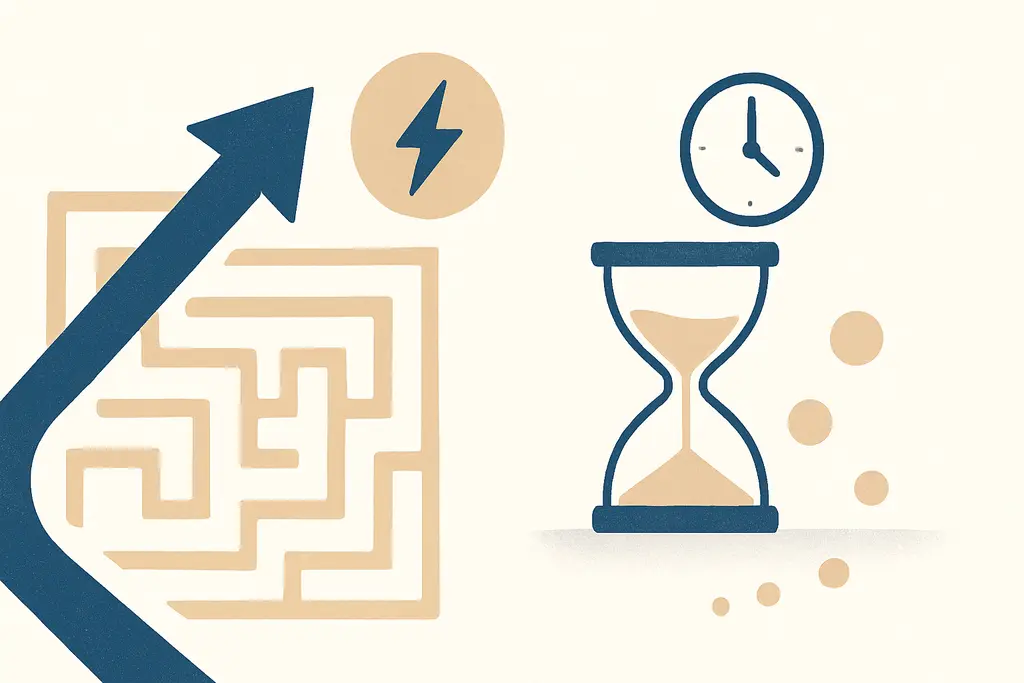
What this pattern really means
Energy-based scheduling means assigning or recommending work tasks when people are most alert and focused — for example, putting deep-analysis work in the morning for an early-riser. Time-based scheduling means booking fixed-time blocks for tasks and meetings regardless of when individuals feel most productive — for example, daily status calls at 3 p.m.
These are not exclusive: many workplaces use a mix. Differences matter because they affect how reliably work gets done, how people report progress, and how managers measure capacity.
Choosing one approach or blending them changes how managers assign work and support performance. Consider both the nature of tasks and team coordination needs when deciding which to use.
Why it tends to develop
**Circadian differences:** people have different natural times of peak focus (morning lark vs night owl) that shape when they do deep work.
**Organizational norms:** longstanding practices (daily stand-ups at a fixed hour) lock teams into time-based patterns.
**Client and stakeholder expectations:** external calendars (client calls, market hours) force time-based scheduling.
**Cognitive load:** complex tasks require high sustained attention, pushing managers to seek windows of peak energy for those tasks.
**Tooling and systems:** calendars, booking tools, and shared schedules privilege fixed slots and make time-based planning easier.
**Performance incentives:** if metrics reward visible hours (attendance, time spent in meetings), teams lean toward time-based work.
**Physical environment:** office layouts, shared resources (labs, meeting rooms) create constraints that favor time-blocking.
Social signaling: synchronous schedules make team visibility and collaboration easier, encouraging time-based approaches.
What it looks like in everyday work
Team calendars heavy with recurring meetings and identical daily blocks across members.
Individuals carving out "focus hours" or blocking mornings for uninterrupted work.
Last-minute rescheduling when someone's energy or context doesn't match a meeting time.
Managers noticing uneven quality: simple tasks completed on time but deep work delayed or rushed.
Frequent comments like "I do my thinking after 6 p.m." or "I can only concentrate before lunch." from team members.
Misaligned handoffs: one person's quiet period is another's peak collaboration window, causing delays.
Rising meeting load to maintain coordination instead of protected time for concentration.
Employees using calendar titles like "deep work" or "do not disturb" to signal energy-focused time.
Metrics that track hours present but not task completion quality, masking energy mismatches.
Burnout signs when energy peaks are ignored and people consistently work at non-optimal times.
A quick workplace scenario (4–6 lines, concrete situation)
A product manager schedules sprint planning at 4 p.m. every Friday. Several engineers are morning-focused and often attend but do their best thinking earlier, then scramble to summarize and present in the afternoon meeting. The manager notices lower-quality estimates and experiments with moving planning to mornings or allowing pre-submitted agenda items to better align with energy windows.
What usually makes it worse
Company-wide meetings scheduled at convenient times for leaders but inconvenient for others.
Tight deadlines that push people to work outside their peak energy windows.
New hires with different work rhythms joining teams with rigid calendars.
Cross-time-zone collaboration requiring synchronous meetings during odd hours.
Performance reviews tied to visible availability rather than outcomes.
Shared resource constraints (limited lab or testing slots) that force fixed booking times.
Sudden increases in ad-hoc requests or interruptions that break energy flows.
Office-wide events or rituals that override individual peak focus periods.
What helps in practice
Applying a few of these moves can reduce friction between coordination needs and personal productivity. Small experiments (move one recurring meeting, trial focus days) reveal what gains are realistic for your team.
Map team energy windows: run a quick anonymous poll to learn when people feel most focused and use that when scheduling high-cognitive tasks.
Block protected focus time in calendars and treat those blocks as high-priority work windows.
Reserve standard, short time-based rituals (e.g., 15-minute stand-ups) while keeping deep work energy-based.
Stagger meeting times for recurring collaboration to rotate burden across time zones and rhythms.
Use asynchronous tools (recorded updates, shared docs) so decisions don’t force everyone into the same clock block.
Create clear rules about when rescheduling is acceptable to avoid constant disruption of energy windows.
Align task types with scheduling style: use time-based slots for coordination and energy-based blocks for creative or analytical work.
Encourage leads to model energy-aware planning by scheduling their most demanding reviews when they are most alert.
Track outcomes, not just attendance: measure quality and completion to see whether energy alignment improves results.
Offer flexible core hours rather than strict 9–5 to balance predictability with energy accommodation.
Provide guidelines for calendar labeling (e.g., "Focus: Heads-down") so managers and peers respect energy blocks.
Reassess quarterly: energy patterns and project needs change; revisit scheduling policies regularly.
Nearby patterns worth separating
Flexible work hours — connects by offering time autonomy; differs because it’s a policy, while energy-based scheduling focuses on aligning tasks to peak alertness.
Asynchronous collaboration — complements energy-based scheduling by enabling coordination without fixed clock time; differs because it addresses communication rather than individual task timing.
Timeboxing — similar to time-based scheduling by allocating fixed intervals to tasks; differs because timeboxing can be used within energy-aware setups as a technique.
Core hours — connects as a hybrid: provides overlap windows for coordination while leaving other hours for energy-based work.
Meeting hygiene — relates by reducing unnecessary time-based friction; differs because it’s about meeting quality rather than when deep work occurs.
Outcome-based performance management — connects by shifting focus from hours to results, supporting energy-based approaches; differs because it’s an evaluation system not a scheduling method.
Cognitive load theory (work design) — connects by explaining why complex tasks need high-energy windows; differs as a theoretical lens rather than a scheduling policy.
Cross-functional handoffs — relates because handoffs create timing constraints; differs since they require coordination solutions beyond individual energy preferences.
Resource booking systems — connects as an operational enabler of time-based scheduling; differs because systems can both constrain and facilitate flexibility.
Remote work norms — connects through flexibility and asynchronous tools that enable energy-based scheduling; differs by encompassing broader cultural practices.
When the situation needs extra support
- If scheduling conflicts consistently cause significant team distress, performance decline, or interpersonal conflict, consider consulting an organizational development or HR specialist.
- When chronic exhaustion or severe impairment in work functioning appears across multiple team members, engage workplace wellness or occupational health professionals.
- If adjustments lead to negative legal or compliance risks (e.g., overtime rules, accommodations), consult HR or legal counsel for appropriate policies.
Related topics worth exploring
These suggestions are picked from nearby themes and article context, not just a flat alphabetical list.
Energy window scheduling
Align work to predictable high-focus periods by mapping tasks to people’s energy windows—practical steps, common confusions, and a manager-friendly checklist for pilots.
Context-switch recovery time
How long people need to regain depth after switching tasks at work, why it costs organisations time, and practical manager-level steps to reduce it.
Energy Management for Peak Focus
A practical field guide to aligning tasks, routines, and team norms so your highest-attention work lands in your natural energy peaks at the office.
Inbox zero myth
Why aiming for an empty inbox is often symbolic, how it shapes daily work behavior, common confusions, and practical fixes to reduce busywork and distraction.
Notification anxiety
Notification anxiety is the anticipatory stress about pings and messages at work — it fragments focus, shapes habits, and can be reduced by norms, batching, and targeted notification settings.
Deep Work for Managers
How managers create, protect, and scale focused, high-value work time—practical steps, pitfalls, and examples for turning attention into better decisions and fewer interruptions.