Quick definition
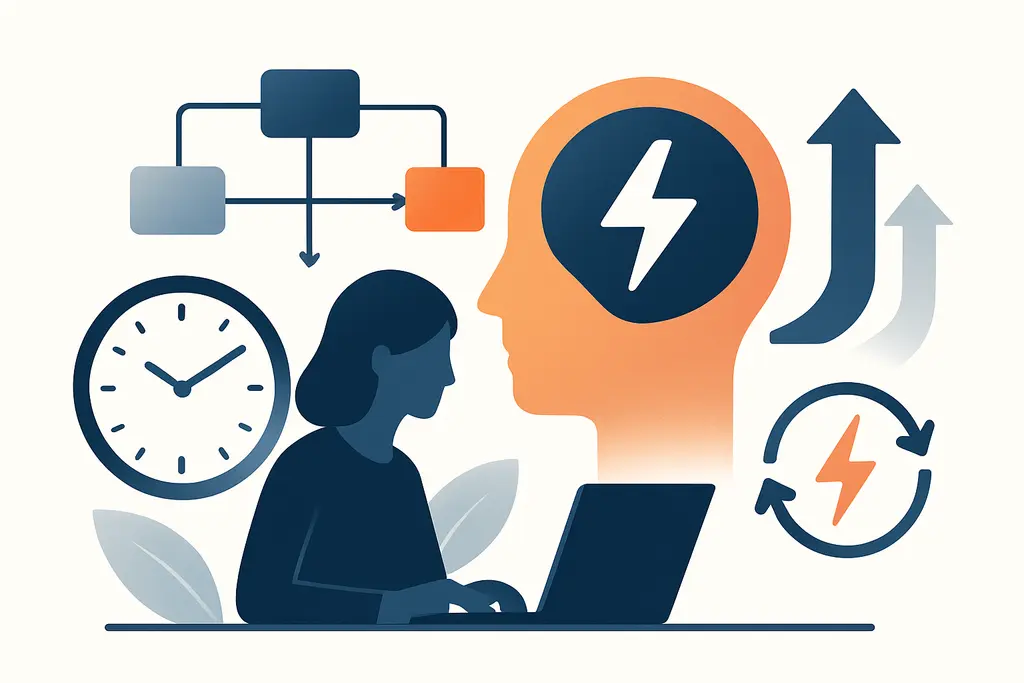
Energy management for peak productivity is a practical approach to work that focuses on when and how you use your mental, physical, and emotional resources. It treats energy as a variable that can be influenced by scheduling, environment, habits, and social interactions, rather than a fixed trait. The goal is to maximize high-quality work windows and reduce wasted time and errors during low-energy moments.
It differs from simple time management by prioritizing capacity (how ready you are to do a task) over clock minutes. It also emphasizes recovery—short, targeted breaks and boundary-setting—so that high-energy periods can be sustained across the day or week. In applied business settings, it’s used to plan meetings, deep work blocks, collaborative sessions, and learning activities.
Key characteristics:
Underlying drivers
Natural circadian rhythm variations—people have different peak times of alertness.
Cognitive load accumulation—sustained concentration depletes available mental resources.
Poor recovery habits—insufficient breaks, irregular sleep, or constant task-switching.
Environmental stressors—noise, poor lighting, uncomfortable ergonomics reduce stamina.
Social demands—back-to-back meetings and interruptions fragment attention.
Nutritional and hydration factors—low blood sugar or dehydration can lower energy.
Emotional labor—managing difficult conversations or high-stakes work drains resources.
Observable signals
Sharp declines in focus during predictable times (mid-afternoon dips, post-meeting fatigue).
Worsening quality on complex tasks later in the day despite long hours.
Frequent context-switching and a sense of never completing deep work.
Reliance on stimulants (coffee, sugar) to push through low-energy periods.
Procrastination on demanding tasks and overdoing routine or busywork.
Increased irritability or reduced patience with colleagues during low-energy windows.
Longer recovery after intense work (needing extended downtime instead of short breaks).
Higher error rates on detail-oriented tasks when working outside peak times.
High-friction conditions
Calendars filled with back-to-back meetings without buffer time.
Ambiguous priorities forcing frequent task-switching.
Open-plan offices or high-noise environments that interrupt concentration.
Unrealistic deadlines that push people to work long hours without recovery.
Early-morning or late-evening meetings that conflict with natural alertness peaks.
Poor sleep patterns caused by irregular schedules or shift work.
Heavy emotional or interpersonal demands (conflict, client escalation).
Practical responses
Identify your energy peaks: track performance and alertness for a week to spot patterns.
Block your calendar: schedule deep, focused work during high-energy windows and meetings in lower-energy periods.
Use theme days or task batching: group similar tasks (creative, administrative, collaborative) to reduce switching costs.
Build short recovery rituals: 5–15 minute breaks with movement, fresh air, or a brief non-work activity between intense tasks.
Create environmental cues: adjust lighting, reduce noise, and set ergonomic posture to support sustained focus.
Set meeting rules: limit duration, include clear agendas, and add buffer time between meetings.
Communicate energy needs: share preferred collaboration times with teammates and set expectations for response windows.
Limit decisions early: reduce low-value choices (e.g., automate routine decisions) so mental energy is reserved for priority work.
Hydrate and snack strategically: choose light, balanced snacks and water to avoid energy swings during the day.
Use short rituals to start and stop work (two-minute setup, two-minute close) to conserve transition energy.
Leverage technology mindfully: silence nonurgent notifications during focused blocks and use status indicators to reduce interruptions.
Often confused with
Time management: complements energy management by organizing when tasks happen, not just how long they take.
Task prioritization: ensures highest-energy periods are devoted to highest-impact work.
Cognitive ergonomics: studies how work environments can be designed to support mental energy and reduce fatigue.
Recovery science: focuses on breaks and sleep habits that replenish energy for sustained performance.
Flow state: an outcome of good energy alignment where concentration and productivity are high.
Boundary management: setting limits around work hours and communication to protect energy reserves.
Meeting hygiene: practices that reduce unnecessary meetings and preserve participants’ energy.
When outside support matters
- If chronic low energy is causing significant work impairment or persistent absenteeism, consider consulting occupational health or a qualified clinician.
- If sleep issues, extreme fatigue, or mood changes persist despite workplace adjustments, speak with a primary care provider or employee assistance program for assessment and recommendations.
- For organizational-level concerns (widespread burnout, productivity drops), discuss systemic solutions with HR, occupational health, or a workplace psychologist.
Related topics worth exploring
These suggestions are picked from nearby themes and article context, not just a flat alphabetical list.
Energy Management for Peak Focus
A practical field guide to aligning tasks, routines, and team norms so your highest-attention work lands in your natural energy peaks at the office.
Energy window scheduling
Align work to predictable high-focus periods by mapping tasks to people’s energy windows—practical steps, common confusions, and a manager-friendly checklist for pilots.
Short productivity sprints
Short productivity sprints are brief bursts of focused team work to produce quick outcomes; learn how they form, how they show up in meetings, and how to use or curb them effectively.
Inbox zero myth
Why aiming for an empty inbox is often symbolic, how it shapes daily work behavior, common confusions, and practical fixes to reduce busywork and distraction.
Notification anxiety
Notification anxiety is the anticipatory stress about pings and messages at work — it fragments focus, shapes habits, and can be reduced by norms, batching, and targeted notification settings.
Deep Work for Managers
How managers create, protect, and scale focused, high-value work time—practical steps, pitfalls, and examples for turning attention into better decisions and fewer interruptions.