What it really means
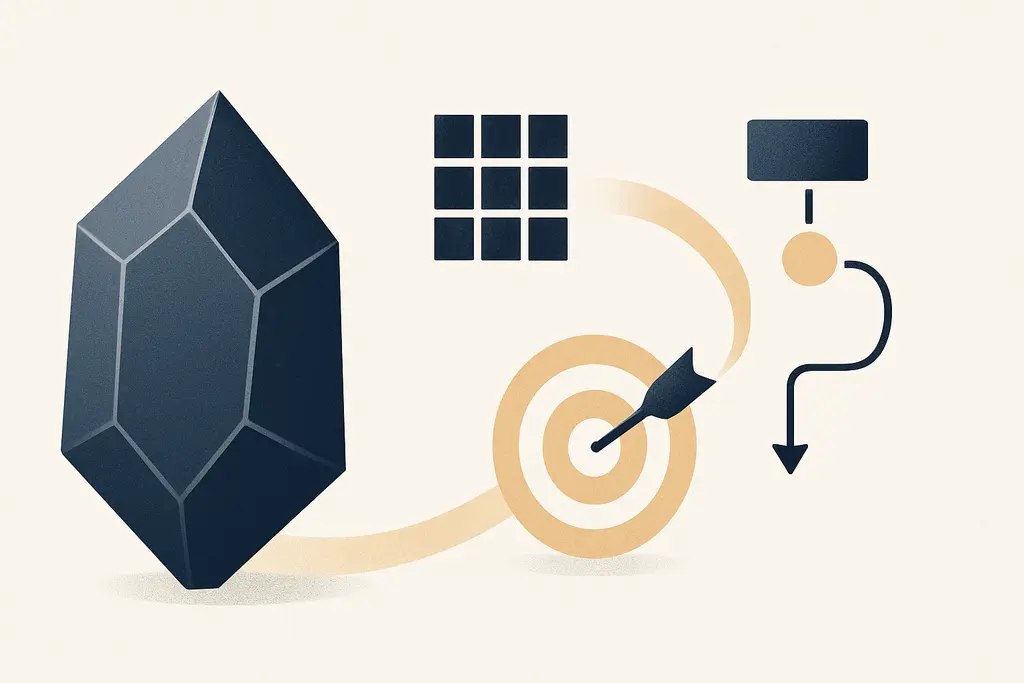
Expectation Drift is not a single event but a trajectory: small departures accumulate until the team’s lived expectations diverge from the original plan. That divergence can involve scope (what work gets done), timing (when it’s done), quality (what counts as finished), or role boundaries.
- Team members start honoring exceptions more often than rules.
- Artifacts (like a slide deck or template) stop being updated and become misleading signals.
- New hires adopt the team’s current habits rather than the documented standards.
Taken together, these patterns turn occasional workarounds into the de facto process. What once was a temporary fix becomes the new normal, usually without an explicit decision to change.
How the pattern gets reinforced
These forces are cumulative. A one-off concession to meet a deadline becomes a precedent; that precedent gets cited later as the expected pace. In meetings where the default response to late work is to say "it's fine for now," the team gradually internalizes a new baseline.
**Ambiguity:** vague goals or incomplete definitions create room for interpretation.
**Social pressure:** people match the behaviour they see rewarded or tolerated.
**Resource shifts:** shrinking time, staff, or budget pushes teams to accept lower standards.
**Leadership signals:** subtle comments or exceptions from managers normalize deviations.
**Infrequent reflection:** lack of structured review lets small changes compound.
How it shows up in meetings and everyday work
- Items repeatedly carried over from sprint to sprint without root-cause discussion.
- Stakeholder updates where the bar for "done" keeps sliding but nobody updates the acceptance criteria.
- New members told informally how things are “really done,” which conflicts with written processes.
- Reviews that focus on immediate fixes rather than why deadlines are missed.
These examples feel familiar because drift usually looks like normal functioning: people solving immediate problems, allowing shortcuts, and focusing on delivery. The trouble is that meetings then reinforce the drift—everyone adapts to the lowered or shifted expectation and stops noticing that the target moved.
A quick workplace scenario
A product team agrees at kickoff that a feature must pass automated tests and include basic documentation. After two releases, leadership asks for faster delivery. The team skips some test coverage to meet dates. Eventually, testing becomes optional for small tickets. New hires observe this and stop writing docs. At the next stakeholder demo, quality complaints emerge and the team is surprised; the documented definition of "done" still requires tests and docs, but the team’s behavior no longer matches it.
What accelerates or makes expectation drift worse
- Lack of explicit override rules for exceptions.
- Celebrating temporary wins that required bending rules ("We shipped this because we skipped X").
- High turnover that prevents cultural memory of why a standard existed.
- Misaligned incentives that reward speed at the expense of quality.
When exceptions are rewarded publicly and the original standards are not defended, those exceptions become the new reference point. Without deliberate maintenance of norms, small choices compound into a significantly different operating model.
Practical steps teams can use to halt or reverse drift
- Establish a short, visible definition of "done" for recurring work and review it every sprint or month.
- Use a deliberate exception log: when the team waives a rule, record the reason, owner, and sunset condition.
- Run quick pre-mortems in planning meetings: ask "what would make us accept lower quality this sprint?" and set guardrails.
- Schedule periodic expectation audits where the team compares behaviour to documented standards and asks what changed.
- Normalize course-correction language in meetings (e.g., "we made a temporary trade-off; let's review it in two sprints").
Applying these steps restores alignment because they turn implicit habits into explicit decisions. Teams that document exceptions and revisit them regularly reduce surprise, improve onboarding, and rebuild trust with stakeholders.
Where expectation drift is commonly misread or confused
- Expectation Drift vs. Scope Creep: scope creep is growth of what’s asked for; expectation drift is a change in what the team accepts as normal. The former is often external requests; the latter is internal normalization.
- Expectation Drift vs. Performance Decline: a drop in measurable output can be a sign of drift, but decline may also come from capability gaps or resourcing—each needs a different remedy.
People often label any problem as "scope creep" or "bad performance," then apply fixes like stricter deadlines or training. Those responses miss the root when the issue is that team norms silently shifted. The right remedy starts with diagnosing whether standards have moved and whether exceptions have been normalized.
Questions worth asking before reacting
- What was the original standard or agreement, and where is it documented?
- When did we first accept a deviation, and who made that call?
- Is this a one-time exception, or has it repeated and become expected?
- What incentive or signal encouraged the change (reward, convenience, leadership comment)?
These questions help teams avoid knee-jerk reactions and identify whether they need to re-establish standards, change incentives, or repair leadership signals.
Related patterns worth separating from it
- Mission Drift: a strategic shift in organizational purpose over a long period. While expectation drift affects operational norms, mission drift changes why the organization exists.
- Rule Erosion: the steady weakening of explicit policies. Rule erosion is a mechanism that produces expectation drift, but expectation drift includes changed mental models and behaviors, not just policy text.
Separating these patterns matters because the interventions differ: mission drift requires strategic conversation at leadership level; rule erosion might be fixed by clarifying policies; expectation drift is best addressed through team rituals and clear feedback loops.
Related topics worth exploring
These suggestions are picked from nearby themes and article context, not just a flat alphabetical list.
Request Framing
How the wording, context, and implied expectations around a work ask shape responses—and practical ways to reframe requests to reduce friction.
Feedback aversion
Feedback aversion is the avoidance of candid performance conversations at work; it shows up as silence, shallow reviews, and missed learning—practical fixes for leaders.
Tacit norm conflicts
When unspoken workplace rules clash, teamwork stalls. Learn how tacit norm conflicts show up in meetings, why they form, and practical steps teams can use to surface and resolve them.
Message Friction
Message friction is the extra effort communications require—unclear asks, wrong channels, or missing ownership—that slows decisions. Learn signs, causes, and practical fixes for work.
Feedback timing effects
How the moment feedback is delivered shapes learning, trust, and behavior at work — and what leaders and teams can do to align timing with the purpose of feedback.
Feedback priming
How initial cues—tone, first metrics, or opening examples—shape how feedback is heard and acted on, plus practical steps to spot and reduce that bias at work.