What this pattern really means
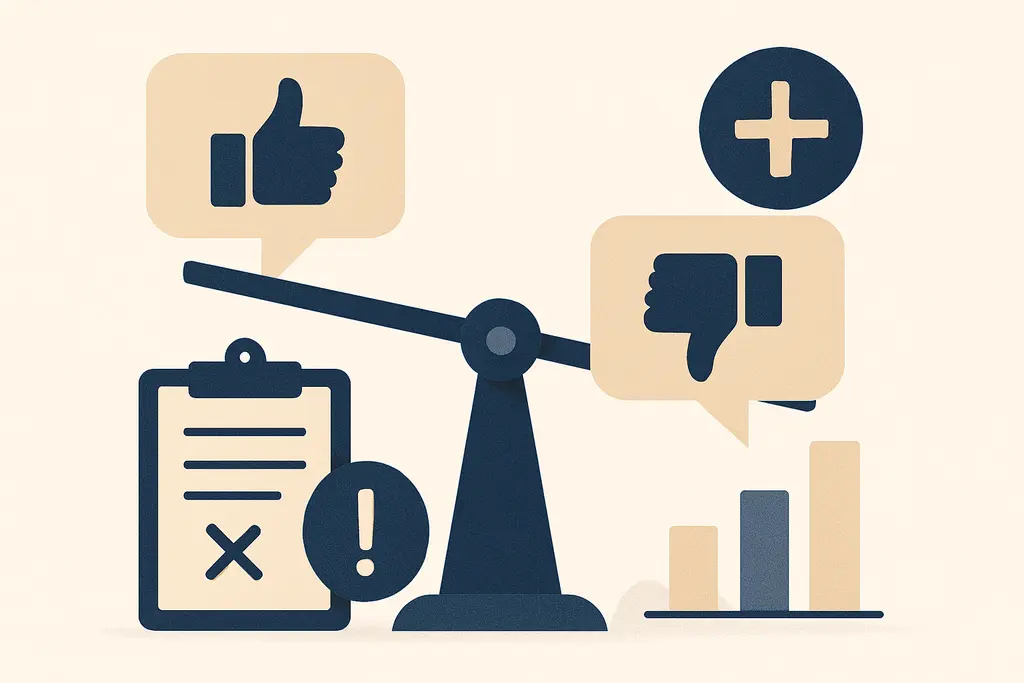
The feedback sandwich pairs a critical point between two positive remarks. It's intended to make corrective input feel less threatening, but its effectiveness depends on timing, sincerity, and context. When done poorly it can feel formulaic; when done well it can preserve relationship while still prompting change.
Used thoughtfully, the structure can protect trust; used as a rote script, it often distracts from the actual improvement needed.
Why it tends to develop
These drivers combine cognitive impulses (avoidance of discomfort), interpersonal goals (maintaining goodwill), and environmental constraints (limited time or training).
**Social discomfort:** people avoid direct criticism to prevent awkwardness or immediate conflict.
**Fear of harming relationships:** a desire to preserve rapport leads to softening messages.
**Unclear feedback skills:** limited training in giving constructive, specific feedback encourages formulaic approaches.
**Power dynamics:** supervisors may downplay negatives to avoid defensive reactions from direct reports.
**Organizational norms:** a culture that prioritizes positivity over candor rewards buffered feedback.
**Time pressure:** when managers are rushed, they default to a quick, rehearsed pattern instead of thoughtful coaching.
What it looks like in everyday work
When this pattern appears, outcomes often include confusion about expectations and limited behavior change. Observing whether the corrective element is actionable and whether the recipient understands next steps helps determine if the approach worked.
Praise that feels generic or unrelated to the issue being raised
Critical point framed briefly and without specific examples or next steps
Recipient focuses on the positive lines and misses the improvement needed
Repeated use with the same person without measurable change
Team members joking about the "sandwich" format in meetings
Performance reviews that read formulaically rather than diagnostically
Feedback delivered publicly that prioritizes face-saving over clarity
Follow-up conversations avoided because clarity was sacrificed for comfort
What usually makes it worse
Delivering difficult feedback for the first time to a direct report
Tight timelines or end-of-quarter reviews that shorten preparation time
High-stakes conversations where preserving morale feels critical
Cultural emphasis on positivity without training in candid feedback
New managers lacking feedback experience or frameworks
Unease about possible emotional reactions from the recipient
Conflicts tied to identity or values where criticism may escalate
Public settings where people want to avoid embarrassment
What helps in practice
These tactics emphasize actionable clarity and relationship maintenance without relying on a scripted praise-critique-praise sequence.
Start with intent: state why you’re giving feedback so the recipient understands the purpose.
Use specific examples: replace vague praise with concrete behaviors and outcomes.
Prioritize clarity over cushioning: say the improvement needed first, then discuss support and strengths.
Offer actionable next steps: give one or two clear actions and timelines for follow-up.
Ask questions: invite the person’s perspective before and after delivering the point to increase buy-in.
Try "feedforward": focus on future actions and solutions rather than dwelling on past faults.
Separate relationship from performance: acknowledge strengths honestly while holding standards clearly.
Practice micro-feedback: deliver small, frequent, focused observations instead of bundled reviews.
Prepare for emotion: plan pauses and follow-up time rather than avoiding directness.
Model directness: demonstrate clear, respectful feedback so your team learns the norm.
Train and role-play: use rehearsals to build skill and reduce anxiety about blunt conversations.
Document agreements: capture action items and review them in the next one-on-one to close the loop.
A quick workplace scenario (4–6 lines, concrete situation)
In a weekly one-on-one, you note the quarterly report missed key metrics. Rather than sandwiching praise around a vague complaint, you say: "The report missed three data points we need. Can we identify why and set a fix for next week? You handled the analysis well last month, so I want to support you to get back on that track." Then schedule a 30-minute follow-up to review progress.
Nearby patterns worth separating
Performance review: Longer-form evaluations that may use feedback patterns; differs by documenting outcomes and development plans rather than one-off conversational techniques.
Feedforward: Focuses on future improvements; connects as an alternative that shifts attention from past mistakes to actionable next steps.
Radical candor: Encourages caring personally while challenging directly; relates as a cultural approach that often rejects sandwiching in favor of direct support.
Coaching conversations: A two-way process focused on growth; differs by using questions and reflection to generate solutions rather than delivering scripted praise and critique.
Psychological safety: The team-level condition that influences whether direct feedback is received constructively; without it, even clear feedback can be misinterpreted.
360-degree feedback: Multi-source input that reduces single-person framing; connects by providing broader context beyond one manager’s delivery style.
Empathy in communication: The skill of acknowledging feelings without diluting content; complements direct feedback by preserving rapport.
Anchoring bias: Tendency for first impressions to shape interpretation; explains why initial praise can make a following critique less salient.
Performance improvement plan (PIP): A formal, documented approach to persistent issues; differs by being structured, monitored, and often escalated beyond conversational feedback.
When the situation needs extra support
In these situations, consider consulting an organizational development specialist, HR professional, or external consultant qualified to assess team dynamics and design interventions.
- If workplace feedback patterns consistently damage team functioning or morale despite changes in approach.
- When conflicts escalate to harassment, bullying, or legal risk and neutral investigation is needed.
- If a manager feels chronically unable to communicate without severe anxiety impacting job performance.
Related topics worth exploring
These suggestions are picked from nearby themes and article context, not just a flat alphabetical list.
Feedback sandwich backfire explained
Why the feedback sandwich can undermine correction: how praise-critique-praise becomes noise, signs it’s failing, and practical steps managers can use to restore clear, actionable feedback.
Feedback aversion
Feedback aversion is the avoidance of candid performance conversations at work; it shows up as silence, shallow reviews, and missed learning—practical fixes for leaders.
Feedback timing effects
How the moment feedback is delivered shapes learning, trust, and behavior at work — and what leaders and teams can do to align timing with the purpose of feedback.
Feedback priming
How initial cues—tone, first metrics, or opening examples—shape how feedback is heard and acted on, plus practical steps to spot and reduce that bias at work.
Feedback fatigue at work
When feedback becomes too frequent, vague, or conflicting, people tune it out. Learn how it shows up, why it forms, common confusions, and practical steps leaders can take to fix it.
Face-saving feedback tactics
How people soften feedback to protect reputation at work: signs, why it develops, examples, and practical steps to encourage clearer, safer critique.