Quick definition
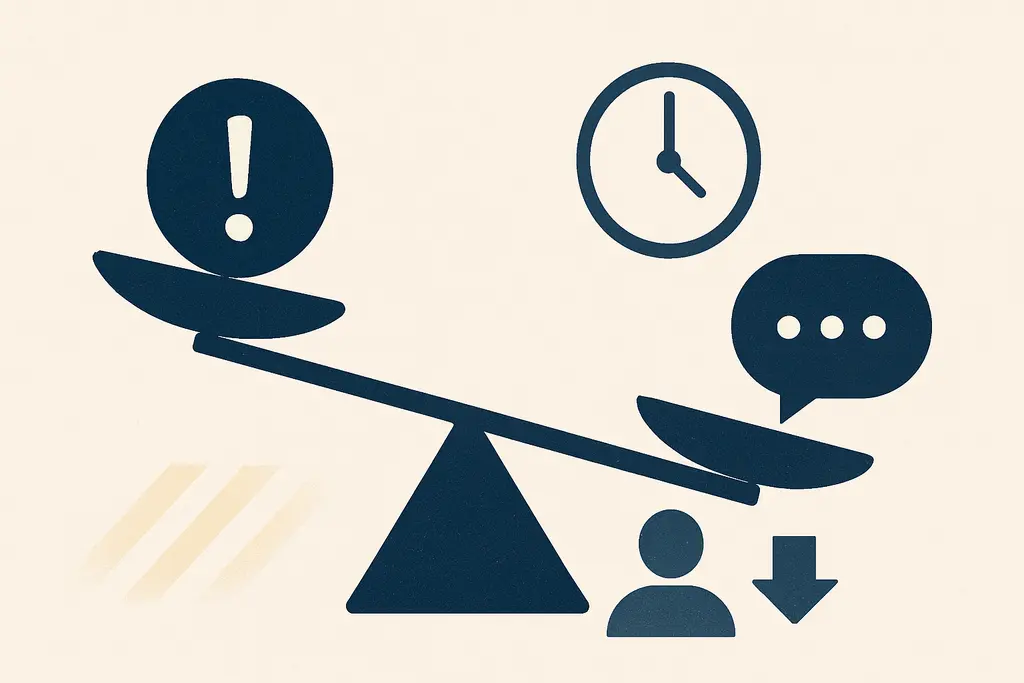
This pattern is about timing more than content: it's the discomfort tied to the schedule and predictability of feedback. It shows up when people hesitate to comment, delay delivering comments, or become anxious waiting for evaluation because they aren't sure when feedback will happen.
It matters because timing shapes how feedback is used. Consistent, predictable timing helps recipients act on input; unpredictable timing reduces clarity, lowers morale, and can distort performance conversations.
The concept applies to single interactions (a skipped 1:1 comment) and to system-level routines (uncertain review cycles). Different people will react differently—some prefer immediate correction, others want reflective, scheduled discussions—but the shared friction comes from not knowing which they'll get.
Underlying drivers
These drivers interact: for example, high cognitive load combined with unclear norms is a common recipe for postponed feedback. Identifying which drivers are strongest helps determine which adjustments will stick.
**Cognitive load:** Busy schedules and competing priorities push feedback lower on the to-do list.
**Perfectionism:** Concern about finding exactly the right words leads to delay.
**Social uncertainty:** Fear of interpersonal fallout makes people wait for "the right moment."
**System gaps:** Lack of formal cycles, tools, or agenda time leaves timing ambiguous.
**Power dynamics:** When roles and decision rights are unclear, people defer or consolidate feedback.
**Cultural norms:** Teams that avoid direct critique or that reward only end-of-cycle summaries create timing friction.
Observable signals
These signs are observable and actionable: they point to timing and process issues rather than to the content of feedback itself. Tracking patterns across projects and people makes it possible to redesign when and how feedback is delivered.
Reactions delayed: people take longer than expected to respond to coaching or action requests.
Feedback clustering: many comments arrive all at once around reviews or deadlines.
Over-anticipation: staff spend significant meeting time preparing for feedback that never arrives.
Defensive tone: when feedback comes unexpectedly, recipients may react as if criticized personally.
Silent gaps: long stretches with no performance touchpoints between assessments.
Agenda creep: meetings intended for other topics become feedback sessions.
Uneven distribution: some team members get frequent, informal input while others get only formal reviews.
Email ambush: feedback delivered in short messages without context because in-person time wasn’t scheduled.
A quick workplace scenario (4–6 lines, concrete situation)
A product team holds quarterly reviews but no regular 1:1s. A contributor makes a small change to a feature, waits three weeks for any input, then receives a detailed critique in the quarterly review. The critique triggers defensiveness and missed opportunities to iterate earlier.
High-friction conditions
Shifting deadlines that displace planned feedback conversations.
End-of-quarter performance pushes that concentrate commentary into a short window.
Unclear meeting agendas that leave no slot for constructive check-ins.
Recent turnover that disrupts established feedback rhythms.
Introduction of new tools or processes without clear guidance on cadence.
High-stakes events (client demos, board reviews) where feedback is intentionally postponed.
Remote or asynchronous work modes that blur the cues for real-time feedback.
Practical responses
Regular, small adjustments to timing often reduce stress more effectively than trying to perfect content. The goal is a predictable rhythm that aligns with how work actually gets done.
Establish predictable cadences: set brief, recurring checkpoints (e.g., weekly 1:1s or biweekly sprint reviews).
Use short formats: implement 10–15 minute focused feedback slots to reduce scheduling friction.
Signal intent: when feedback will be high-level only, note that in advance so recipients know to expect follow-ups.
Batch strategically: schedule “quick corrections” slots separate from in-depth development conversations.
Make timing explicit: add a timeline note to written feedback (e.g., "actionable by next demo").
Normalize interim comments: encourage micro-feedback (one-sentence suggestions) between formal reviews.
Create agreed rules: teams can adopt simple timing norms (e.g., respond within 48 hours to process-related feedback).
Use technology wisely: set calendar templates and shared docs that reserve time for feedback.
Protect focus windows: block short, consistent slots so feedback doesn’t get pushed by urgent work.
Calibrate with context: ask recipients what timing helps them implement changes most effectively.
Track and adjust: periodically review whether cadence is meeting needs and make small, data-driven changes.
Often confused with
Performance management cycles — connects by setting the broad schedule; differs because timing anxiety is about uncertainty within and between cycles.
Psychological safety — related because safe environments make timing conversations easier; differs because safety is broader than timing patterns.
Meeting hygiene — links to the practical organization of time; differs because meeting hygiene covers many agenda issues beyond feedback timing.
Asynchronous communication — connects through delayed exchanges; differs because timing anxiety focuses on the emotional and behavioral effects of delay.
Check-in culture — overlaps where frequent check-ins reduce anxiety; differs because culture is the shared norm while timing anxiety is the resulting pattern when norms fail.
Expectation management — ties in by clarifying when feedback will occur; differs since expectations cover scope as well as timing.
Workload management — related because overloaded schedules cause delays; differs because workload is a root cause, not the behavioral pattern itself.
When outside support matters
In these cases, consider involving qualified organizational development consultants, HR partners, or employee assistance resources to facilitate structured change.
- If anxiety about feedback timing leads to persistent avoidance of work tasks or repeated workplace conflicts.
- If uncertainty about feedback timing significantly impairs team functioning or performance consistently.
- If attempts to adjust timing systems create escalating interpersonal tension that can't be resolved internally.
Related topics worth exploring
These suggestions are picked from nearby themes and article context, not just a flat alphabetical list.
Feedback timing effects
How the moment feedback is delivered shapes learning, trust, and behavior at work — and what leaders and teams can do to align timing with the purpose of feedback.
Feedback aversion
Feedback aversion is the avoidance of candid performance conversations at work; it shows up as silence, shallow reviews, and missed learning—practical fixes for leaders.
Feedback priming
How initial cues—tone, first metrics, or opening examples—shape how feedback is heard and acted on, plus practical steps to spot and reduce that bias at work.
Feedback fatigue at work
When feedback becomes too frequent, vague, or conflicting, people tune it out. Learn how it shows up, why it forms, common confusions, and practical steps leaders can take to fix it.
Face-saving feedback tactics
How people soften feedback to protect reputation at work: signs, why it develops, examples, and practical steps to encourage clearer, safer critique.
Feedback avoidance and its team effects
How teams avoid giving or seeking candid feedback, why that pattern repeats in meetings, and practical steps teams can use to surface issues and reduce harm.