Working definition
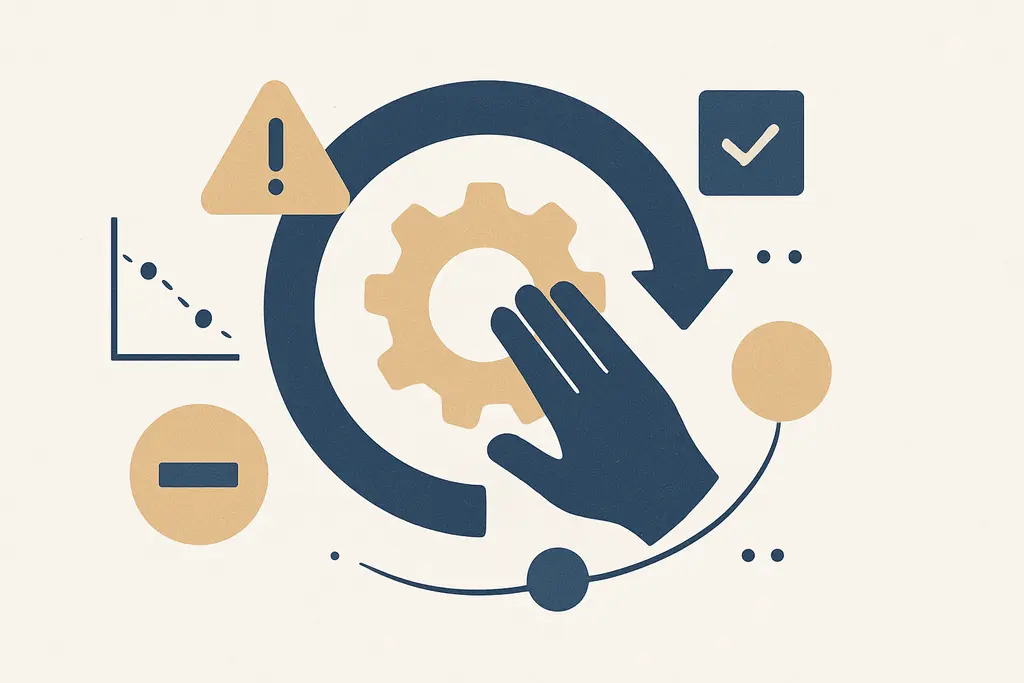
Habit friction is the resistance experienced when a desired behaviour requires extra effort, attention, or decision-making compared with the current routine. It’s not a single big blocker; it’s the collection of small inconveniences that stop a new practice from becoming automatic.
In workplace settings, habit friction often appears in procedures, tools, or social expectations that interrupt momentum. When teams repeatedly abandon an intended action—like logging time, updating a shared doc, or following a new meeting routine—friction is usually at play.
Key characteristics:
Seen from a systems perspective, habit friction is a design and social problem rather than a personal failing. Fixes often involve simplifying steps, clarifying expectations, or changing the environment so the desired action becomes the easiest option.
How the pattern gets reinforced
**Cognitive load:** When a task requires extra memory, decision-making, or context switching, people defer or skip it.
**Process complexity:** Steps split across tools or people create timing gaps and handoff confusion.
**Social ambiguity:** Unclear norms about who should act or how strictly a practice is enforced reduces compliance.
**Physical/environmental friction:** Poor tool access, hidden menu paths, or inconvenient locations increase effort.
**Reward delay:** When benefits are long-term or diffuse, immediate effort feels unrewarding.
**Inconsistent enforcement:** Sporadic checks or mixed messages teach teams that the habit isn’t essential.
**Default settings:** When systems default away from the desired behaviour, extra action is required to opt in.
**Time pressure:** Under tight schedules, optional or non-urgent steps get deprioritized.
Operational signs
Repeated reminders are needed before a task is completed.
A single person or small group consistently carries the burden of a process.
Checklists or SOPs exist but are rarely followed end-to-end.
Tool usage drops after initial training or pilot periods.
Workarounds multiply—teams create shortcuts to bypass an awkward step.
Meeting minutes, action items, or templates often remain incomplete.
New hires take much longer to adopt standard practices than expected.
Quality or data issues trace back to skipped intermediate steps.
Managers see surface compliance but not sustained behavioral change.
People cite “I didn’t have time” or “I forgot” rather than process reasons.
A quick workplace scenario (4–6 lines, concrete situation)
A team introduces a one-step post-meeting update in the shared tracker, but the entry form is buried behind three menus. After two weeks, only the project lead fills it in; everyone else mentions they "meant to". The lead now spends an extra hour each week gathering updates—the small obstacle in the form turned into a recurring coordination cost.
Pressure points
New software with non-intuitive workflows.
Multiple systems requiring duplicate entries.
Ambiguous ownership of recurring tasks.
Meeting-heavy calendars that interrupt focused steps.
Forms with many optional fields that create decision paralysis.
Templates or SOPs that aren't pre-populated or linked in context.
Rarely practiced routines that require memory retrieval.
Sudden policy changes without visible short-term benefit.
Access permissions that require manual requests each time.
Moves that actually help
Practical changes usually focus on making the right action easier, faster, and clearer than alternatives. Small design tweaks combined with visible ownership are often more effective than repeated reminders.
Map the full workflow and highlight every handoff and decision point.
Remove or combine steps so the desired action is the path of least resistance.
Make the desired behaviour the default (pre-filled forms, auto-saves, templates).
Assign explicit ownership and visible accountability for recurring tasks.
Provide in-context prompts (e.g., a one-click button inside a tool, not a separate email).
Use short, time-bound experiments to test simplified versions of the process.
Surface small wins and quick feedback loops so effort feels worthwhile.
Train with real examples and create short job aids placed where work happens.
Limit choices early: offer one recommended option plus two alternatives, not a long menu.
Schedule the new habit into existing rituals (start-of-meeting, end-of-day signoff).
Monitor usage metrics and correlate them with task outcomes to spot remaining friction.
Solicit frontline suggestions—people who do the work often know the easiest fixes.
Related, but not the same
Habit formation: concerns how behaviours become automatic; habit friction explains why that automaticity is delayed or blocked.
Nudge theory: focuses on altering choice architecture; nudges are tactics to reduce habit friction by changing defaults and prompts.
Change management: broader effort to implement organizational change; habit friction is one operational barrier change management must address.
Cognitive load: describes mental effort; high cognitive load is a driver of habit friction when tasks require extra memory or decisions.
Process bottlenecks: points that slow throughput; friction is often the human-side expression of a bottleneck.
Micro-habits: very small, low-effort routines; creating micro-habits is a strategy to overcome habit friction by lowering effort thresholds.
When the issue goes beyond a quick fix
- If repeated attempts to redesign workflows still lead to widespread non-adoption, consult an organizational development specialist.
- If workplace systems consistently produce stress, lowered performance, or high turnover tied to process issues, engage HR or an occupational psychologist for assessment.
- Use an employee assistance program (EAP) or external consultant when coordination patterns harm morale or create chronic overload.
Related topics worth exploring
These suggestions are picked from nearby themes and article context, not just a flat alphabetical list.
Habit friction audit
A practical guide to auditing small workplace barriers that stop intended routines — find the micro-obstacles, test simple fixes, and turn intentions into repeatable habits.
Habit friction in hybrid work
Small practical barriers—extra clicks, unclear norms, and social uncertainty—that prevent teams from forming consistent hybrid work habits and how to reduce them.
Habit relapse pathways
How workplace habit relapse pathways (cue→response→reinforcement loops) undo change, where they originate, and concrete steps leaders can use to interrupt them.
Habit Stacking Pitfalls
How habit-stacking in the workplace creates brittle routines, why stacks fail, and practical steps managers can take to simplify, test, and rebuild resilient workflows.
Habit scaffolding
How small, structured supports (cues, defaults, micro-routines) help new workplace habits form and persist — and how managers design, test, and remove those supports.
Micro-habit decay
Micro-habit decay is the gradual fading of tiny workplace routines (like quick updates or ticket notes) that causes friction; this memo shows causes, examples, and fixes for managers.