Quick definition
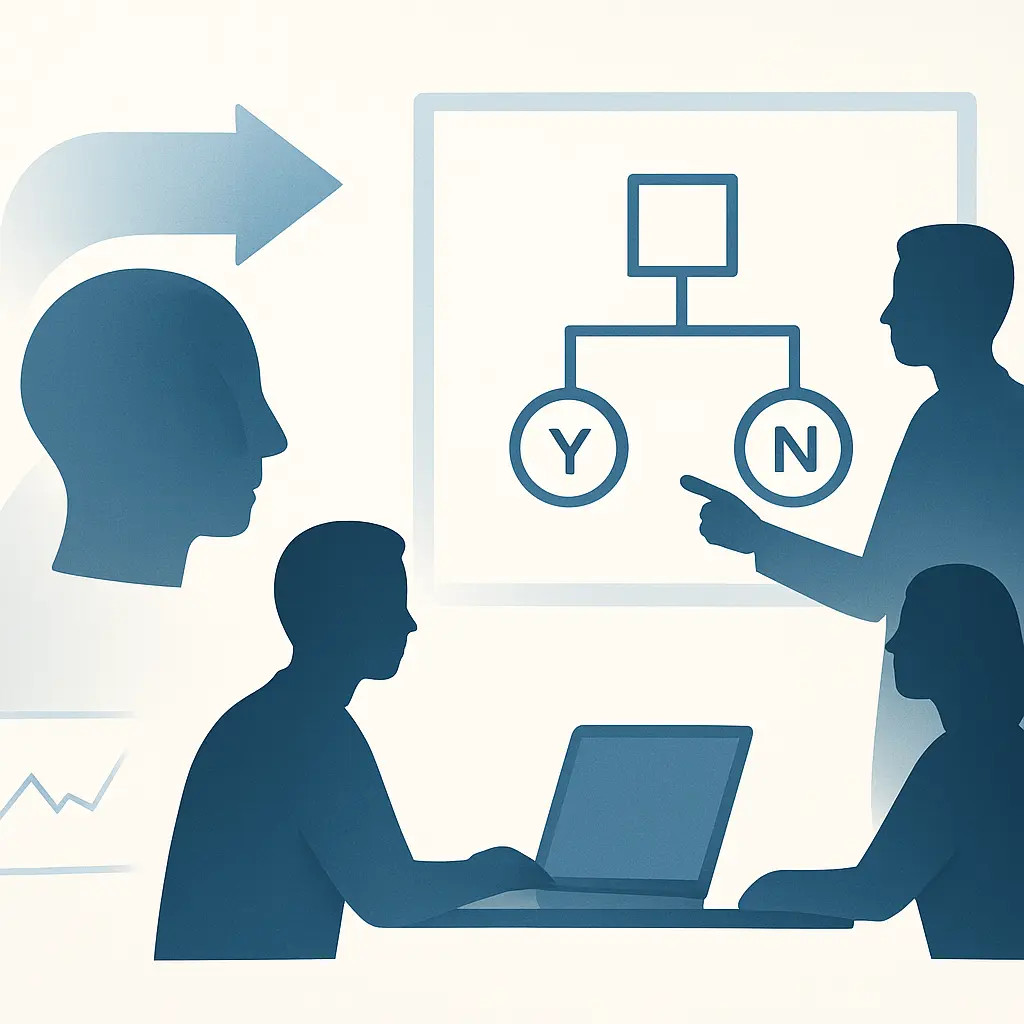
Hindsight bias in postmortems means evaluating past decisions with information you didn’t have at the time, and treating those decisions as if they were obvious. In practice this makes causes look clearer and the room for alternative outcomes smaller than it actually was.
This bias changes how team members remember what they knew, when they knew it, and how they assess others’ choices. It reduces curiosity about process and increases focus on surface explanations.
These points summarize the pattern; together they create an environment where lessons are distorted. That makes postmortems less useful for future risk reduction and more likely to generate defensiveness or scapegoating.
Underlying drivers
**Cognitive simplification:** The mind prefers a neat story after an outcome — it fills gaps to make a sequence look logical.
**Memory reconstruction:** Team members unintentionally update memories to match known outcomes, conflating what was known then with what is known now.
**Outcome-focused culture:** When success or failure drives recognition or blame, discussion collapses around the outcome rather than process.
**Social signaling:** Individuals may assert that an outcome was obvious to demonstrate competence or align with dominant views.
**Information asymmetry:** When some people had more data, others retrospectively assume they all had the same picture.
**Poor record-keeping:** Lack of contemporaneous notes about options and uncertainties makes it easy to overstate predictability.
**Time pressure in meetings:** Short postmortems encourage quick cause-and-effect narratives instead of thorough analysis.
Observable signals
These signs indicate the team is leaning on hindsight rather than documenting what was actually known and uncertain at the time. That reduces the value of lessons and makes future decisions poorer.
Rapid assignment of blame to a single person or decision, with little discussion of system factors
Phrases like "we should have known," "obvious problem," or "that was bound to happen"
Reconstructed timelines where early warnings are exaggerated or invented
Dismissal of alternative explanations that were plausible at decision time
Repeated postmortems that yield the same ‘‘lessons learned’’ without changing behavior
Avoidance of recording uncertainty or dissenting views in meeting notes
New policies implemented as knee-jerk fixes following a single incident
People who changed their story about what they knew or recommended once the outcome was revealed
High-friction conditions
High-profile failures that attract scrutiny or public attention
Tight deadlines that make fast judgments necessary
Incentives tied to outcomes (bonuses, promotions, or public recognition)
Sparse or missing decision logs and meeting notes
Strong hierarchies where junior voices are discouraged during reviews
Single catastrophic events that draw disproportionate focus
Media or stakeholder pressure for a simple explanation
Lack of a standardized postmortem process
Practical responses
Applying these steps consistently builds a culture where postmortems surface realistic causes rather than hindsight-driven narratives. Over time the team collects better data about decision processes and reduces repeat mistakes.
Create a simple template that records what was known, who knew it, and the information available at each decision point
Run a pre-mortem before projects: ask the team to assume failure and list possible causes in advance
Separate timeline facts from interpretation in meeting notes; label conjectures clearly
Rotate a neutral facilitator to manage postmortems and protect against dominant narratives
Encourage people to state uncertainty explicitly (e.g., probabilities or confidence levels) when describing past choices
Use counterfactual prompts: "What data would have made this decision different?" or "What could have happened instead?"
Limit outcome-focused language; create a rule to postpone blame until systemic factors are explored
Keep records (logs, emails, decision memos) accessible so the team can check what was actually available
Invite an external reviewer or peer team to audit a postmortem for perspective
Turn lessons into experiments or small changes with clear hypotheses, not sweeping pronouncements
Document dissenting views and track whether they recur in later reviews
Train meeting chairs in techniques for drawing out quieter voices and challenging consensus
A quick workplace scenario (4–6 lines, concrete situation)
In a sprint review, a product launch missed key performance targets. Afterward one senior engineer says, "We should have seen this bug coming," and the team agrees. A facilitator pauses the group, pulls up the decision log, and shows the information available two weeks earlier: the failing test was intermittent and only visible under a rare configuration. The conversation then shifts from blame to how testing coverage and release checklists can reduce that blind spot.
Often confused with
Confirmation bias — differs by focusing on how people search for and interpret information to confirm beliefs; connects because hindsight often retrospectively justifies the chosen belief.
Outcome bias — outcome bias judges a decision by its result; connects closely but differs because hindsight emphasizes perceived predictability, not only fairness of the decision.
Groupthink — differs in that groupthink is about suppressing dissent during decision-making; connects because both reduce consideration of alternatives in reviews.
Attribution bias — concerns how people assign causes (person vs. situation); connects because hindsight often leads to dispositional attributions (blaming individuals).
Survivorship bias — differs by focusing on samples that survived; connects when postmortems ignore projects that failed earlier and are not visible.
Counterfactual thinking — differs as a cognitive process of imagining alternatives; connects because deliberate counterfactuals are a tool to counter hindsight.
Root cause analysis — differs as a methodical technique; connects when properly applied it can counteract hindsight-driven simplifications.
Decision documentation — differs as a practical record-keeping practice; connects because good documentation reduces the space for hindsight reinterpretation.
When outside support matters
- If postmortem dynamics create persistent conflict or harassment, consider involving HR or an impartial mediator
- When repeated reviews fail to produce safer processes, an organizational development consultant or facilitator can help redesign postmortems
- If individuals feel chronic reputational harm or career impact from review meetings, speak with a qualified workplace advisor or HR representative
Related topics worth exploring
These suggestions are picked from nearby themes and article context, not just a flat alphabetical list.
Present bias at work
How present bias at work leads teams to choose quick gains over long-term value — why it happens, how managers misread it, and practical fixes to nudge better decisions.
Recency bias in reviews
Recency bias in reviews is the tendency to overweight the latest events when evaluating performance or products — learn how it shows up at work and practical ways to reduce its impact.
Sunk Opportunity Bias
How past missed chances (not just spent costs) distort team decisions—why it happens in meetings, real examples, and practical steps to reduce reactive fixes and overcompensation.
Default policy bias
How workplace defaults become sticky: why existing policies persist, how to spot when a default is blocking better choices, and practical steps managers can use to test and change them.
Outcome Bias in Business Decisions
Outcome bias is judging decisions by results instead of the quality of the decision process — learn how it shows up at work and practical steps managers can use to reduce it.
Value-fit bias in hiring
How workplace teams favor candidates who 'share our values'—why that bias forms, how it shows up in interviews, and practical steps managers can use to reduce it.