implementation intentions for goal achievement in teams — Business Psychology Explained
Category: Habits & Behavioral Change
Intro
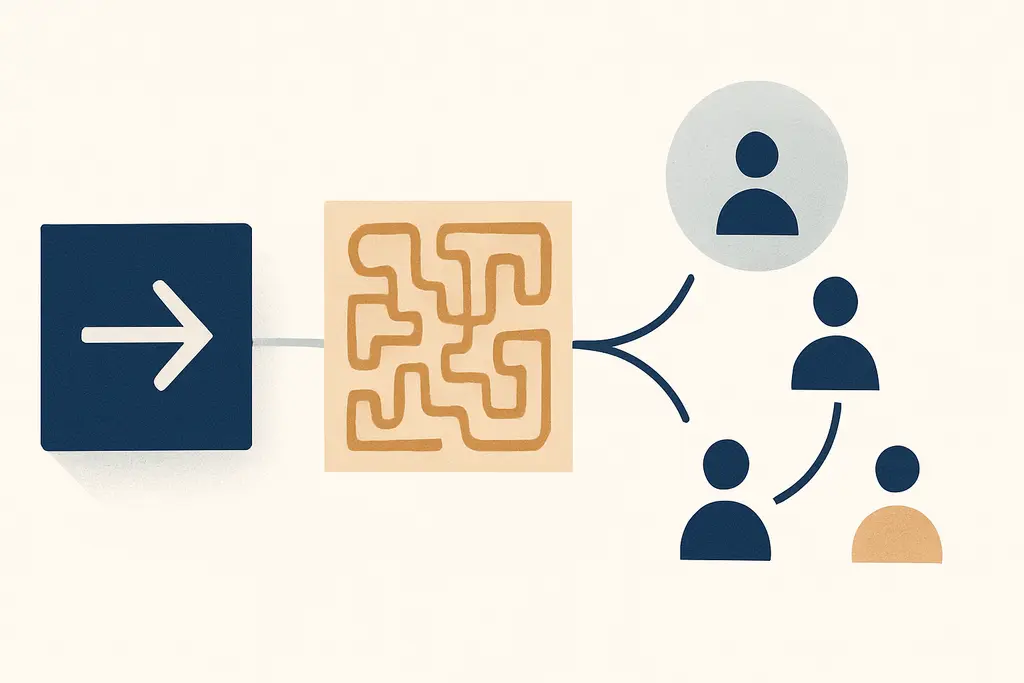
Implementation intentions for goal achievement in teams are simple if–then plans that link a clear trigger to a concrete action across multiple people. In practice they turn vague objectives into specific team commitments (for example: “If the client requests a scope change, then Alice drafts a reply within 24 hours”). They matter because tailored triggers and shared responses reduce ambiguity, speed decisions, and make follow-through visible.
Definition (plain English)
Implementation intentions are short statements that specify WHEN and WHERE a planned action will occur and WHO will do it. In a team setting they move a team goal from abstract (“improve response time”) to procedural (“when a support ticket is marked high-priority, the on-shift person escalates within 30 minutes and notifies the project lead”).
Applied at the team level, they are most useful when they are co-created, documented, and integrated into everyday tools (calendars, ticketing systems, meeting agendas). They are not detailed project plans; they are targeted cues linked to specific behaviors so the team knows exactly what to do when a common situation arises.
Key characteristics:
- Clear trigger: a concrete, recognizable situation (time, event, or cue).
- Specific action: a single, observable behavior tied to the trigger.
- Assigned responsibility: a named person or role for the action.
- Simple phrasing: one if–then sentence per intention.
- Documented and visible: written in meeting notes, playbooks, or tools.
These features make intentions easy to follow in the moment and easy to audit after the fact. Teams that treat implementation intentions as lightweight operating rules reduce delays caused by indecision.
Why it happens (common causes)
- Cognitive clarity: Teams adopt if–then plans because simple rules reduce mental overhead when tasks compete for attention.
- Attention scarcity: When several goals compete, triggers help people know what to act on first.
- Social coordination: Shared intentions emerge to prevent duplication and to align handoffs between roles.
- Environmental cues: Tools (ticket tags, calendar events) or physical signals (status boards) encourage forming action rules.
- Time pressure: Approaching deadlines push teams to standardize quick responses.
- Risk aversion: Teams create pre-agreed responses to avoid awkward last-minute negotiations.
- Leadership signals: When process owners request concrete commitments, teams formalize if–then steps.
How it shows up at work (patterns & signs)
- Meeting notes include explicit if–then lines instead of vague next steps.
- A shared document lists triggers (e.g., “client escalation”) and the immediate actions assigned.
- Team members refer to the plan in real time: “If the server alerts, we follow the runbook step 1.”
- Faster handoffs: people step in automatically when the trigger occurs, reducing wait time for decisions.
- One person acts as the default responder for specific triggers, and others know the backup.
- Check-ins and standups reference whether the specified action was taken after a trigger.
- Automation or reminders (calendar invites, Slack bots) are linked to the cue to prompt the action.
- Confusion when triggers are ambiguous or when multiple intentions conflict for the same event.
- Reduced debate in routine situations because the if–then covers typical choices.
- Occasionally, over-reliance on intentions for novel situations where flexibility would be better.
Common triggers
- Project milestone reached or missed (e.g., scope review due).
- Client escalation or high-priority support ticket.
- Sprint planning or end-of-week standup.
- Change in resource availability (sick leave, new hire start).
- Automated alerts from monitoring tools.
- Receipt of a contract or compliance request.
- A KPI crossing a threshold (e.g., churn rise, response-time slip).
- Handover moments (shift change, offboarding a team member).
- Post-mortem findings that identify recurring decision points.
Practical ways to handle it (non-medical)
- Draft one-line if–then intentions in planning meetings: make triggers concrete and name a responder.
- Co-create intentions with the people who will act on them to ensure feasibility and buy-in.
- Record intentions in places people already look (ticket fields, meeting minutes, shared checklists).
- Link intentions to tooling (automated reminders, status tags, Slack notifications) so cues aren’t missed.
- Keep them short and testable: a reviewer should be able to answer “Did the action happen?” with yes/no.
- Define backups and escalation paths so single-person absence doesn’t stall the response.
- Run quick experiments: try an intention for one sprint, collect evidence, and iterate in the retro.
- Use pre-commitment in meetings: ask the assignee to restate the if–then out loud to strengthen commitment.
- Align intentions with existing policies or SOPs to avoid conflicting instructions.
- Train new team members on the key if–then rules during onboarding.
- Review and retire intentions that are obsolete or create bottlenecks.
Short explanatory note: Practical handling focuses on making intentions visible, testable, and resilient to routine disruptions. Treat them as lightweight operational rules that you can revise based on evidence rather than permanent mandates.
A quick workplace scenario (4–6 lines)
During a weekly planning meeting the team agrees: “If a client asks for a timeline change, then the account lead logs the request in the project board within two hours and schedules a decision meeting within 24 hours.” The account lead is named, the trigger is clearly defined, and the project board automates a reminder. At the next meeting the team reviews whether those steps happened and adjusts the timing if needed.
Related concepts
- OKRs (Objectives and Key Results): OKRs set the outcome and measurable target; implementation intentions supply the moment-to-moment actions that help reach those targets.
- Action planning: Action plans often list multiple tasks and dependencies; implementation intentions are narrower, pairing a single cue with a single action for immediate response.
- Mental contrasting: Mental contrasting focuses on motivation by comparing reality and goals; implementation intentions are the procedural follow-up that specify what to do when an obstacle or cue appears.
- Standard operating procedures (SOPs): SOPs can be long and formal; implementation intentions are compact, trigger-linked rules for routine decisions.
- Checklists: Checklists ensure steps aren’t missed during a process; implementation intentions tell the team exactly when to start a checklist item.
- Nudges and reminders: Nudges change choice architecture through design; implementation intentions are explicit commitments people make that can be reinforced by nudges.
- Accountability partners: An accountability partner provides follow-through support; implementation intentions assign the action to a role and define the trigger so accountability is clearer.
- SMART goals: SMART focuses on goal quality (specific, measurable, etc.); implementation intentions operationalize the S and T (specificity, time/place) into momentary actions.
When to seek professional support
- If repeated failures to agree on workable intentions create persistent conflict or team dysfunction, consider consulting an organizational consultant or coach.
- If workload or role ambiguity leads to chronic missed actions and impacts team wellbeing, speak with HR or an employee relations professional for structural changes.
- If you need help designing measurement systems or revamping team processes, an organizational psychologist or process improvement specialist can offer evidence-based solutions.
Common search variations
- implementation intentions for goal achievement at work
- Search for practical templates and examples that translate team goals into if–then rules you can paste into meeting notes.
- implementation intentions for goal achievement examples
- Look for one-line real-world examples (e.g., support triage, client escalations, release checklists) to model for your team.
- signs of effective implementation intentions for goal achievement
- Queries about observable indicators such as reduced decision time, consistent follow-through, and clearer handoffs.
- how to use implementation intentions for goal achievement step by step
- Stepwise guides that show drafting, testing, integrating with tools, and iterating in retrospectives.
- how to overcome barriers to implementation intentions for goal achievement
- Practical tips for resolving resistance, ambiguous triggers, and tooling gaps that prevent follow-through.
- team if–then plans for project management
- Focused searches for playbook language and sample if–then lines tailored to common project triggers.
- integrating implementation intentions with team tools
- Guidance on connecting intentions to ticketing, calendar, or chat reminders so cues are surfaced automatically.
- measuring whether implementation intentions work in teams
- Queries about simple evidence (timestamps, completion checks, reduction in response lag) to evaluate effectiveness.