Quick definition
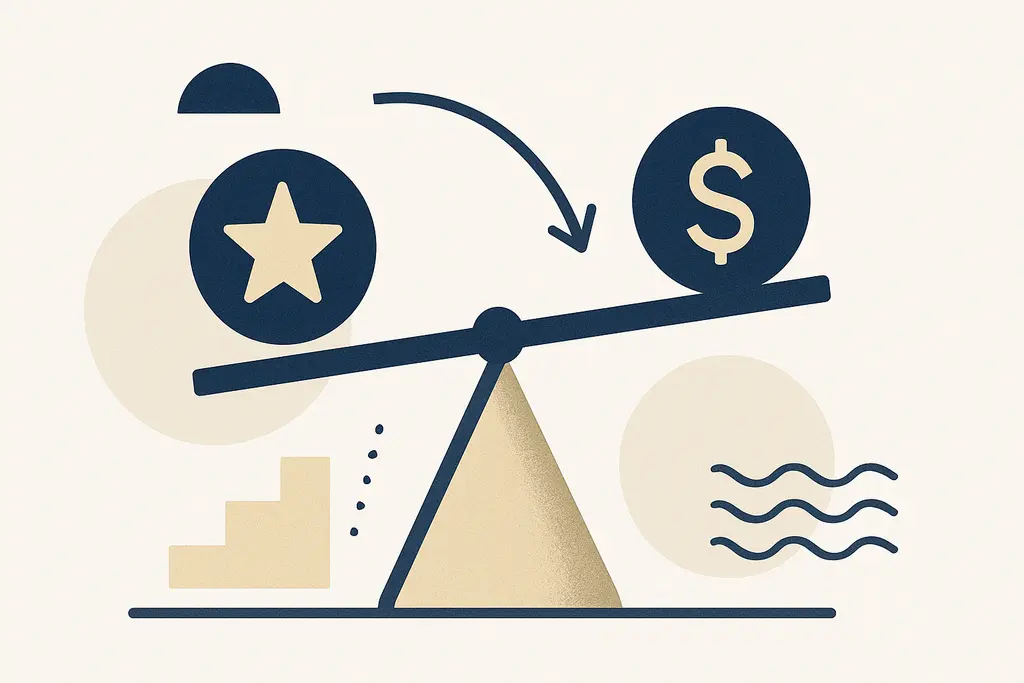
Inconsistent rewards and team motivation describes situations where outcomes (praise, pay, privileges, or advancement) do not align reliably with expected performance or agreed goals. The mismatch can be between promises and delivery, between team members doing similar work, or between the stated criteria and what is actually rewarded.
These features reduce the ability of team members to learn which behaviors are effective. Over time the team adapts by minimizing discretionary effort or focusing on short-term wins that appear to get rewarded.
Underlying drivers
**Ambiguous goals:** unclear or shifting objectives make it hard to judge who should be rewarded.
**Cognitive overload:** decision-makers default to heuristic choices when busy, leading to inconsistent reward decisions.
**Social pressure:** favoritism, alliances, or groupthink influence who gets recognized.
**Measurement gaps:** lack of reliable metrics forces subjective judgments.
**Resource constraints:** limited reward budgets lead to irregular distribution as needs arise.
**Reactive management:** rewards tied to putting out fires rather than steady performance.
**Policy gaps:** informal reward norms conflict with formal HR processes.
**Cultural misalignment:** organizational values don’t match everyday reward practices.
Observable signals
Team members ask privately whether a task is “worth” doing because rewards are unclear.
High performers withdraw from non-visible work that isn’t consistently recognized.
Informal rivalry grows as people compete for sporadic recognition.
Short-term tactical behavior increases at the expense of long-term planning.
Attendance at optional collaboration events drops unpredictably.
Repeated questions about criteria for bonuses, promotions, or spot awards.
Resentment or passive-aggressive comments surface after selective praise.
Managers publicly praise one person for work that others also did.
People hedge responsibilities to avoid tasks that historically go unrewarded.
Turnover or internal transfers spike in teams where reward patterns feel unfair.
A quick workplace scenario (4–6 lines)
A product milestone is met after a cross-functional push. Leadership publicly thanks a few visible engineers; the quietly coordinating operations lead receives no mention. Over the next quarter, operations stops offering proactive support on low-visibility tasks, and delivery problems resurface.
High-friction conditions
Announcing broad reward programs without clear eligibility rules.
Last-minute budget cuts that change who gets bonuses.
Leaders praising outcomes while ignoring contributors behind the scenes.
Performance metrics added retroactively to justify decisions.
One-off crises where only immediate responders are rewarded.
Manager turnover that brings different recognition styles.
Informal, anecdotal decision-making replacing written criteria.
Rewarding visibility (presentation skills) instead of impact.
Overreliance on discretionary spot awards without a baseline.
Practical responses
Applying a mix of these steps builds predictability and restores the link between effort and reward. Over time, consistent practices reduce gaming and encourage sustained contributions.
Establish clear, documented criteria linking behaviors and outcomes.
Communicate the rationale for past reward decisions when changes occur.
Use consistent timing (e.g., quarterly reviews) for routine recognition.
Track contributions with simple, shared logs for cross-functional work.
Rotate decision panels for discretionary awards to reduce bias.
Make recognition public and specific: name the behavior that earned it.
Create low-cost, frequent acknowledgements so not everything depends on big payouts.
Align metrics with long-term goals, not only short-term visibility.
Encourage upward feedback so contributors can highlight unseen work.
Provide training for evaluators on equitable recognition and unconscious bias.
Pilot small changes and collect anonymous team input before scaling.
Often confused with
Performance management: connects through formal reviews but differs by focusing on ongoing development rather than the unpredictability of rewards.
Psychological safety: related because inconsistent rewards can reduce the safety to take risks; psychological safety is about the environment that allows that risk-taking.
Equity theory: explains how people compare inputs and outcomes; inconsistent rewards are a practical trigger for perceived inequity.
Recognition systems: the operational tools for saying thanks; these are the mechanisms that can be designed to reduce inconsistency.
Intrinsic vs. extrinsic motivation: connects by clarifying that unpredictable external rewards can crowd out internal motivation over time.
Organizational justice: a broader concept that covers fairness in procedures and outcomes; inconsistency undermines both.
Goal-setting: when goals are unclear or change, reward inconsistency becomes more likely; clear goal-setting helps prevent it.
Social loafing: a possible behavioral consequence when inconsistent rewards demotivate contributors in group tasks.
Managerial accountability: this focuses on the leader behaviors that create consistent reward signals; it’s a lever for improvement.
Incentive design: how rewards are structured; good design reduces the gap between intended and actual consequences.
When outside support matters
- If repeated reward inconsistency is causing significant team conflict that local changes don’t fix, consider consulting HR or an organizational development specialist.
- If patterns point to systemic bias or legal risk, engage appropriate HR, legal, or compliance advisors.
- For sustained morale or performance declines despite managerial efforts, an external organizational psychologist or consultant can audit systems and recommend changes.
Related topics worth exploring
These suggestions are picked from nearby themes and article context, not just a flat alphabetical list.
Motivation-Job Fit Gap
When a person's motivation and daily tasks don’t match, performance and retention suffer. Learn how this gap forms, how it shows up, and practical steps to close it.
Motivation Debt
Motivation Debt is the build-up of deferred work and skipped motivational investments at work; it makes routine tasks harder, creates backlogs, and needs process plus cultural fixes.
Motivation hygiene
Motivation hygiene is the daily systems and habits that prevent motivation from eroding at work — the small fixes managers can make to keep teams engaged and productive.
Anticipatory Motivation
How expectations about future events drive present effort at work — how it shows up, why it develops, how leaders can spot and reshape it for better outcomes.
Velocity Motivation
Velocity Motivation describes the drive to favor quick, visible progress over slower strategic work—how it forms, how leaders misread it, and practical steps to balance speed and impact.
Motivation Alignment Gap
The Motivation Alignment Gap occurs when employee actions and organizational objectives diverge; spot it through misdirected effort and fix it by aligning signals, incentives, and processes.