What it really means
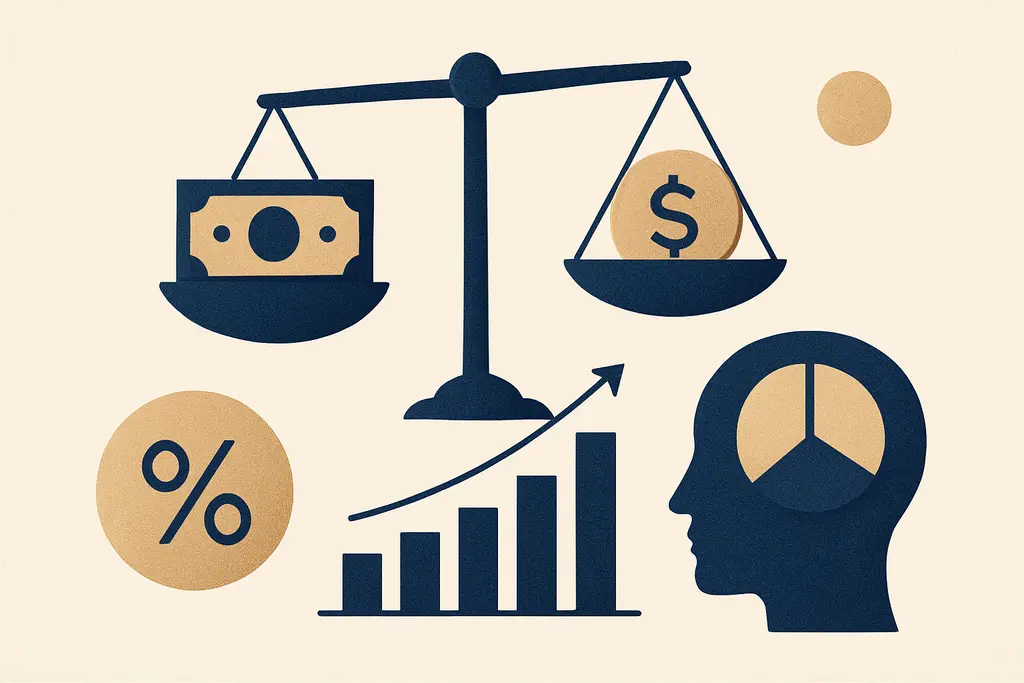
Mental accounting is the tendency to assign different values and rules to the same money depending on its label or source. In workplaces that means regular paychecks get one mental category (necessities, steady living) while bonuses, commissions or one‑time awards go into another (treats, discretionary spending). The result: identical dollars behave differently in decisions and emotions.
This matters because compensation designers, managers and employees will draw different practical conclusions from the same compensation package — from how someone reacts to a raise to whether a bonus fuels longer‑term engagement or a one‑off splurge.
Why it tends to develop
These forces compound. Mental shortcuts reduce cognitive load at the cost of consistency: it’s easier to let a bonus be for fun than to rework a monthly budget. Organizational signals (how rewards are announced, whether bonuses are predictable) keep the categories active.
**Separate accounts:** People mentally partition income streams to simplify choices (salary = essentials; bonus = extras).
**Expectation framing:** Regular pay is expected and planned for; bonuses are framed as surprise or reward and feel less ‘earned’ for budgeting.
**Emotional tagging:** Bonuses carry emotional weight (pride, celebration, relief) that nudges spending toward symbolic or immediate rewards.
**Visibility and timing:** Lump sums are more salient than small, repeated increases, so they attract different decisions.
How it shows up in everyday work
- An employee uses a year‑end bonus for vacation or a large gadget while ignoring opportunities to adjust ongoing expenses.
- Teams celebrate spot awards publicly, reinforcing the idea that those funds are for celebration rather than planning.
- When negotiations focus on bonuses, candidates may accept low base pay but expect to cover living costs from variable pay.
- Managers see a motivated short‑term spike after bonuses but little change in daily habits.
A quick workplace scenario
Jamal receives a performance bonus equal to one month’s salary. He books a trip and buys a new laptop. His monthly bills are still tight because base salary didn’t change. Meanwhile, his manager expects the bonus to improve retention. The team gets the immediate benefit of Jamal’s boosted morale, but the underlying financial stress persists.
This example highlights the separation between one‑off reward effects and ongoing financial reality — a common misalignment between intention and outcome.
What helps in practice
These steps are behavioral and communicative rather than financial prescriptions. They help align expectations: when variable pay is presented and managed as a component of overall compensation, it becomes easier for people to incorporate it into ongoing decisions rather than treating it as disposable income.
Clarify labels: Encourage treating part of variable pay as part of total compensation when discussing role affordability and long‑term plans.
Build predictability: More predictable variable pay (clear targets and frequencies) weakens the ‘surprise’ framing that strengthens mental accounting.
Use commitment devices: Agreeing in advance how to allocate future lump sums reduces emotional, reactive spending.
Reframe conversations: Talk about total rewards instead of isolating bonus lines when reviewing offers or budgets.
Nearby patterns worth separating
Separating these ideas helps: mental accounting is about internal rules; loss aversion is about emotional asymmetry; tokenization is a naming effect that can be created or reduced through communication.
Mental accounting vs. loss aversion: People often confuse them. Loss aversion explains why losing money feels worse than gaining the same amount; mental accounting explains why gains from different sources are treated differently.
Windfall framing vs. true windfall: A lump sum labelled as a "bonus" is psychologically a windfall even if it was budgeted; calling money a windfall changes behavior even when economics don’t.
Token money and fungibility: Some treat bonuses as "fun money," but money is fungible — the behavioral separation is a mental rule, not a practical barrier.
Compensation design issues: Confusion can arise between bonus-heavy offers and low base pay (appears attractive in good months, risky in others). Negotiation outcomes and perceived fairness often hinge on that misunderstanding.
Practical questions worth asking before you react
- Am I treating this pay differently because of how it was presented, not because of my real needs?
- Would my decision change if this money were an extra paycheck instead of a bonus?
- For managers: are we unintentionally signaling that variable pay is for perks only?
Answering these quickly can shift a choice from reactive to intentional.
Related patterns worth keeping apart
- Bonus dependence: Financial vulnerability that comes from assuming variable pay will recur. This is a structural risk, not a cognitive shortcut.
- Reward salience: How visible rewards shape behavior — often exploited by immediate recognition programs but distinct from how employees mentally label income.
Recognizing each pattern clarifies whether the issue is psychology, compensation design, or both.
Related topics worth exploring
These suggestions are picked from nearby themes and article context, not just a flat alphabetical list.
Pay Secrecy Culture
How pay secrecy culture—informally or formally hiding salary information—shapes trust, rumor networks, and fairness perceptions at work, and what managers can do first to address it.
Pay transparency and team morale
How visible pay information shapes team trust, cooperation, and motivation — and practical steps managers can use to reduce harm and build fairer pay practices.
Perks-versus-pay tradeoff
How organizations trade visible perks for pay, why that balance forms, how it shows up at work, and practical steps to make compensation fairer and more effective.
Salary negotiation fear
Fear of asking about pay that leads people to accept offers or stay silent; explains causes, everyday signs, misreads, and practical workplace fixes.
Lifestyle Creep Trap
How small pay and perk increases become permanent workplace expectations, why incentives and social signals fuel them, and practical steps leaders can use to stop rising baseline costs.
Investment paralysis
Investment paralysis is the habit of repeatedly postponing resource commitments at work, causing stalled projects, lost momentum, and missed learning opportunities.