What this pattern really means
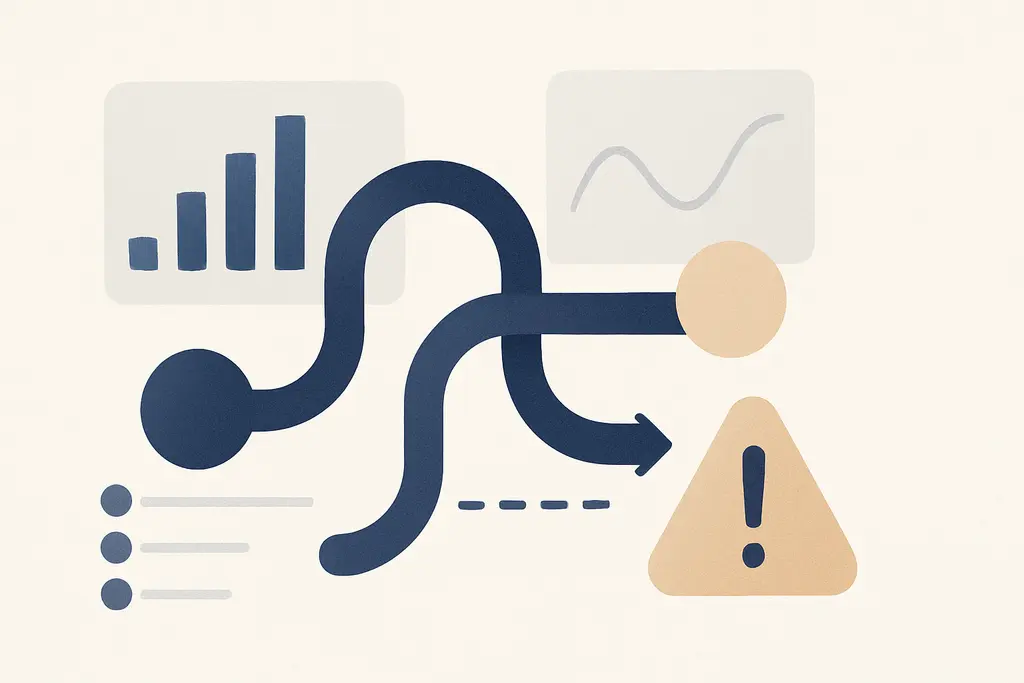
Motivation drift describes a slow, often unnoticed change in why someone does their job. It can be positive (finding new purpose) or negative (losing interest), but the key feature is that the change accumulates over time rather than appearing suddenly.
Teams and managers notice drift when effort, choices or language no longer match the early goals or stated values for a role or project. It is not a single event — it’s a pattern that becomes visible in decisions, meeting focus, and follow-through.
Key characteristics:
Managers who track outcomes and conversations can spot drift early by comparing current actions to earlier commitments and expectations.
Why it tends to develop
These drivers often interact: for example, changing incentives combined with poor feedback accelerates drift because people adapt to what is rewarded and never get corrected for slow deviations.
Changing incentives: rewards or KPIs shift attention to different tasks.
Cognitive overload: when people juggle too much, they default to easier or familiar actions.
Goal displacement: administrative or compliance tasks push aside mission-focused work.
Social norms: team practices and peer behavior normalize new habits.
Feedback gaps: lack of timely feedback lets small deviations persist.
Environmental friction: tools, process complexity or interruptions make original work harder.
Meaning loss: repeated, narrow tasks can erode the sense of purpose.
What it looks like in everyday work
Spotting these patterns early helps leaders decide whether to realign goals, change incentives, or redesign work. Small course corrections are easier than reversing entrenched drift.
Meetings focus more on metrics or firefighting than on original strategy.
Task lists grow with low-value items while core priorities get postponed.
Quality standards start to vary between people or over time.
Language changes: mission words disappear from status updates and reports.
Shortcut behaviors spread (e.g., skipping steps, copying past work) and become normalized.
People cite “lack of time” or “new priorities” as routine explanations.
Role creep: people take on tasks outside the intended scope and stop doing core work.
Uneven engagement: some team members remain motivated while others check out.
A quick workplace scenario (4–6 lines, concrete situation)
A product team started a quarter focused on user retention, but after two months weekly reports emphasized feature count. Developers began prioritizing new features over metric-driven experiments. The manager notices fewer experiment designs in planning and schedules a retro to reclarify the retention objective and adjust sprint priorities.
What usually makes it worse
These triggers often look harmless at first — a one-off deadline or a new report — but they create conditions where small changes become permanent.
**New KPIs:** introducing targets that reward different behaviors.
**Leadership change:** a new manager emphasizes other priorities.
**Tool changes:** a platform update makes original workflows harder.
**Workload spikes:** urgent tasks crowd out planned work.
**Reward shifts:** bonuses or recognition tied to narrow outputs.
**Process drift:** informal practices replace documented procedures.
**Role ambiguity:** unclear responsibilities let tasks drift between people.
What helps in practice
Small, consistent adjustments by leaders and teams are usually enough to nudge motivation back on course without heavy restructuring. The goal is to create routines that make aligned behavior easier than drifting.
Re-clarify purpose: periodically restate the team’s core goals and why they matter.
Realign measures: review KPIs to ensure they support desired behaviors.
Introduce short reviews: add quick checkpoints that compare current work to original aims.
Create feedback loops: encourage peer and manager feedback focused on alignment.
Reduce friction: simplify tools or remove low-value tasks that distract from main work.
Protect priority time: reserve blocks for mission-critical work and defend them from last-minute changes.
Rotate tasks intentionally: give team members exposure to core activities to rebuild connection.
Publicly track commitments: make key priorities visible so drift becomes noticeable.
Reinforce norms: model and praise behaviors that reflect desired motivation.
Adjust incentives: shift recognition to actions that support long-term goals rather than short-term outputs.
Reassess workload distribution: ensure no one is overloaded with low-impact tasks that erode motivation.
Nearby patterns worth separating
Goal drift — similar but usually refers specifically to changing targets; motivation drift is broader and includes changes in why people do the work.
Mission creep — often used for projects expanding scope; motivation drift explains why teams accept the creep.
Engagement — engagement measures current interest and energy, while motivation drift explains how that interest can shift over time.
Incentive misalignment — one cause of drift; this concept focuses on rewards and their unintended effects.
Cognitive overload — a driver of drift; describes the mental limits that push people toward simpler, sometimes misaligned choices.
Role ambiguity — connects to drift by allowing responsibilities to slip; resolving ambiguity reduces drift risk.
Process decay — the gradual loss of formal procedures that sustain motivation; related but emphasizes systems rather than purpose.
Organizational culture — shapes social norms that either accelerate or prevent drift; culture determines which deviations become acceptable.
Habit formation — explains the mechanics of how small behaviors become entrenched, contributing to drift.
When the situation needs extra support
Professional support can help distinguish between normal motivational shifts and deeper organizational issues that need structural change.
- When drift is linked to persistent conflict, burnout signs, or sustained performance drops, consider consulting HR or an organizational development specialist.
- If repeated attempts to realign teams fail and morale or productivity keeps declining, an external workplace consultant can help diagnose systemic causes.
- For individual employees showing significant distress related to work, encourage them to speak with their employee assistance program (EAP) or a qualified occupational health professional.
Related topics worth exploring
These suggestions are picked from nearby themes and article context, not just a flat alphabetical list.
Motivation-Job Fit Gap
When a person's motivation and daily tasks don’t match, performance and retention suffer. Learn how this gap forms, how it shows up, and practical steps to close it.
Motivation Debt
Motivation Debt is the build-up of deferred work and skipped motivational investments at work; it makes routine tasks harder, creates backlogs, and needs process plus cultural fixes.
Motivation hygiene
Motivation hygiene is the daily systems and habits that prevent motivation from eroding at work — the small fixes managers can make to keep teams engaged and productive.
Anticipatory Motivation
How expectations about future events drive present effort at work — how it shows up, why it develops, how leaders can spot and reshape it for better outcomes.
Velocity Motivation
Velocity Motivation describes the drive to favor quick, visible progress over slower strategic work—how it forms, how leaders misread it, and practical steps to balance speed and impact.
Motivation Alignment Gap
The Motivation Alignment Gap occurs when employee actions and organizational objectives diverge; spot it through misdirected effort and fix it by aligning signals, incentives, and processes.