What it really means
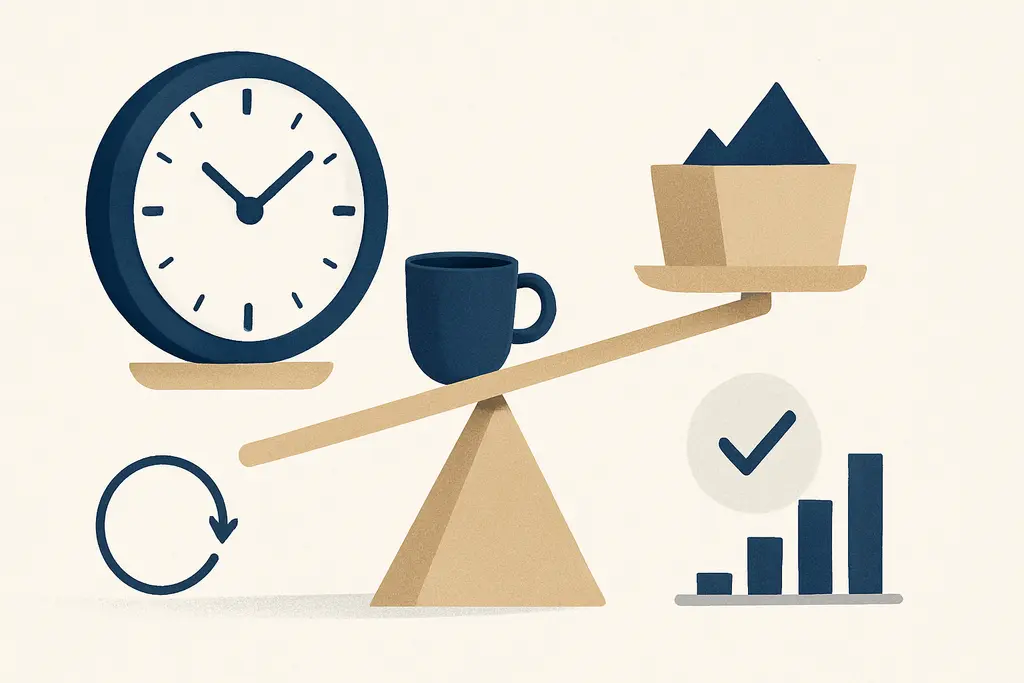
A motivation ritual is a consistent cue–action sequence that precedes a deliberate, time-limited block of focused work. The ritual's goal is not magic; it is about creating a predictable trigger and a context that makes it easier to enter concentrated effort for a defined sprint (often 25–90 minutes).
Rituals differ from general routines because they carry an intentional framing: they signal "now we do focused work," not simply "this is morning." That framing changes how attention and effort get allocated during the sprint.
Underlying drivers
These drivers combine: a low-cost cue plus an immediate payoff makes a pattern stick. Over time the brain learns that the ritual predicts high productivity, so the ritual itself becomes motivating.
**Cognitive economy:** People adopt rituals to reduce early-morning decisions when willpower or executive function is lower.
**Reward feedback:** Quick wins at the end of a sprint (cleared inbox items, a progress note) reinforce the ritual.
**Environmental cues:** A quiet desk, a closed laptop lid, or a specific playlist becomes part of the signal chain.
**Social modeling:** Colleagues or managers who start with visible sprints make the behavior normal.
How it shows up in everyday work
- People block 60 minutes on their calendars labeled "Deep Sprint" and start with a five-minute checklist.
- An employee always makes a specific drink and uses the first sip to scan three priority tasks before working.
- Teams begin daily pairing sessions with a shared 10-minute kickoff where everyone states a single sprint goal.
- Some workers silence notifications, put on headphones with a familiar playlist, and physically signal the start by setting a timer.
These appearances vary by workplace culture: in remote teams a Slack status or a shared timer can be the ritual; in offices, a walk to a nearby quiet room might be the signal. The visible elements matter because they reduce ambiguity about when the sprint has begun.
Practical responses
What undermines rituals:
Start with one low-effort cue and a clear, short sprint goal. Small wins early in the day build momentum for later work.
Pick a single, repeatable cue (calendar block, ritual beverage, five-second stretch).
Timebox the sprint and use a modest timer (25–60 minutes) to create a predictable end.
Make the first task small and meaningful so the sprint produces an immediate win.
Reduce friction: close unnecessary tabs, mute unrelated apps, place necessary documents on the desktop.
Test social commitment: pair with a buddy or use a visible status update to increase follow-through.
Changing cues frequently so the brain never associates them with focus.
Expecting a ritual to carry a sprint without designing the task structure (no clear goal).
Overloading the ritual with too many steps; complexity reduces consistency.
Often confused with
Many people conflate motivation rituals with related ideas; separating them clarifies how to design and modify behavior.
These near-confusions matter because mislabeling leads to wrong interventions: treating a failed ritual as lack of discipline (punitive) rather than a cue design problem (fixable).
Flow vs ritual: Flow is a deep absorption state that can emerge during a sprint; a ritual is just the entry mechanism. Rituals increase the chance of flow but do not guarantee it.
Habit vs ritual: A habit runs without deliberate intention; a ritual is usually performed purposefully to initiate focus.
Pomodoro and timeboxing: These are formal techniques (25/5 cycles, fixed blocks). Rituals are compatible with them but are broader—rituals provide the mindset cue, while Pomodoro provides the cadence.
A workplace example and an edge case
A quick workplace scenario
Lina, a product designer, noticed mornings dragged because she faced many small decisions. She introduced a two-minute ritual: make tea, open a single design file, and write the sprint goal in a sticky note. The visible sticky note and the smell of tea acted as a consistent cue. She used 45-minute sprints and recorded one achievement per sprint. After two weeks she had noticeably fewer task-switches.
Edge case: In a noisy open-plan office, physical cues (like headphones) may not be effective because social interruptions are frequent. A remote worker may rely more on status indicators or shared timers. Neurodivergent employees may need rituals with clearer structure or sensory accommodations—what works for one person can be distracting or insufficient for another.
Questions worth asking before you change a ritual:
- What exact cue starts the sprint, and how repeatable is it?
- What immediate payoff does the sprint deliver (task progress, feedback)?
- Which environmental interruptions are most likely to break the ritual?
Answering those keeps changes targeted and measurable.
Practical red flags and a short checklist for adaptation
- Red flags: rituals that require high effort, rituals that are never completed, and rituals that create a false sense of progress without real outcomes.
Quick adaptation checklist:
- Try a single, minimal cue for one week.
- Use a timer and one concrete goal per sprint.
- Track completion (not just start) for five workdays and iterate.
Successful morning motivation rituals for work sprints are small design experiments: choose a cue, pair it with a short, clear sprint, observe results, and tweak. The employee advantage is that these adjustments are low-cost and can be tailored to personal tempo and workplace constraints.
Related topics worth exploring
These suggestions are picked from nearby themes and article context, not just a flat alphabetical list.
Motivation-Job Fit Gap
When a person's motivation and daily tasks don’t match, performance and retention suffer. Learn how this gap forms, how it shows up, and practical steps to close it.
Motivation Debt
Motivation Debt is the build-up of deferred work and skipped motivational investments at work; it makes routine tasks harder, creates backlogs, and needs process plus cultural fixes.
Motivation hygiene
Motivation hygiene is the daily systems and habits that prevent motivation from eroding at work — the small fixes managers can make to keep teams engaged and productive.
Anticipatory Motivation
How expectations about future events drive present effort at work — how it shows up, why it develops, how leaders can spot and reshape it for better outcomes.
Velocity Motivation
Velocity Motivation describes the drive to favor quick, visible progress over slower strategic work—how it forms, how leaders misread it, and practical steps to balance speed and impact.
Motivation Alignment Gap
The Motivation Alignment Gap occurs when employee actions and organizational objectives diverge; spot it through misdirected effort and fix it by aligning signals, incentives, and processes.