Working definition
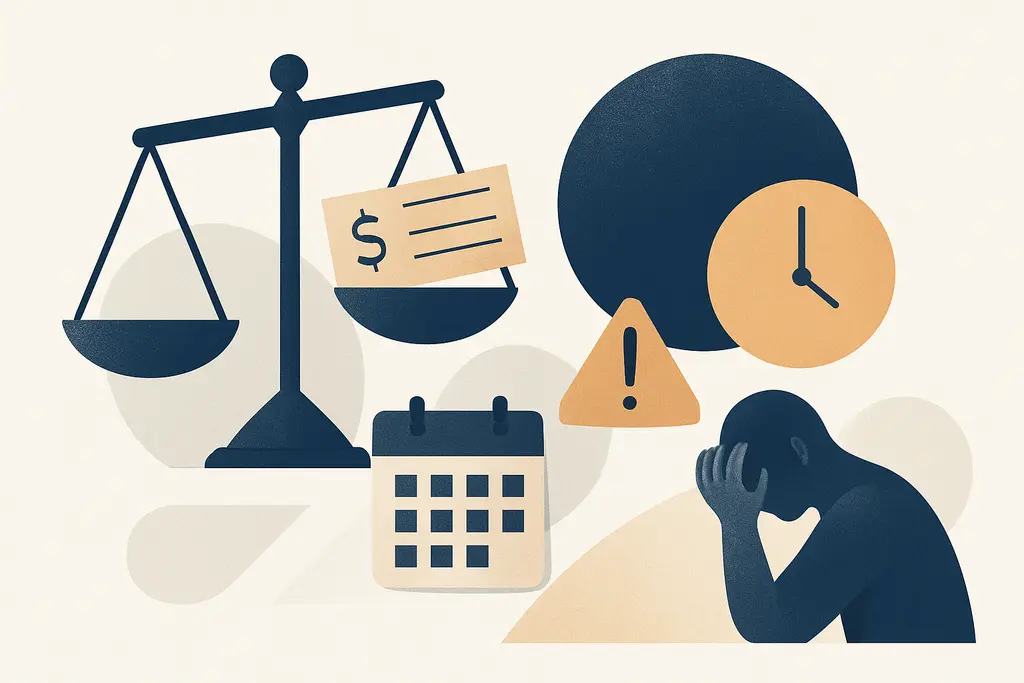
Paycheck-to-paycheck anxiety is the stress or worry tied to not having a financial buffer between paychecks. It is focused on short-term cash flow: the fear that an unexpected bill or a small scheduling change will create immediate hardship.
In a workplace context it often appears as practical behavior changes—requests for schedule tweaks, sudden absenteeism, or frequent questions about pay timing—rather than long-term financial planning issues. It is distinct from chronic financial hardship in that it centers on the immediate gap between income and expenses.
This pattern varies by employee and role. Some people experience occasional spikes during holidays or after a missed shift; others show a steady pattern across many pay cycles. It does not require labeling or clinical language to be useful for managers and team leads.
Key characteristics:
Recognizing these characteristics helps supervisors design operational fixes and supportive conversations that reduce disruption and improve retention.
How the pattern gets reinforced
These drivers combine cognitive, social, and environmental forces: the workplace shapes income predictability and also the social norms around asking for help.
**Unpredictable schedules:** irregular shift patterns or variable hours make income hard to forecast
**Timing gaps:** pay-date mismatches with regular bills create periodic crunches
**Low or stagnant wages:** when earnings barely cover fixed costs, small shocks become urgent
**High fixed expenses:** rent, childcare or loan payments consume most take-home pay
**Scarcity-focused thinking:** cognitive load from juggling immediate needs reduces planning bandwidth
**Limited access to benefits:** lack of paid leave, emergency pay options or predictable overtime amplifies stress
**Economic environment:** inflation, rising living costs, and local market conditions increase sensitivity to pay timing
Operational signs
These signs are practical indicators for managers to investigate root causes rather than to make assumptions about motivation.
Increased requests for shift trades or early clock-outs around certain dates
Frequent, urgent conversations with managers about payroll timing or advances
Higher rates of short-notice absenteeism the week before paydays
Reduced engagement in long-term projects that don’t improve immediate cash flow
Hesitance to take unpaid training or voluntary assignments that shift pay timing
Repeated performance dips tied to recurring personal stressors (rent due, bills arriving)
Employees taking on extra shifts or overtime consistently to cover shortfalls
Reluctance to use benefits that temporarily reduce take-home pay (e.g., voluntary deductions)
Friction in one-on-one meetings when financial concerns surface unexpectedly
Informal pay-related rumors or comparison conversations among team members
A quick workplace scenario (4–6 lines, concrete situation)
A store supervisor notices that one cashier repeatedly swaps shifts the week before payday and asks to borrow tips. The cashier’s punctuality slips on those days. The supervisor checks payroll timing, confirms no errors, and offers a predictable shift schedule plus a brief referral to the company hardship policy.
Pressure points
These triggers often create short windows of heightened concern that ripple through team attendance and focus.
Payroll processing delays or errors
Announcement of a payroll policy change (frequency or date)
Loss of expected overtime or bonus income
Sudden personal expense (unexpected medical bill, car repair) that coincides with a pay gap
Seasonal dips in hours for hourly workers
Company restructuring or rumors about layoffs
End-of-month billing cycles that don’t align with pay date
New benefit enrollments that alter net pay unexpectedly
Moves that actually help
Implementing a mix of predictable systems and compassionate handling reduces interruptions and improves trust. Small operational changes often produce outsized benefits for team stability.
Standardize and communicate pay schedules clearly and well in advance
Reduce payroll errors by improving payroll processes and confirming changes promptly
Offer predictable scheduling where possible (set shifts, consistent hours)
Provide clear information about company hardship supports (advances, grants, EAP) and how to request them
Train managers to handle pay-related requests with dignity and without stigma
Create small operational buffers (float shifts, cross-trained staff) to cover sudden absences
Publish a simple checklist for payroll-related questions so employees know where to go
Make timing of bonuses, commissions, or irregular pay items transparent and predictable
Coordinate benefits enrollment periods to avoid sudden changes in net pay without explanation
Encourage managers to document recurring patterns so systemic fixes can be proposed
Share anonymized aggregate data (e.g., frequent advance requests) with HR to design policy fixes
Related, but not the same
Financial insecurity — broader, chronic lack of resources; paycheck-to-paycheck anxiety is a specific, time-bound expression focused on short-term cash flow.
Scarcity mindset — cognitive narrowing under resource pressure; this explains some decision patterns but is a broader psychological mechanism.
Presenteeism — attending work while impaired; paycheck-to-paycheck anxiety can cause presenteeism when employees avoid taking needed time off for fear of lost pay.
Job insecurity — fear of job loss; this can coexist with paycheck anxiety but is about employment continuity rather than immediate cash gaps.
Compensation transparency — sharing pay policies; increased transparency can reduce anxiety by removing uncertainty about timing and criteria.
Burnout — prolonged occupational strain; paycheck stress can contribute to exhaustion but is a distinct driver tied to finances.
Employee assistance programs (EAPs) — workplace resource offering confidential support; they can help connect employees with appropriate professionals without changing payroll systems.
Shift volatility — operational unpredictability in scheduling; this is a practical workplace cause that directly links to paycheck-to-paycheck patterns.
When the issue goes beyond a quick fix
- If short-term financial anxiety consistently impairs an employee’s ability to perform core job duties
- If stress about pay leads to frequent crises or repeated safety concerns at work
- If employees request, refer them to HR or the company’s employee assistance program for confidential guidance
- Suggest consulting a qualified professional (mental health clinician or certified financial counselor) when problems persist beyond operational fixes
Related topics worth exploring
These suggestions are picked from nearby themes and article context, not just a flat alphabetical list.
Startup equity anxiety
The workplace stress tied to stock options and ownership: why employees fixate on vesting, valuation, and identity, how it shows up day-to-day, and practical steps to reduce it.
401(k) choice anxiety
How stress over 401(k) choices shows up at work, why employees freeze or defer, and practical workplace changes that reduce confusion and avoidance.
Salary negotiation fear
Fear of asking about pay that leads people to accept offers or stay silent; explains causes, everyday signs, misreads, and practical workplace fixes.
Lifestyle Creep Trap
How small pay and perk increases become permanent workplace expectations, why incentives and social signals fuel them, and practical steps leaders can use to stop rising baseline costs.
Investment paralysis
Investment paralysis is the habit of repeatedly postponing resource commitments at work, causing stalled projects, lost momentum, and missed learning opportunities.
Frugality guilt
Frugality guilt is feeling ashamed to spend workplace money; it delays purchases, hides needs, and can be reduced by clearer rules, visible budgets, and reframed leadership signals.