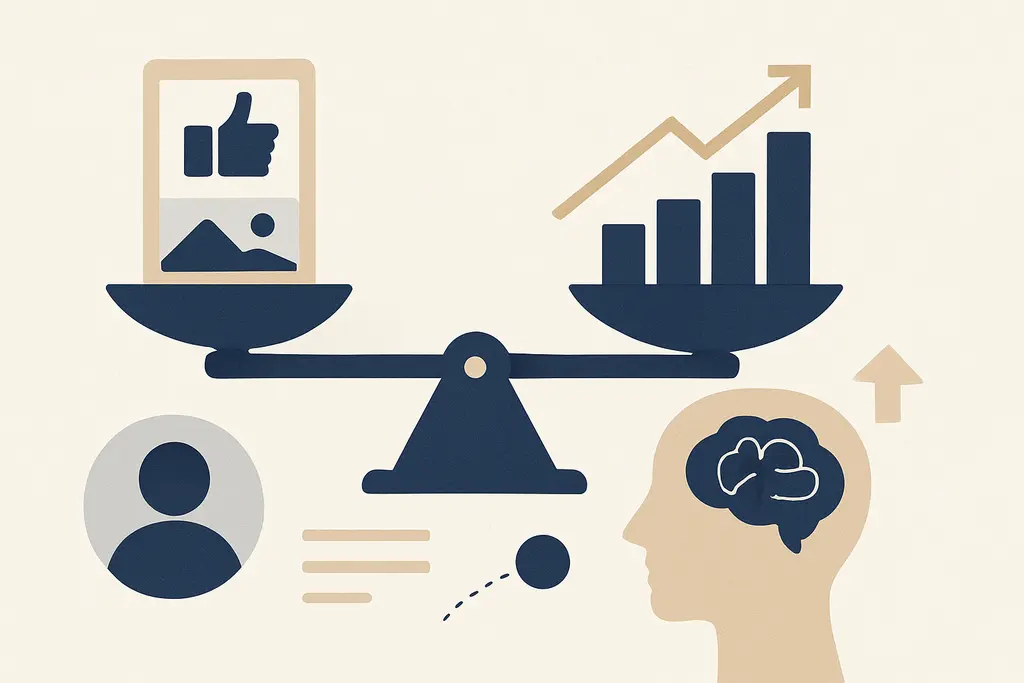
What the pattern looks like in everyday work
- Polished signals dominate: people notice curated posts, flashy wins, or confident updates on internal feeds and external social media and treat them as proxies for overall ability.
- Private doubts rise: when colleagues see others’ highlight reels they may feel inadequate or assume they should be performing at that visible level immediately.
- Manager judgments tilt: leaders may unconsciously reward visibility (posts, presentations) rather than sustained outcomes or learning curves.
These behaviors create a feedback loop: visible success gets more attention, which amplifies perceived competence, while quieter but steady contributors are overlooked. The trap is not that social media or visibility are bad — it's that they become the dominant evidence for capability.
Why this pattern takes hold
- Cognitive ease: humans prefer simple comparisons (who looks better at a glance) to digging into complex performance histories.
- Signal scarcity: objective evidence about day-to-day work is often limited, so teams default to the most visible signals.
- Reward mechanics: recognition systems or social platforms that amplify top posts make those signals appear more common and important than they are.
- Emotional contagion: seeing peers celebrated triggers anxiety and imitation rather than reflection.
These forces sustain the trap because they align attention, incentives, and emotion toward surface indicators. Over time, both employees and managers internalize the expectation that confidence ought to match what is broadcast, which makes honest performance conversations harder.
Often confused with
Common oversimplifications to avoid:
This distinction matters because the interventions differ: psychological support and coaching fit impostor feelings, while structural changes and measurement adjustments fix comparison-driven distortions.
Impostor syndrome: often conflated because both involve self-doubt, but impostor syndrome is an internal experience of feeling like a fraud despite evidence of competence; the Performance Comparison Trap is an external social process that shifts perceived competence by comparison.
Low motivation or poor skill: managers may mistake quiet, unshared work for disengagement or lack of ability, when the root cause is that the person is demotivated by constant upward comparison.
Treating social posts as proof of superior talent rather than curated moments.
Assuming someone who posts less is hiding problems rather than exercising different communication preferences.
A quick workplace scenario
Julia consistently delivers quality analysis but rarely posts on the company intranet. Marcus, who shares weekly project wins and short videos, becomes the visible star. Peers begin to ask Marcus for advice; a new hire assumes Marcus has faster domain knowledge; Julia’s manager starts assigning fewer high-visibility tasks because there’s a perception Marcus can handle them. Over a year Julia becomes less likely to volunteer for cross-team work and starts underestimating her readiness for promotion.
That scenario shows three common dynamics in a single thread: visibility breeds perceived competence; perceived competence redirects opportunities; redirected opportunities change behavior and capability over time.
Practical steps to reduce the trap
- Calibrate evidence: require multiple sources of performance evidence (peer feedback, code/research quality, delivery history) before treating visibility as competence.
- Normalize process signals: encourage sharing partial progress, problems solved, and learning steps, not just wins.
- Separate recognition channels: design recognition programs that reward consistency, collaboration, and improvement as well as high-visibility achievements.
- Coach visible contributors: remind frequent posters to include context (team contributions, trade-offs) so signals are less misleading.
- Protect quieter contributors: create structured opportunities for less visible staff to present work in low-pressure formats.
These steps shift attention from curated highlights to a fuller picture of ability. Over time the organization will find that decision quality improves when visibility is just one of several legitimate signals.
Questions worth asking before reacting
- What other evidence do we have besides this post or update?
- Is the visible signal representative or an outlier?
- Who benefits from amplified visibility, and who is being left out?
- Are our reward or recognition rules unintentionally favoring showmanship?
Asking these short questions prevents snap decisions that reward appearance over substance and helps preserve fairness in assignments and promotions.
Related patterns worth distinguishing
- Social comparison theory: a broad psychological mechanism that explains why people evaluate themselves against others; it underpins the trap but is not the same as organizational signal distortion.
- Spotlight effect: an overestimation of how much others notice one’s failures or successes; this can make people overshare or under-share, both of which feed the trap.
These patterns overlap with the Performance Comparison Trap and can guide different fixes — awareness training addresses spotlight effects, while measurement redesign addresses social comparison-driven distortions.
Quick checklist for leaders
- Ask for diverse performance data before reallocating tasks.
- Reward transparency about process, not just outcomes.
- Create predictable channels where quieter contributors can surface work.
Using this checklist consistently reduces the chance that social media or internal feed highlights become the dominant basis for judgments.
A brief edge case to watch
High-visibility contributors who consistently underperform on substantive metrics can temporarily skew team morale: their posts may raise expectations, then lead to disappointment when delivery lags. Treat repeated mismatch between visibility and outcomes as a data point requiring performance conversation, not punishment driven by embarrassment.
By recognizing the Performance Comparison Trap and adjusting how leaders and teams gather and weight evidence, organizations can protect confidence, allocate opportunities more fairly, and make better talent decisions.
Related topics worth exploring
These suggestions are picked from nearby themes and article context, not just a flat alphabetical list.
Comparison Spiral
How repeated workplace comparisons erode confidence and participation, what sustains the cycle, and practical manager steps to interrupt it.
Quiet Confidence Building
Quiet confidence building is the gradual, low‑visible growth of workplace competence—how it develops, how to spot it, and practical ways teams and leaders support it.
Confidence scaffolding for new managers
Practical supports and routines that help first-time managers grow steady confidence—how it shows up, why it forms, what helps, and how leaders can scaffold (and remove) it.
Confidence calibration for career decisions
Practical guidance on aligning confidence with real readiness when choosing jobs, promotions, or stretch roles—how it shows up, why it happens, and steps to improve calibration.
Confidence Rebound After Failure: getting back on track
Practical guidance for managers to restore team confidence after failure—signs, causes, common misreads, and concrete early steps to get people back on track.
Recognition Aversion
Recognition aversion is when employees avoid public praise; learn how it shows up, why it develops, how managers misread it, and practical ways to acknowledge contributions without harm.