What this pattern really means
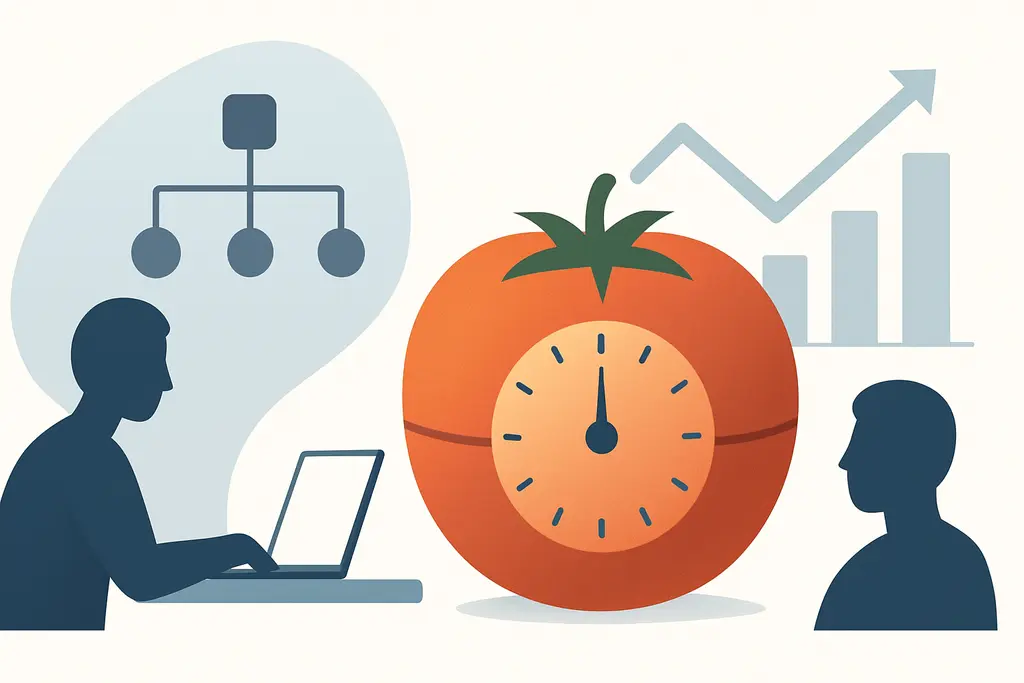
The Pomodoro Technique Psychology is the study of the mental and social effects that arise from using the Pomodoro method: alternating focused work intervals (traditionally 25 minutes) with short breaks (traditionally 5 minutes). It treats the timer, break structure, and rituals as interventions that reshape habits, perceived urgency, and concentration.
Psychologically, the technique draws on principles such as timeboxing (limiting work to fixed intervals), external cues (a timer signaling when to act), and micro-rewards (the relief of a break after effort). These elements influence motivation, reduce procrastination, and can lower the friction of getting started on tasks.
Viewed at team and organizational levels, Pomodoro Technique Psychology also covers social signals (whether a person is "in a pomodoro"), expectations about availability, and how shared routines affect coordination.
Why it tends to develop
Attention span limits: short intervals align with natural difficulty sustaining intense focus.
Procrastination avoidance: an external timer reduces the mental cost of starting a task.
Reward sensitivity: predictable breaks act as immediate, reliable rewards that reinforce work behavior.
Cognitive load management: chunking work into smaller units lowers perceived task complexity.
Environmental interruptions: open offices and notifications make shorter focus windows more practical.
Social norms: team adoption or expectations can make the method more or less effective depending on coordination.
Habit formation: repeated cycles create a cue-routine-reward loop that cements the practice.
What it looks like in everyday work
People use a visible timer or app to mark focus intervals and breaks.
Employees block calendar slots labeled for focus or "Pomodoro" sessions.
Noticeable bursts of productivity followed by planned microbreaks.
Colleagues mark themselves as unavailable during pomodoros, or conversely, feel confused if not informed.
Task lists are broken into many small, time-sized items to fit intervals.
Frequent restarting or resetting of the timer when interrupted or distracted.
Guilt or anxiety when a break is skipped or a session goes over time.
Overly rigid use: refusing to adapt interval length for creative or complex tasks.
Use of pomodoro counts as a basic metric of output (e.g., "I did four pomodoros today").
What usually makes it worse
Tight deadlines that push people to timebox efforts.
Long or ambiguous tasks that feel overwhelming without chunking.
High-interruption environments (open-plan offices, chatty teams).
Persistent email or message notifications breaking concentration.
Morning procrastination and difficulty getting started on priority work.
Team pressure to be always available for quick questions.
Burnout or fatigue that makes long continuous work unsustainable.
Shifts to remote work where individuals need more self-structure.
What helps in practice
Start with a standard pattern (e.g., 25/5) then experiment: try 50/10 or 45/15 for deeper work.
Communicate availability: set status messages, calendar blocks, or desk signs to signal pomodoro windows.
Batch interruptions: create a simple rule (check messages only during breaks) and let colleagues know the cadence.
Break large tasks into clear, time-sized sub-tasks so a pomodoro has a concrete goal.
Use a visible timer to make the structure salient and reduce decision friction about when to stop.
Allow flexible adjustments: extend a pomodoro for a task in flow or combine pomodoros for complex work.
Make breaks restorative: stand, stretch, hydrate, or step outside briefly rather than immediately switching to other screens.
Track outcomes, not just counts: note what got done in each session to learn realistic pacing.
Set team norms about interruptions and emergency exceptions to avoid mixed signals.
Protect at least one longer uninterrupted block per day for creative/deep tasks that don’t suit short sprints.
If guilt arises over breaks, reframe them as planned recovery that improves overall focus and quality.
Use ambient sound or noise-cancelling tools to reduce environmental distraction during pomodoros.
Nearby patterns worth separating
Timeboxing — Pomodoro is a specific, repeatable form of timeboxing with built-in breaks.
Attention residue — Short intervals reduce carryover attention from previous tasks when switching.
Flow state — Pomodoro can help enter flow, but very short intervals may also interrupt deep flow.
Habit formation — Repeated pomodoro cycles create cue-routine-reward loops that build work habits.
Parkinson's Law — Timeboxing leverages the idea that work expands to fill allotted time.
Microbreaks — Short recovery periods that restore focus and reduce fatigue between sprints.
Decision fatigue — External structure from pomodoros reduces micro-decisions about when to work.
Task chunking — Breaking work into pomodoro-sized pieces aligns with cognitive load limits.
Team norms — Shared Pomodoro use requires social agreements about availability and interruptions.
When the situation needs extra support
- If work-related stress, anxiety, or exhaustion linked to time pressure is persistent and significantly reduces job performance or daily functioning, consider speaking with a qualified occupational health professional or counselor.
- If patterns of overwork, perfectionism, or avoidance are causing chronic burnout, discuss with a workplace coach, occupational psychologist, or employee assistance program (EAP) representative.
- If sleep, mood, or concentration problems continue despite behavioral changes, consult an appropriate qualified health professional for assessment and guidance.
Related topics worth exploring
These suggestions are picked from nearby themes and article context, not just a flat alphabetical list.
Inbox zero myth
Why aiming for an empty inbox is often symbolic, how it shapes daily work behavior, common confusions, and practical fixes to reduce busywork and distraction.
Notification anxiety
Notification anxiety is the anticipatory stress about pings and messages at work — it fragments focus, shapes habits, and can be reduced by norms, batching, and targeted notification settings.
Deep Work for Managers
How managers create, protect, and scale focused, high-value work time—practical steps, pitfalls, and examples for turning attention into better decisions and fewer interruptions.
Focus residue recovery
How leftover attention from one task slows the next—and practical steps managers and teams can use to clear it, from short buffers to one‑line handoffs.
Decision batching
Decision batching groups similar workplace choices into scheduled sessions; it can boost focus and consistency but also cause delays and bottlenecks if misused.
Visual task queueing
How visible lines of work—sticky notes, Kanban columns, inbox piles—shape focus and coordination at work, why they form, and practical ways to manage them.