What this pattern really means
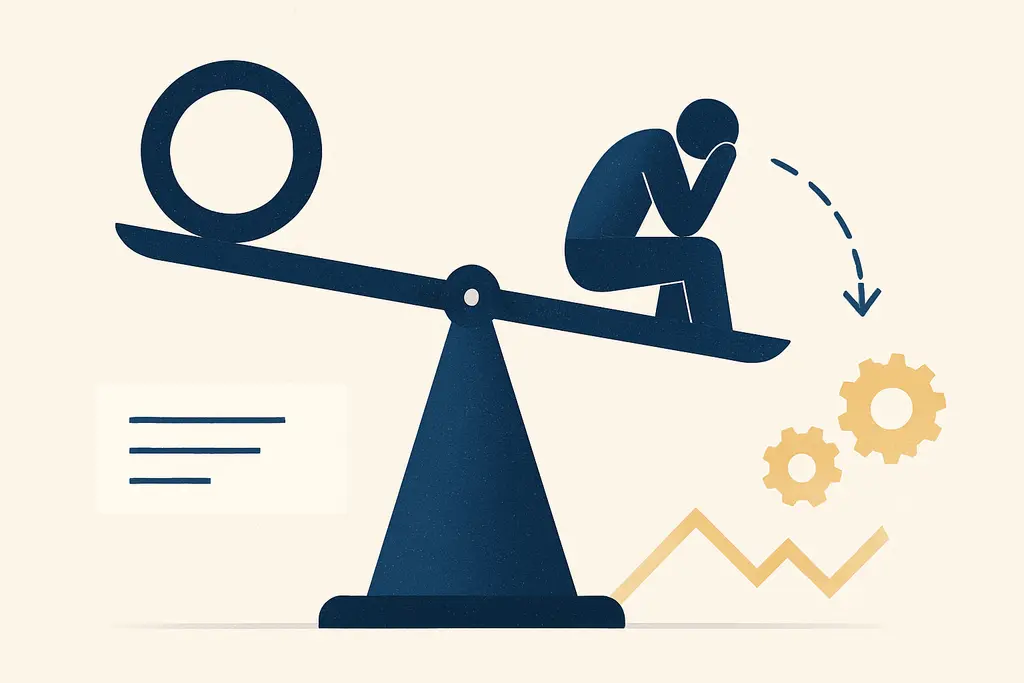
Post-Failure Self-Doubt is more than embarrassment. It’s a short- to medium-term cognitive and behavioural response in which one failure is used as evidence for broader personal incompetence. The pattern mixes thought (I shouldn’t have done that), emotion (shame, anxiety), and behaviour (avoiding similar tasks).
- Immediate reaction: a replay of the event, selective attention to errors, and quick negative self-statements.
- Cognitive pattern: overgeneralisation from a single outcome ("I failed once, so I can't do this") and selective recall of mistakes.
- Behavioural fallout: reduced initiative, excessive checking, passing decisions to others, or quiet withdrawal.
These elements typically interact: negative self-talk increases vigilance, vigilance fuels mistakes or indecision, and new mistakes deepen the doubt. That circularity is why early recognition matters.
Why it develops and what sustains it
There are workplace conditions and personal tendencies that make Post-Failure Self-Doubt more likely and more persistent.
- Attribution shortcuts: blaming oneself for systemic problems rather than analysing root causes.
- Feedback environment: vague or punitive feedback magnifies personal blame.
- High-stakes visibility: public failures feel more identity-threatening than private ones.
- Personal patterns: perfectionism, a scarcity mindset, or prior experiences of harsh criticism.
- Metrics and incentives that reward flawless output over iterative learning.
Sustaining forces are usually social and structural. If the team normalises blame, or if KPIs punish experimentation, the employee keeps interpreting failure as a stable trait rather than a data point. That reinforcement loop prevents psychological distancing and inhibits corrective learning.
How it shows up in everyday work
Signs are often subtle and spread across interactions and outputs.
- Fewer proactive suggestions in meetings.
- Requests for others to validate even small decisions.
- Overly conservative project plans and reluctance to own new tasks.
- Email tone that apologises pre-emptively or hedges recommendations.
A quick workplace scenario
A mid-level product manager misses a release date because of underestimated dependencies. After the event they stop proposing new feature ideas, begin double-checking every minor task with their manager, and volunteer to do less visible work. Team members interpret the quiet as disengagement, while the manager reads it as lower competence rather than a temporary confidence dip. Without a structured debrief, the manager’s avoidance persists across two quarters and the individual's scope shrinks.
This scenario shows how a single operational failure can cascade into role narrowing unless addressed as a specific confidence issue rather than a performance verdict.
Moves that actually help
Short-term and structural actions both matter. Start with low-effort, high-signal steps that restore a sense of control and learning.
Immediate measures lower emotional intensity and re-anchor attention on processes rather than identity. Over weeks, combine them with coaching or role adjustments (temporarily pairing with a peer, clarified responsibilities) to rebuild mastery and reduce avoidance.
Run a factual after-action review focusing on causes and next steps, not character.
Re-establish small, achievable goals to rebuild a track record of success.
Normalize partial failure publicly by sharing other teams' learning stories.
Use experiment framing: treat the next task as a testable hypothesis, not a pass/fail.
Managers: provide specificity in feedback (what changed, what to try) and invite the person to co-design corrective steps.
Related patterns and common misreads
Post-Failure Self-Doubt is easily confused with several nearby phenomena; separating them clarifies the right response.
- Impostor feelings: ongoing chronic belief of fraudulence; Post-Failure Self-Doubt is often situational and triggered by a defined setback.
- Perfectionism: a trait driving unrealistic standards that increases chances of self-doubt after any slip; the perfectionist sets the trap, but self-doubt follows the trap being sprung.
- Learned helplessness: a longer-term sense that actions don’t influence outcomes; self-doubt can be an early stage but learned helplessness implies repeated uncontrollable outcomes.
- Low self-efficacy: a broader lack of confidence across tasks, while post-failure doubt may be task- or domain-specific.
Misreading patterns is common: leaders sometimes label temporary self-doubt as a fixed competence problem and cut responsibility, which removes opportunities for corrective experience. Conversely, treating chronic impostor presentations as a one-off confidence dip can miss deeper support needs. Correct diagnosis—situational, recent setback vs. persistent identity belief—guides whether the team needs a debrief and small wins or a longer-term development plan.
Questions worth asking before reacting
- Was this a one-off outcome or part of a pattern? Who else experienced similar issues?
- Did feedback focus on behaviours and decisions or on the person?
- What small, manageable task could restore a sense of capability?
Answering these steers responses away from blame and toward repair. The goal is to convert a single failure into actionable learning without turning it into self-defining evidence of incompetence.
Related topics worth exploring
These suggestions are picked from nearby themes and article context, not just a flat alphabetical list.
Peer success self-doubt
When a colleague’s win makes someone doubt their own ability, managers can misread retreat as low performance; learn signs, causes, and practical steps to respond.
Self-Attribution Gap
How employees under-credit their own contributions at work, why that widens impostor feelings, and practical manager steps to spot and reduce the gap.
Confidence Rebound After Failure: getting back on track
Practical guidance for managers to restore team confidence after failure—signs, causes, common misreads, and concrete early steps to get people back on track.
Perceived expert bias: when early success inflates self-belief
When early wins make someone seem universally expert, teams overweight confidence over evidence. Learn how it forms, shows up in meetings, and practical fixes for managers.
Self-promotion discomfort: why competent people undersell themselves
Why capable employees downplay achievements at work, how it shows up, why it develops, and practical steps managers and teams can use to capture contributions and reduce career leakage.
Recognition Aversion
Recognition aversion is when employees avoid public praise; learn how it shows up, why it develops, how managers misread it, and practical ways to acknowledge contributions without harm.