What it really means
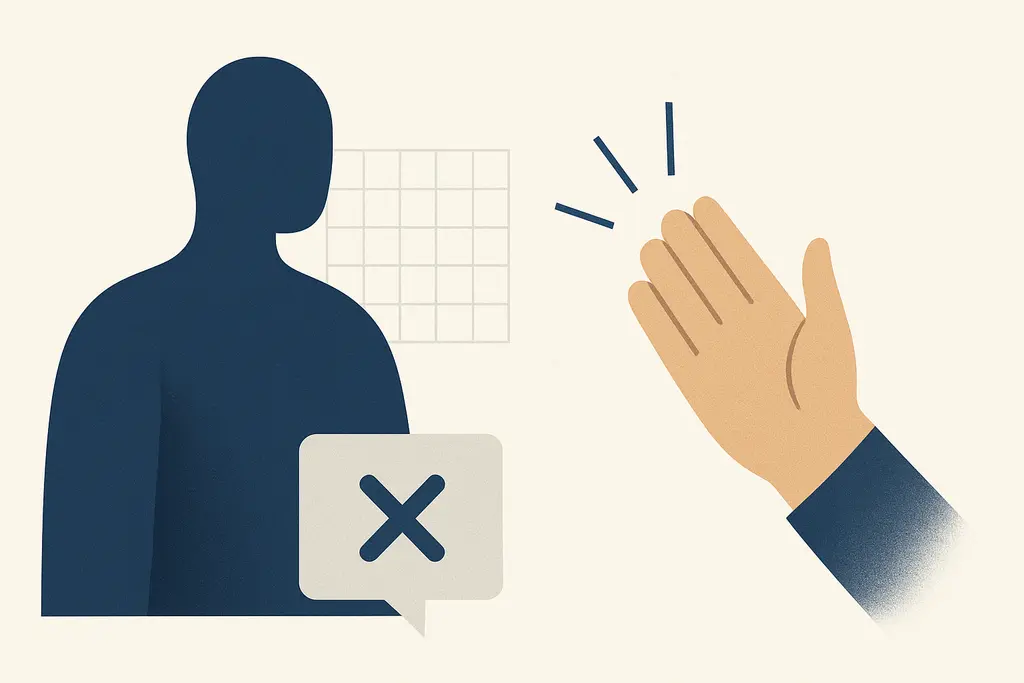
At its simplest, this pattern separates two social acts: praise displayed where others see it, and criticism given one-on-one. The consequences are both interpersonal (how people feel treated) and informational (what others learn about acceptable behavior). When praise is public and criticism private, teams get clear social proof about norms but may miss learning opportunities from failure.
How this pattern forms and keeps going
- Social pressure: public praise gives visible approval that others can imitate or chase.
- Face-saving: managers avoid embarrassing people by moving criticism out of sight.
- Risk aversion: leaders fear that public critique will demoralize high performers or provoke backlash.
- Performance signaling: organizations use public recognition to reward desired outcomes and set examples.
- Time and effort economics: it’s easier to thank a group in a meeting than run structured feedback sessions with everyone.
These forces overlap. Public praise creates a reward loop (others emulate rewarded behaviors), while private criticism preserves individual dignity and reduces immediate conflict. Over time the pattern becomes the default because it balances visible incentives with private control.
How it shows up in everyday work
- A team member is applauded in a town-hall for hitting a milestone; later the manager pulls them aside about missed documentation.
- Slack channels full of kudos for sales wins while customers’ complaints are handled privately by account owners.
- A project review highlights successes publicly, but postmortems and hard lessons are confined to closed meetings.
A quick workplace scenario
In a software company, the release manager announces in the all-hands that the new feature launched ahead of schedule (public praise). Three days later, the product lead privately tells the engineer that the deployment has reliability issues that must be fixed (private criticism). Other engineers hear the public praise and assume the release is stable; the private feedback delays collective learning about causes and mitigation steps.
The scenario shows how the public/private split can slow organizational learning and create mixed signals about risk tolerance.
What helps in practice
When managers intentionally choose visibility levels, the team gains both motivation and learning. Public praise remains motivating but no longer masks problems; private criticism remains humane but doesn’t hide systemic issues from the group.
Create norms for balanced visibility: pair public recognition with transparent accounts of trade-offs where appropriate.
Train managers in framing: use private critique for remediation and public critique for systemic issues addressed as learning opportunities.
Institutionalize structured learning forums (postmortems, retrospectives) that are safe but not secret.
Use calibrated transparency: decide which critiques are instructional and can be shared, and which are personal coaching matters.
Model vulnerability: leaders who admit mistakes publicly reduce the stigma around critique.
Nearby patterns worth separating
Managers frequently misread the pattern by assuming all public praise is insincere or that all private criticism is defensive. The reality is nuanced: visibility choices carry both signal and social cost. Separating intent (protecting someone’s dignity) from impact (hiding important lessons) helps clarify corrective action.
Praise-seeking vs. reward recognition: public praise is sometimes mistaken for people simply wanting attention, when it often signals alignment with organizational goals.
Private feedback vs. secrecy: private criticism is sometimes read as cover-up, even when it’s meant to protect dignity.
Public shaming vs. public accountability: calling out poor practices publicly can be framed as accountability but easily crosses into shaming if not handled constructively.
Feedback avoidance vs. conflict management: reluctance to give public critique can be misread as avoidance, while it may be a deliberate tactic to avoid unproductive conflict.
Questions worth asking before you act
- Will revealing this criticism publicly help the team learn, or mainly embarrass someone?
- Is the praise highlighting a repeatable behavior we want others to copy, or a one-off result?
- Can learning goals be achieved with calibrated transparency (a redacted case study, for example)?
- Who benefits most from public recognition, and who will be harmed if critique becomes public?
Answering these prompts helps leaders balance morale, fairness, and organizational learning in their visibility choices.
Related topics worth exploring
These suggestions are picked from nearby themes and article context, not just a flat alphabetical list.
Feedback timing effects
How the moment feedback is delivered shapes learning, trust, and behavior at work — and what leaders and teams can do to align timing with the purpose of feedback.
Feedback avoidance and its team effects
How teams avoid giving or seeking candid feedback, why that pattern repeats in meetings, and practical steps teams can use to surface issues and reduce harm.
Request Framing
How the wording, context, and implied expectations around a work ask shape responses—and practical ways to reframe requests to reduce friction.
Feedback aversion
Feedback aversion is the avoidance of candid performance conversations at work; it shows up as silence, shallow reviews, and missed learning—practical fixes for leaders.
Tacit norm conflicts
When unspoken workplace rules clash, teamwork stalls. Learn how tacit norm conflicts show up in meetings, why they form, and practical steps teams can use to surface and resolve them.
Message Friction
Message friction is the extra effort communications require—unclear asks, wrong channels, or missing ownership—that slows decisions. Learn signs, causes, and practical fixes for work.