Working definition
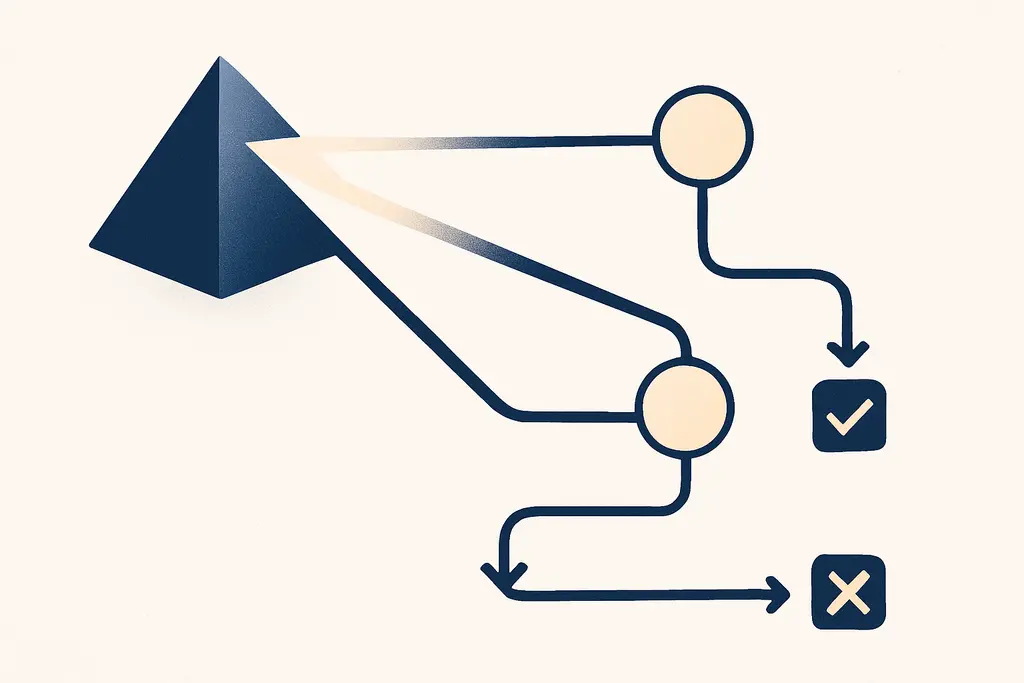
Recency bias in performance reviews is the tendency to focus more on recent behavior or outcomes than on the whole review period. In practice this looks like a supervisor remembering last week's presentation more clearly than months of steady work, or penalizing someone for a late deliverable that followed a year of strong results. It reduces fairness and can produce inaccurate records used for raises, development plans, or role changes.
Key characteristics:
Managers who recognize these characteristics can design review processes that deliberately widen the observation window and rely less on unaided memory.
How the pattern gets reinforced
**Cognitive load:** Working memory is limited, so the most recent items are easiest to recall and use when forming judgments.
**Availability heuristic:** Recent or vivid examples come to mind faster, so they seem more representative.
**Emotion amplification:** Recent stressful or celebratory events leave stronger impressions and skew perception.
**Time pressure:** Tight review schedules push reviewers to rely on the easiest memories—usually recent ones.
**Lack of documentation:** Without notes or a performance log, managers default to recent recollections.
**Organizational signals:** If rewards or attention focus on recent deliverables, those become the reference points.
**Meeting dynamics:** End-of-cycle calibration meetings can emphasize last-quarter performance if earlier periods are not discussed.
Operational signs
Spotting these patterns allows adjustments to ensure evaluations reflect the entire performance window rather than a short slice.
Performance feedback mostly references recent projects or interactions rather than a full-year pattern
End-of-period reviews that differ markedly from mid-year check-ins
Sudden changes in ratings after a high-visibility event (presentation, crisis, client win/loss)
Development plans that ignore earlier strengths or persistent challenges
Discrepancies between written records and spoken review comments
Managers apologizing for "not bringing up earlier" or saying they "just remembered" something
Promotion or bonus decisions tied to one recent success rather than sustained contribution
Employees reacting surprised or defensive because they believed long-term work was stronger
Calibration meetings dominated by recent anecdotes rather than balanced data
Pressure points
Tight timelines for completing reviews (e.g., forced ranking at year-end)
A high-stakes recent event (client issue, product launch, crisis response)
New manager taking over near review time without historical context
Lack of mid-cycle check-ins or progress notes
Performance systems that highlight monthly metrics over cumulative trends
Emotional interactions just before a review (conflict or praise)
One-off errors or successes that are highly visible to leadership
Remote work situations where in-person cues are reduced
Last-minute changes to roles or responsibilities during the review period
Moves that actually help
Keep a performance log: encourage regular notes on milestones, feedback, and outcomes across the review period
Schedule periodic check-ins so feedback is distributed across time, not concentrated at year-end
Use calibrated rating rubrics with clear criteria tied to behaviors and outcomes, reducing reliance on memory
Aggregate data: combine objective metrics, peer feedback, and documented examples from across the cycle
Create a review template that prompts for examples from early, middle, and late periods of the evaluation window
Invite self-assessments that require employees to list accomplishments and challenges throughout the period
Train reviewers on cognitive biases and give concrete strategies to counteract recency bias
Employ calibration meetings where teammates compare notes and surface evidence from different times
Use shared documentation (e.g., performance dashboards, project trackers) managers can consult before reviews
Delay final judgment briefly when a recent event is emotionally salient; allow time to gather broader evidence
Rotate reviewers or include multiple raters to dilute individual memory effects
Make mid-year or quarterly mini-reviews part of the process to normalize distributed evidence gathering
A quick workplace scenario (4–6 lines, concrete situation)
A manager preparing year-end reviews remembers a heated client call from last month and rates an otherwise reliable analyst down for communication. Mid-year notes and project logs reveal the analyst consistently met deadlines and received positive peer feedback. A brief calibration meeting brings those earlier records back into view and the rating is adjusted.
Related, but not the same
Anchoring bias — Anchoring differs because it ties judgments to an initial reference point, while recency bias ties them to the most recent information.
Halo/Horns effect — Halo/Horns uses a single trait to color overall judgment; recency bias uses timing (recent events) rather than trait-based impressions.
Confirmation bias — Confirmation bias involves seeking evidence that fits beliefs; recency bias unintentionally weights recent evidence over older evidence.
Availability heuristic — Availability is a broader memory shortcut; recency bias is a specific instance where the freshest items are most available.
Attribution error — Attribution error explains behavior causes (person vs. situation); recency bias affects which behaviors are noticed and thus can influence attributions.
Stereotyping — Stereotyping applies generalized beliefs across people; recency bias is about temporal weighting of specific events for an individual.
Performance appraisal inflation — Inflation is a systemic upward drift in ratings; recency bias can contribute if recent positive events are overemphasized.
Hindsight bias — Hindsight makes outcomes seem predictable after the fact; recency bias makes recent outcomes seem more diagnostic in the present.
Rating central tendency — Central tendency compresses scores toward the middle; recency bias pulls ratings toward extremes based on recent events.
When the issue goes beyond a quick fix
- If repeated review conflicts are harming team morale or retention, consult HR or an organizational development specialist
- For persistent calibration or bias issues across managers, engage an external consultant or a certified workplace psychologist for assessment and training
- If employees report chronic unfairness affecting performance or career progression, request a formal review of the appraisal process
- Consider mediation or facilitated calibration sessions when individual disagreements about evaluations escalate
Related topics worth exploring
These suggestions are picked from nearby themes and article context, not just a flat alphabetical list.
Recency bias in reviews
Recency bias in reviews is the tendency to overweight the latest events when evaluating performance or products — learn how it shows up at work and practical ways to reduce its impact.
Present bias at work
How present bias at work leads teams to choose quick gains over long-term value — why it happens, how managers misread it, and practical fixes to nudge better decisions.
Sunk Opportunity Bias
How past missed chances (not just spent costs) distort team decisions—why it happens in meetings, real examples, and practical steps to reduce reactive fixes and overcompensation.
Default policy bias
How workplace defaults become sticky: why existing policies persist, how to spot when a default is blocking better choices, and practical steps managers can use to test and change them.
Outcome Bias in Business Decisions
Outcome bias is judging decisions by results instead of the quality of the decision process — learn how it shows up at work and practical steps managers can use to reduce it.
Value-fit bias in hiring
How workplace teams favor candidates who 'share our values'—why that bias forms, how it shows up in interviews, and practical steps managers can use to reduce it.