What it really means
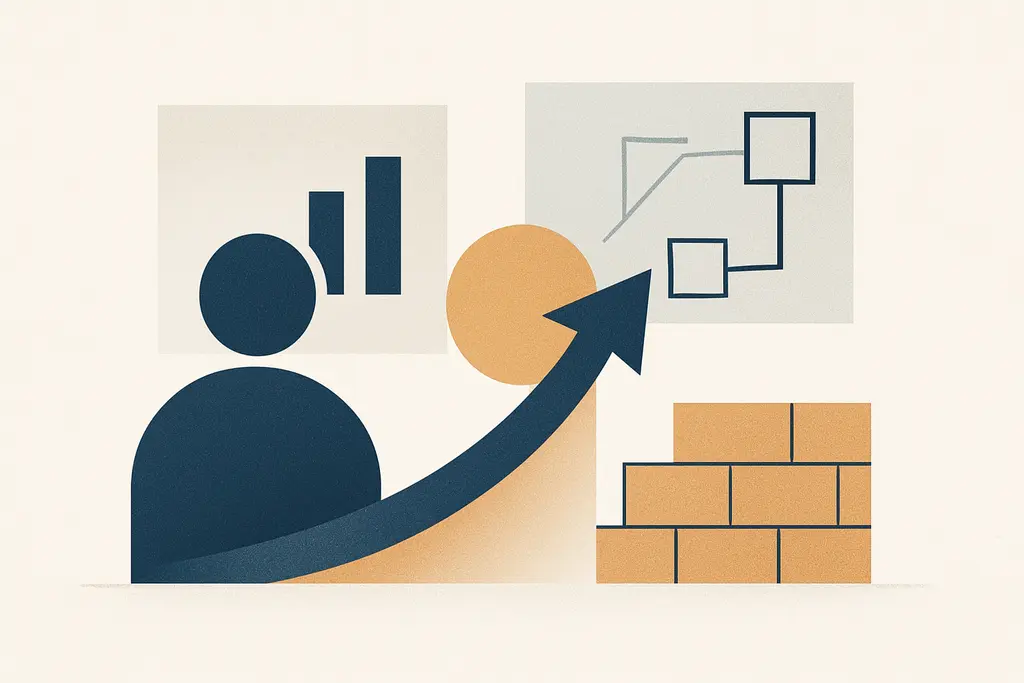
This pattern is not a single event but a gradual relocation of skills, identity and expectations. An engineer who increasingly does customer support, a marketer who becomes the go-to project manager, or a senior contributor who unofficially mentors more than they deliver are all examples of drift. They keep doing valuable work — which hides the fact that their career path is changing.
How it usually develops and what sustains it
- Social pressure: colleagues and leaders ask the person to fill a gap and it becomes normalized.
- Low visibility rewards: the drifted tasks are appreciated informally but not recognized in goals or promotion criteria.
- Role ambiguity: unclear job boundaries make it easy to add or shift tasks.
- Immediate business needs: urgent problems create temporary fixes that become permanent.
- Personal preferences: the employee prefers helping others or avoiding stretch assignments.
These factors interact: informal praise makes the additional work feel worthwhile, ambiguity removes obstacles to taking it on, and urgent needs lock the change in place. Over time, the drift solidifies into expectations that are hard to reverse without explicit intervention.
Observable signals
On the surface these look like dependable behaviour. Under the surface they produce opportunity costs: the individual loses time for skill growth, and the organisation loses clarity about who owns what. Managers often interpret steady output as stability rather than drift.
Someone consistently volunteering for cross-team fixes instead of advancing their core projects.
Performance reviews that praise helpfulness and reliability but show stagnation on career-development goals.
Job descriptions, KPIs or promotion criteria that no longer match what the person does day to day.
A backlog of strategic work that never advances because the employee is diverted to operational tasks.
A quick workplace example
A quick workplace scenario
Rosa is a product designer whose team repeatedly asks her to prototype ideas, run user interviews, and also prepare weekly client updates. Over two years she becomes the default bridge to customers. Her portfolio shows fewer new design frameworks and more client-facing artifacts. When promotion time comes, her manager praises her stakeholder skills but notes limited advancement in design leadership. Rosa feels loyal to the team and surprised that her role no longer aligns with her career goal of senior design strategy.
This scenario highlights two things: drift can be voluntary and value-adding in the short term, and it can quietly redirect a career away from stated goals.
Where leaders commonly misread or confuse it
- Career plateau — mistaken when productivity looks steady but growth has slowed.
- Role creep — similar, but role creep is often task-level and seen as a coordination problem; drift is about trajectory and identity.
- Burnout or disengagement — drift can coexist with engagement; people may enjoy the new tasks even as they lose growth momentum.
- Poor performance — drift masquerades as reliable performance because the person is effective in their diverted duties.
Managers sometimes conflate high reliability with the right long-term placement. The crucial difference: drift indicates a structural change in the employee's career path, not just a short-term assignment issue. Clarifying that distinction prevents misdiagnosing someone as unambitious or underperforming.
Practical responses
Start with a candid one-on-one. Use the questions above to map current work to future goals, and document the outcome as an action plan. In many cases a 3–6 month trial of rebalanced responsibilities followed by a review is enough to test whether drift was temporary or entrenched.
Managers should treat stealth career drift as a signal, not a reprimand: it points to gaps in role design, resourcing or communication. Addressing it tends to improve retention, clarity of delivery and fair recognition for the person and the team.
Clarify boundaries: review role descriptions and adjust expectations with the employee.
Re-align incentives: ensure goals and promotions reflect strategic skills, not just helpfulness.
Reclaim stretched time: protect blocks for the employee's core development work.
Provide a swap or backfill: make it possible to hand off recurring ad-hoc duties.
Ask focused questions: what do you want to be doing in 12–24 months? Which tasks feel like development vs. maintenance?
Related topics worth exploring
These suggestions are picked from nearby themes and article context, not just a flat alphabetical list.
Career pivot guilt
How career pivot guilt—feeling obliged or morally weighed down by changing roles—shows up at work, why it persists, common misreads, and practical steps managers and employees can use.
Networking ROI for career moves
How to read and manage the return on time spent networking for career moves: what it produces, why it persists, everyday signs, common misreads, and practical checks for fairer hiring and promotion.
Late-career skill anxiety
Worry experienced employees feel about their skills becoming outdated, how it shows in behavior, and practical, low-risk steps leaders can take to reduce it.
Career Plateau Perception
How employees come to feel their career has stalled, what sustains that belief, everyday signs managers should watch for, and practical steps to restore forward momentum.
Explaining career gaps in interviews
Practical guidance on how candidates should frame career gaps in interviews and how hiring teams can interpret them accurately to focus on skills, evidence, and fit.
Is a lateral move good for my career?
A practical decision brief for employees: how to judge whether a lateral move will advance skills, visibility, and long-term career options, with questions and an example.