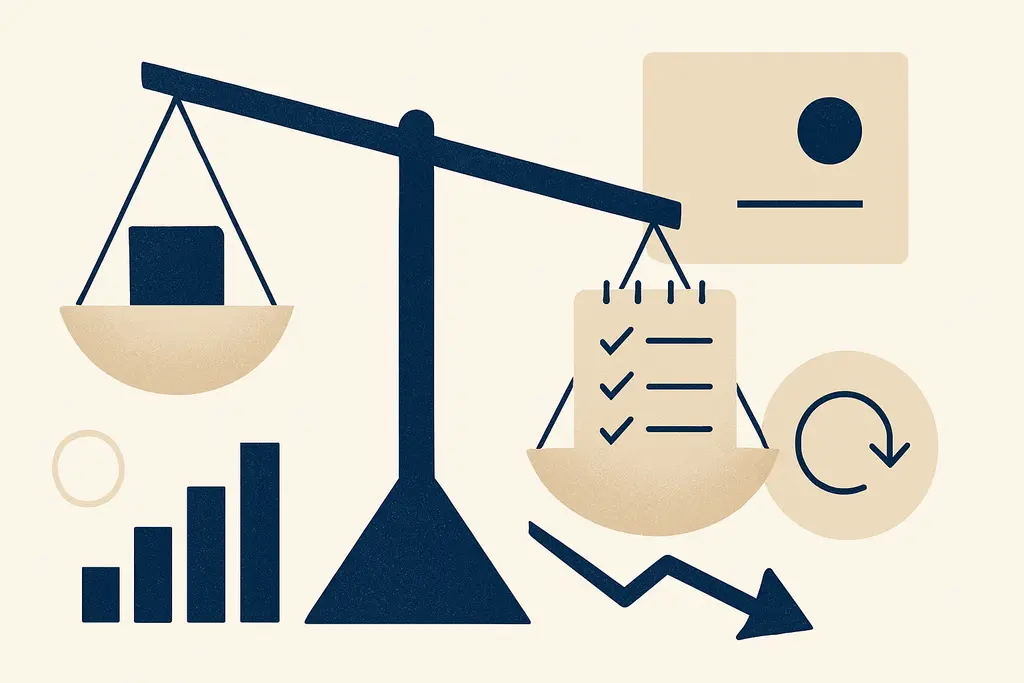
What this pattern looks like in practice
- Procrastination turning structural: deadlines are met with rushed outputs, and the team begins to expect low-quality work.
- Escalating friction: reminders or interventions create pushback, which increases resistance to the task over time.
- Task identity shift: certain tasks become “the ones nobody wants,” so they are deferred or dumped onto a few people.
These signs are not one-off laziness; they reflect a repeated dynamic where avoidance behavior and organizational responses feed each other. Observing where the loop starts (individual discomfort, unclear scope, or poor incentives) helps target the interruption point.
Why the loop develops and stays active
Several mutually reinforcing forces keep the loop alive:
- Ambiguity and unclear expectations create anxiety about how to start.
- Negative feedback or public correction increases emotional cost of attempting the task.
- Overloaded schedules make avoidance an apparently rational short-term choice.
- Reward structures emphasize visible outputs, so preparatory or unpleasant work is undervalued.
Because each completed avoidance episode reduces short-term pain (fewer decisions, temporary relief), the behavior is reinforced. Over time, the organizational memory stores the pattern: people learn that avoiding yields predictable short-term relief and delayed consequences.
How it shows up day-to-day (concrete examples)
- Late meeting prep: recurring late agendas or slides submitted hours before calls.
- Data gaps: recurring missing inputs in reports, forcing others to stop or redo work.
- Ownership shirking: tasks with unclear ownership pass between people each sprint.
Managers often see the symptom—missed deadlines or frequent handoffs—without noticing the cycle behind it. The behavior is different from one-off overload: it repeats in the same contexts and with similar emotional responses (relief followed by dread).
A quick workplace scenario
A product team repeatedly delays user-research tasks. Initially the PM asks individuals to do interviews; they delay because facilitation feels awkward and uncertain. When interviews finally happen, findings are shallow. The PM expresses frustration publicly, which makes people less likely to volunteer next time. The team starts skipping research entirely and relies on assumptions, leading to poor product choices and higher costs later.
What commonly makes the loop worse
- Lack of clarity about who is responsible or how to start.
- Public shaming, punitive follow-ups, or micromanagement that raise emotional stakes.
- Incentives that reward visible outputs over foundational tasks (e.g., demos over documentation).
- Infrequent review cycles that allow small avoidance behaviors to compound.
When these conditions exist, avoidance becomes an adaptive short-term strategy. Managers who respond with louder pressure often unintentionally strengthen the loop rather than dissolve it.
Practical steps that reduce task aversion
- Break tasks into tiny, visible first steps and assign a single immediate owner. Small wins reduce activation energy.
- Reframe and normalize early failures as learning: remove punitive consequences for low-stakes attempts.
- Create ritualized, low-friction starts (e.g., 15-minute co-working sessions) to reduce the social cost of beginning.
- Adjust recognition and reward systems so preparatory work is visible and valued.
- Use time-boxed experiments: mandate a short trial rather than open-ended ownership.
Start with structure and psychological safety: when people know exactly what to do next and feel that early attempts won't be punished, avoidance drops rapidly. Follow with systemic changes to incentives so those initial fixes persist.
Nearby patterns worth separating
Managers frequently mistake repeated avoidance for poor attitude or laziness, or conversely label it as burnout without checking structural triggers. Separating these helps choose interventions: skills training, workload adjustment, and loop disruption are different responses.
Task aversion loop vs. simple procrastination: procrastination can be situational; the loop is a repeating, system-level pattern reinforced by responses and context.
Task aversion loop vs. burnout or incapacity: burnout involves depletion and may need workload or wellbeing changes; incapacity implies missing skills. The loop can coexist with either but is distinguished by its feedback-driven persistence.
Questions worth asking before reacting
- Is this behavior happening repeatedly in the same context or with the same task type?
- What immediate relief does avoidance provide to the person or team?
- How have past interventions affected willingness to try the task again?
- Which small, low-risk first step could lower the activation cost?
Answering these focuses action on breaking the reinforcement rather than applying more pressure. A short experiment—clear owner, 30-minute co-working start, and neutral feedback—often reveals whether the problem is a loop or a one-time issue.
Related topics worth exploring
These suggestions are picked from nearby themes and article context, not just a flat alphabetical list.
Time scarcity mindset
A practical guide to the time scarcity mindset at work: how habitual urgency forms, how it looks day-to-day, common misreads, and concrete steps to reduce chronic hurry.
Motivation-Job Fit Gap
When a person's motivation and daily tasks don’t match, performance and retention suffer. Learn how this gap forms, how it shows up, and practical steps to close it.
Grit Fatigue
Grit fatigue is when sustained effort keeps rising but returns fall—people work harder yet adapt less. Learn to spot it, what causes it, and how leaders can recalibrate teams.
Reward crowding
When external rewards reduce employees’ intrinsic motivation and broaden narrow, metric-driven behavior—how it shows up, why it happens, and practical fixes for leaders.
Motivation Debt
Motivation Debt is the build-up of deferred work and skipped motivational investments at work; it makes routine tasks harder, creates backlogs, and needs process plus cultural fixes.
OKR overload
OKR overload is when objectives and key results multiply or become maintenance-heavy, sapping focus; this guide shows how it develops, appears day-to-day, and how leaders can prune and restore focus.