What this pattern really means
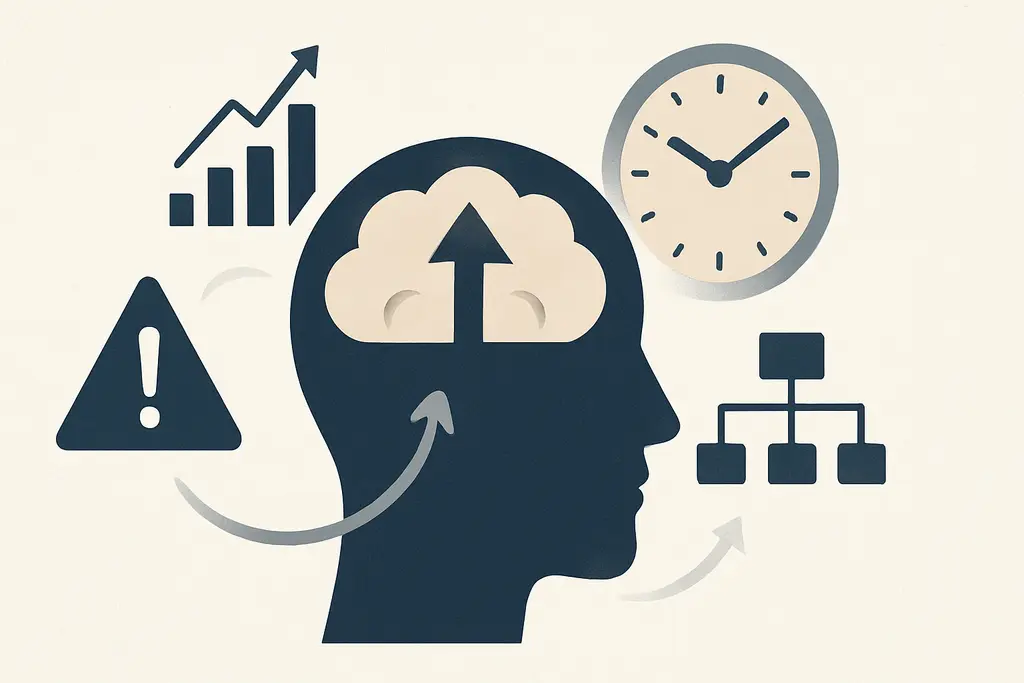
Trigger stacking describes how separate triggers—each tolerable on its own—accumulate until a person’s ability to respond calmly is overwhelmed. The pattern is about accumulation and interaction: timing, sequence, and context matter more than any single event.
This is not a labeling of a person as "fragile"; it’s a process managers can observe and influence. When you map triggers and timings you can design practical buffers to prevent stacks from forming.
Why it tends to develop
**Cognitive overload:** Reduced working memory and attention make small problems feel larger. Managers can spot this after high-intensity sprints.
**Decision fatigue:** Repeated choices over a day lower tolerance for frustration and increase impulsive responses.
**Social pressure:** Team norms, criticism, or perceived judgement raise sensitivity to new triggers.
**Unclear priorities:** When priorities shift frequently, each change adds to mental load and frustration.
**Environmental strain:** Poor ergonomics, noisy spaces, or constant interruptions compound stress.
**Sleep and recovery gaps:** Low recovery between workdays reduces baseline resilience.
**Temporal clustering:** Multiple deadlines or meetings scheduled close together create stacking opportunities.
**Cumulative small conflicts:** Unresolved micro-conflicts build a backlog that primes someone to overreact.
What it looks like in everyday work
Quick escalation from calm to anger in meetings or message threads
Withdrawn behavior after a minor piece of feedback
Higher frequency of heated email/Slack replies late in the day
Drop in task accuracy or missed steps on routine work
Noticeable change in tone or body language during back-to-back meetings
Increased calls to escalate issues that previously would be handled locally
More frequent requests for deadline extensions shortly before due dates
Short-tempered responses to routine IT glitches or administrative tasks
Repeated absences or late starts following particularly intense weeks
Team morale dips after one member experiences a visible stack
What usually makes it worse
Overlapping deadlines or calendar congestion
Ambiguous instructions or shifting priorities from leadership
Critical feedback delivered without buffering or context
High meeting load with little time for focused work
Technical failures during presentations or demos
Last-minute scope changes to projects
Ongoing interpersonal tension or micro-conflicts in the team
Personal stressors (caregiving, commute, sleep) interacting with work demands
Sudden increases in workload during resource shortages
Constant interruptions from messages and notifications
What helps in practice
Managers can prioritize a few low-cost changes (calendar buffers, feedback timing, and short pauses) and evaluate their effect quickly. Small, consistent improvements to scheduling and communication often prevent many stacks before they form.
Create visible buffers: stagger deadlines and avoid scheduling multiple high-stakes items back-to-back
Normalize short pauses: build 5–10 minute breaks between meetings for mental reset
Use check-in rituals: quick pre-meeting signals asking if someone is overloaded before decisions
Limit sequential triggers: avoid giving critical feedback immediately after task reassignments
Offer temporary workload adjustments: reassign tasks or extend timelines when stacks are evident
Teach simple de-escalation scripts: short phrases teammates can use to pause a conversation (e.g., “Can we pause and revisit?”)
Encourage boundary-setting: model not answering messages after a certain hour for recovery
Maintain a trigger log: track recurring patterns and timing to redesign workflows
Reduce ambient stressors: quiet rooms, clearer documentation, and fewer context switches
Set norms for digital communication timing to prevent late-day triggering
Run after-action reviews to detect stacking patterns and change future scheduling
Provide access to coaching or employee assistance programs for ongoing resilience-building
Nearby patterns worth separating
Cumulative stress — connects by describing the gradual build-up; differs because cumulative stress is broader and longer-term, while trigger stacking emphasizes the sequence and interaction of recent events.
Cognitive load — relates as an immediate driver that lowers tolerance; differs because cognitive load focuses on processing capacity rather than emotional reactivity.
Decision fatigue — connects as a mechanism making late-day triggers more likely; differs because decision fatigue specifically refers to reduced quality of decisions over time.
Emotional contagion — relates by showing how one person’s stacked reaction can spread to others; differs because contagion emphasizes social transmission rather than individual accumulation.
Psychological safety — connects as a protective factor that reduces stacking effects by enabling open debriefs; differs because psychological safety is a team climate, not an individual reaction pattern.
Escalation dynamics — connects by describing how small issues become larger; differs because escalation often focuses on organizational processes rather than moment-to-moment trigger interactions.
Boundary management — relates as a preventive practice; differs because boundary management is a daily habit rather than a description of the stacking process.
Micro-stressors — connects directly as the individual building blocks; differs because micro-stressors are single events, while trigger stacking explains their combined impact.
Decision heuristics — relates because heuristic shortcuts can worsen responses under stacking; differs as heuristics are cognitive tools, not stress accumulations.
Burnout (work-related) — connects through long-term risk if stacks recur frequently; differs because burnout is a prolonged syndrome involving exhaustion and disengagement, whereas stacking is about acute accumulations.
When the situation needs extra support
- If an employee’s reactions repeatedly impair their work or safety, suggest consulting HR or occupational health resources
- If stacking consistently leads to severe conflict, consider involving an external facilitator or workplace mediator
- Use employee assistance programs to connect individuals with licensed mental health professionals when personal distress is significant
- If there are signs of chronic impairment (persistent absenteeism, sharp performance decline), escalate through formal support channels
A quick workplace scenario (4–6 lines)
A product lead has three demos, two deadlines, and a skipped lunch day. After a minor bug during a late demo, they snaps at the engineering lead in front of the client. The manager notices the stack, pauses the call, reschedules follow-ups, and later adjusts the lead’s calendar to prevent another clustering of high-stakes items.
Related topics worth exploring
These suggestions are picked from nearby themes and article context, not just a flat alphabetical list.
Habit Stacking Pitfalls
How habit-stacking in the workplace creates brittle routines, why stacks fail, and practical steps managers can take to simplify, test, and rebuild resilient workflows.
Nudge Fatigue
Nudge fatigue is when repeated workplace prompts lose effect and annoy people; learn how it develops, appears in daily work, and which fixes restore impact.
Habit relapse pathways
How workplace habit relapse pathways (cue→response→reinforcement loops) undo change, where they originate, and concrete steps leaders can use to interrupt them.
Team Keystone Habits
How small shared routines—team keystone habits—drive disproportionate outcomes at work and how managers can identify, change, and sustain better defaults.
Micro-goal calibration
How tiny, frequently adjusted short-term targets shape daily work—why teams fall into them, how to spot misleading progress, and practical manager-level fixes.
Habit friction audit
A practical guide to auditing small workplace barriers that stop intended routines — find the micro-obstacles, test simple fixes, and turn intentions into repeatable habits.