Working definition
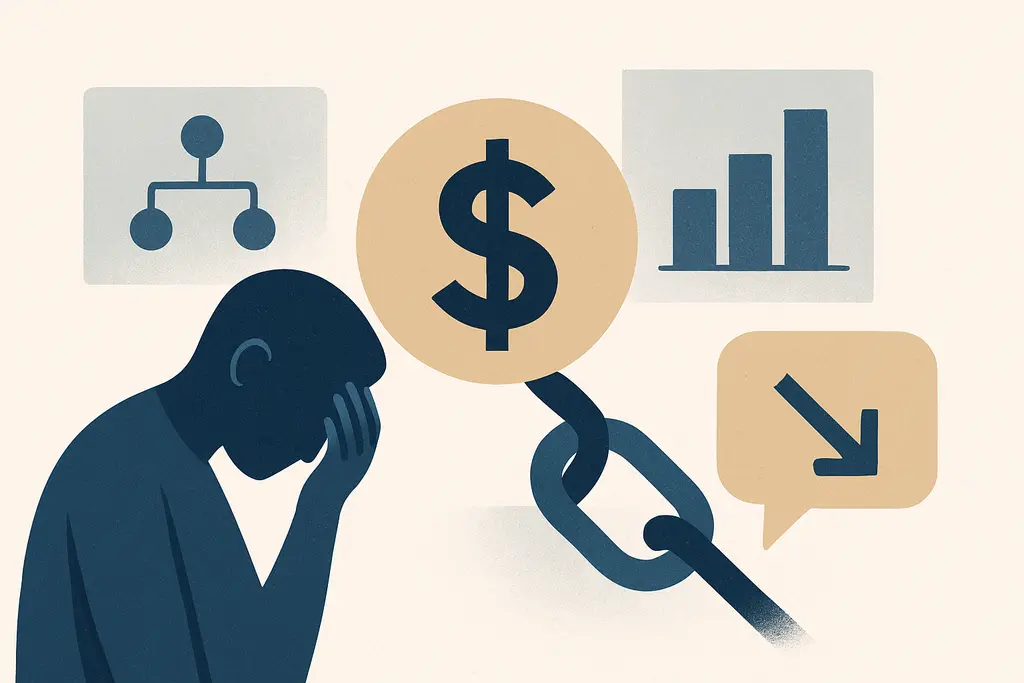
Workplace money shame is a social emotion that appears when someone feels inadequate or fears judgment about money-related matters in the office. That can include awkwardness around salary conversations, reluctance to request expenses or equipment, or hiding financial stress that affects performance.
These features are about how people manage image and belonging in a group where money is visible or implied. For leaders, recognizing these patterns helps protect trust and decision quality.
How the pattern gets reinforced
**Social comparison:** coworkers compare salaries, perks, or lifestyles and feel worse when they perceive a gap
**Status cues:** visible symbols like titles, office location, or company-funded perks make differences salient
**Stigma around need:** cultural messages that asking for help equals weakness increase shame
**Opaque policies:** unclear pay bands, bonus criteria, or reimbursement rules create anxiety and rumor
**Power imbalance:** junior staff may fear retaliation or judgment when raising money-related concerns
**Performance pressure:** linking pay tightly to perceived worth encourages hiding struggles
Operational signs
Managers who notice these signs are seeing behaviors driven by identity and social risk, not just finances. Addressing them improves transparency and retention.
Repeated silence in conversations about raises, promotions, or benefits
Employees avoiding expense claims or using out-of-pocket payments to dodge paperwork
Reluctance to negotiate or to ask for role-appropriate resources
Overcompensation: taking on extra work to 'prove' worth rather than asking for pay adjustments
Frequent comparisons or indirect comments about colleagues' compensation
Avoidance of mentorship or development conversations that touch on future earning potential
Absent or limited use of available support programs, like hardship funds or flexible pay options
Managerial blind spots: misreading quiet compliance as satisfaction
A quick workplace scenario
A mid-level analyst avoids filing a travel reimbursement because she worries colleagues will learn she took a cheaper flight to save money. Her manager notices fewer expense forms and a sudden drop in questions about travel policy. A private check-in reveals embarrassment rather than incompetence, and the manager clarifies anonymous reimbursement options.
Pressure points
These triggers make financial differences visible or uncertain, which raises the social stakes of money-related conversations.
Team discussions that mention salaries, bonuses, or raises without context
Public recognition tied to high-value clients, travel, or perks
Unclear or inconsistent expense and reimbursement procedures
Performance reviews that focus heavily on compensation as a status signal
Open seating or office allocations that map to pay bands
New hires disclosed with publicly known compensation packages
Budget cuts announced without clear rationale or equitable criteria
Moves that actually help
These steps reduce the interpersonal risk that feeds shame and improve access to legitimate support without exposing individuals.
Normalize private, one-on-one conversations about compensation, expenses, and resource needs
Implement clear, written policies for pay bands, reimbursements, and perks to reduce guesswork
Use neutral language in group settings when discussing budgets or rewards to avoid singling people out
Offer anonymous channels for questions about pay and benefits where practical
Train managers to ask open, nonjudgmental questions about barriers to performance (eg, "What resources would help?")
Audit visible perk distributions (office space, travel budgets) for equity and explain allocation logic
Encourage equitable recognition practices that separate praise from financial status
Make administrative tasks simple and confidential so claiming benefits is low-effort and low-risk
Model vulnerability appropriately: leaders can share procedural experiences (not personal finances) to reduce stigma
Provide clear routes to HR or employee support with confidentiality assurances
Related, but not the same
Pay transparency: relates to workplace money shame by altering how visible compensation is; transparency can reduce rumor but may increase shame if not paired with clear rationale
Financial stigma: broader social prejudice about poverty or debt that amplifies shame in the workplace context
Psychological safety: a team condition where people feel safe to speak up; higher psychological safety lowers the chance money shame controls behavior
Status signaling: ways people display rank or success; differs from shame because it focuses on outward signals rather than internal embarrassment
Equity versus equality: connects to shame when perceived unfairness in rewards makes some employees feel inferior; equity emphasizes need and context
Organizational justice: perceptions of fairness in processes; poor procedural fairness increases money-related shame
Help-seeking behavior: willingness to ask for support; money shame suppresses it, while supportive cultures encourage it
When the issue goes beyond a quick fix
- If money-related worries are causing significant absenteeism, drop in performance, or interpersonal conflict
- If an employee expresses persistent distress tied to workplace financial issues despite internal adjustments
- If leadership needs structured guidance, consider consulting an organizational psychologist or HR specialist for policy and culture work
Related topics worth exploring
These suggestions are picked from nearby themes and article context, not just a flat alphabetical list.
Workplace financial avoidance
Workplace financial avoidance is the tendency to dodge money conversations at work—causing delayed decisions, surprise costs, and weaker planning. A manager-focused guide to spotting and fixing it.
Money avoidance: why I won't check my bank balance
Why some employees avoid checking bank balances, how that shows up at work, why it develops, and practical, non-blaming steps managers and teams can use to reduce it.
Salary negotiation fear
Fear of asking about pay that leads people to accept offers or stay silent; explains causes, everyday signs, misreads, and practical workplace fixes.
Lifestyle Creep Trap
How small pay and perk increases become permanent workplace expectations, why incentives and social signals fuel them, and practical steps leaders can use to stop rising baseline costs.
Investment paralysis
Investment paralysis is the habit of repeatedly postponing resource commitments at work, causing stalled projects, lost momentum, and missed learning opportunities.
Frugality guilt
Frugality guilt is feeling ashamed to spend workplace money; it delays purchases, hides needs, and can be reduced by clearer rules, visible budgets, and reframed leadership signals.