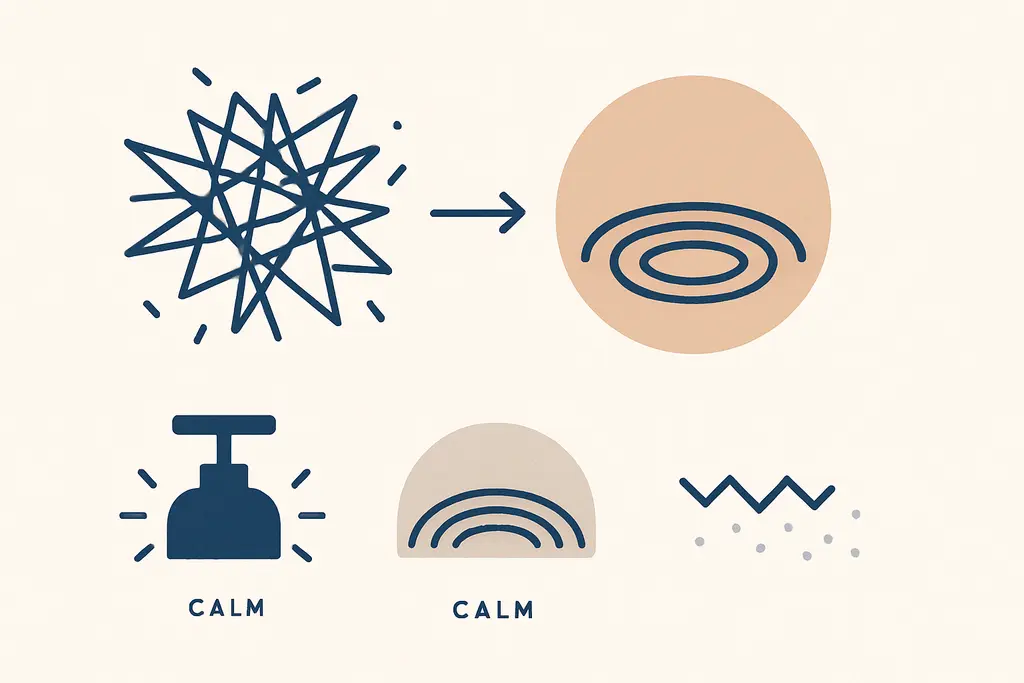
What background stress looks like at work
This pattern shows up as steady, small failures rather than big breakdowns. People keep getting their work done, but quality, creativity and discretionary effort decline.
- Missed follow-through on non-essential tasks (reports, follow-ups)
- Lower initiative: fewer voluntary improvements or suggestions
- Shorter attention spans in meetings and more “checkbox” behaviors
- Quiet withdrawal: people avoid impromptu help requests or social exchanges
- Increased irritability over minor issues and longer time to recover from setbacks
Those signs are subtle and often intermittent. Individually they look like normal variation; together they create a predictable downward slope in team effectiveness. The distinguishing feature is consistency: the team rarely crashes, but seldom accelerates either.
Why it becomes the default
Several routine workplace structures create and sustain low-level burnout.
- Persistent overload: steady task volume with few clear stop points.
- Unclear priority signals: conflicting goals from different stakeholders.
- Perpetual context-switching: fragmented calendars and frequent interruptions.
- Insufficient recovery: limited breaks, no protected focus time.
- Reward mismatch: metrics value speed or outputs over sustainable effort.
These drivers interact. For example, unclear priorities increase context-switching, which raises perceived load even when headcount is adequate. Over time the team normalizes the stress and managers mistake reduced complaints for stability rather than erosion.
How managers commonly misread low-level burnout
Managers often interpret the pattern through a few common but misleading lenses:
- As a temporary productivity dip caused by a single project (when it’s systemic).
- As individual attitude or competence problems rather than a team-level environment issue.
- As resistance to leadership style, prompting micro-management that worsens the stress.
When misread this way, responses tend to be punishment, reorganization, or hiring—measures that can treat symptoms but not the background causes. Good diagnosis requires seeing frequency and distribution of small lapses across people and contexts, not just isolated incidents.
A quick workplace scenario
A product team consistently misses optional beta enhancements. The product manager blames the engineers, who point to vague roadmaps. Meetings start 10 minutes late and run overtime; heads nod but few take notes. The manager hires a contractor to speed delivery. Six months later the backlog is still noisy and the team morale has sunk.
This scenario shows how adding capacity without fixing priorities, meeting hygiene or protected focus time preserves the background stress.
Practical actions that reduce the steady drag
Short-term and structural steps both matter.
- Set clearer priorities: establish one or two measurable team goals for each quarter.
- Protect focus time: block daily deep-work periods and limit meetings on specific days.
- Reduce context-switching: consolidate communication channels and batch similar tasks.
- Triage work explicitly: teach triage rules (what to stop, postpone, or delegate).
- Fix meeting hygiene: shorter agendas, time-boxed items, and explicit outcomes.
- Adjust metrics and recognition: reward sustained quality and collaboration, not just throughput.
Start with one or two changes and measure small signals (meeting punctuality, number of unfinished optional tasks, repeat interruptions). These practical shifts curb the steady load and produce early wins that help normalize healthier behavior.
Related patterns and common confusions
Background stress overlaps with and is often confused with other workplace patterns. Distinguishing them avoids the wrong fix.
- Presenteeism vs disengagement: preseneeism looks like people physically present but underproductive; disengagement is broader withdrawal from discretionary effort. Background stress can cause both in different people.
- Acute burnout episodes: those are intensive, high-impact collapses that require different interventions. Low-level burnout is chronic and cumulative.
- Performance issues vs environmental causes: isolated poor performance may be individual, while widespread small declines usually point to system-level causes (processes, priorities, culture).
Separating these helps choose responses that are systemic (process changes, prioritization, workload design) instead of solely individual (coaching, performance plans).
Questions worth asking before acting
- Which tasks are repeatedly delayed though not urgent? Why?
- Where do people lose time repeatedly (context switches, waiting on decisions)?
- Which metrics or incentives push people toward constant speed over sustainable quality?
- What small procedural changes could free protected focus time this month?
Asking these focuses attention on systems rather than personalities and guides practical pilot changes.
A short contrast: edge case to watch
A high-performing, small team with intense, short sprints may look similar to a team in background stress. The difference is seasonality: sprint teams recover between cycles and show spikes in vitality. Teams under constant background stress do not consistently recover and show creeping erosion across cycles. The right response for a sprint team is planning for recovery windows; for a stressed team it’s changing the default operating model.
Background stress is quiet but fixable. Managers who treat it as a systemic operating problem—clarifying priorities, protecting focus, and adjusting incentives—can restore sustainable performance without dramatic interventions.
Related topics worth exploring
These suggestions are picked from nearby themes and article context, not just a flat alphabetical list.
Quiet stress at work: sustained low-level strain
Sustained low-level pressure at work that quietly drains focus and quality—how it forms, how it shows up day-to-day, common misreads, and practical manager actions to reduce it.
Adaptive stress vs toxic stress at work
How to tell when pressure at work fuels growth (adaptive) versus when it becomes chronic harm (toxic), what creates each, and practical steps leaders can take.
On-Call Burnout
On-call burnout is the cumulative mental and physical strain from repeated after-hours responsibility; learn how it appears, why it persists, and practical fixes for teams.
Burnout rumination
How recurring, work-focused negative thinking drains teams, how it shows up, why it persists, and practical manager actions to reduce it.
Post-project burnout
A practical guide to post-project burnout: how the post-delivery slump shows up, why it persists, and concrete manager steps to restore team energy and follow-through.
Burnout recovery guilt
Burnout recovery guilt is the shame or hesitation people feel when returning from burnout. It shows as secrecy, overcompensation, and reluctance to use supports; clarified expectations and visible bou