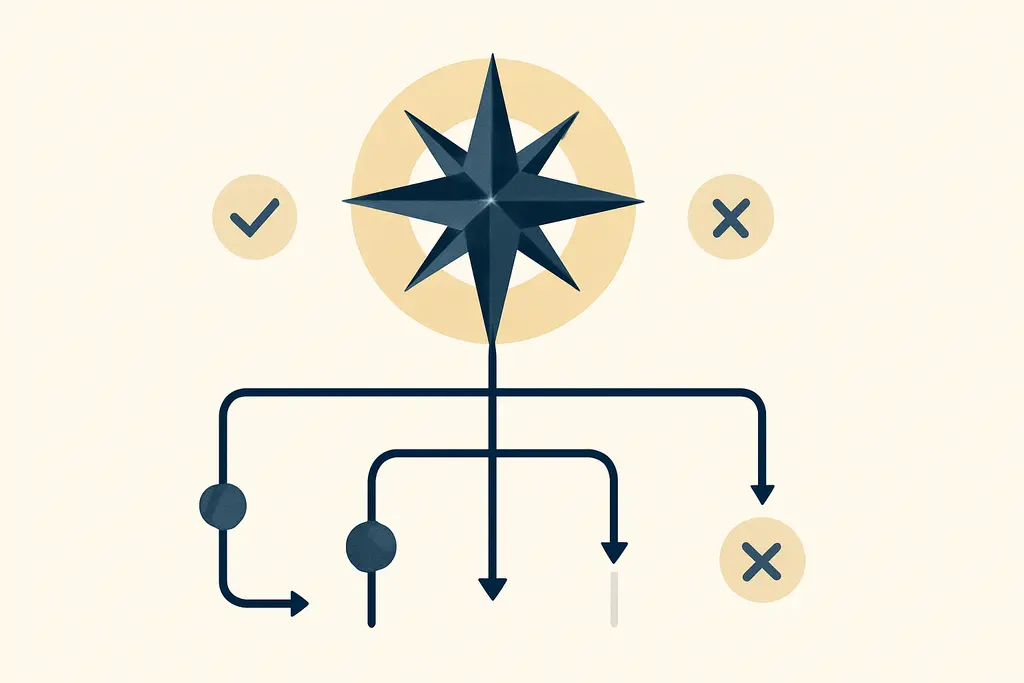
What consensus complacency looks like in meetings
- Quick nods: People agree immediately without offering detail or elaboration.
- Few dissenting voices: Objections are absent or delayed until after implementation.
- Rushed closure: The group accepts a proposal to save time rather than to test it.
- Polished surface language: Comments are framed positively (“Sounds good”) rather than specific (“I’m concerned about X”).
Those signals can be subtle. A manager who sees little debate may assume alignment, but the silence often masks uncertainty, fear of social friction, or a belief that the leader’s idea is non-negotiable.
Why groups fall into it
- Deference to perceived authority or expertise
- Time pressure and meeting overload
- Cultural norms that reward harmony over critique
- Lack of structured decision routines (no devil’s advocate, limited data checkpoints)
When teams are busy or roles are ambiguous, the path of least resistance is to agree and keep moving. Over time, that pattern entrenches itself: people learn that raising concerns is unrewarded or risky, and leaders learn to treat quiet rooms as alignment—so the cycle repeats.
Where consensus complacency is commonly misread
- Groupthink: assuming everyone is thinking the same thing when they’re not.
- False consensus effect: leaders overestimate agreement because visible cues suggest alignment.
- Social loafing: silence may be disengagement rather than agreement.
- Conflict avoidance: not the same as constructive compromise.
These near-confusions matter because each suggests a different fix. Treating complacency as mere indifference misses the social dynamics that suppress feedback; treating it as honest consensus can lead to under-tested decisions.
Practical steps to reduce complacent agreement
- Introduce structured dissent: assign a rotating devil’s advocate or use pre-meeting red-team reviews.
- Require explicit assumptions: ask teams to list what must be true for the decision to work.
- Use silent input methods: collect anonymous written feedback or pre-read positions before the meeting.
- Set decision checkpoints: pilot, measure, and iterate rather than full rollouts after a single meeting.
- Change meeting norms: invite one late-arriver to summarize objections or call for “two-minute reservations.”
These tactics reduce the social cost of disagreement and make hidden doubts visible. Over time they create a norm where testing and clarification are expected steps, not optional friction.
A quick workplace scenario
Example: Product launch planning
A product team spends 30 minutes on a go/no-go and most members nod when the VP says “let’s ship.” Two weeks after launch, a key integration breaks because a different API version was assumed. In the retrospective, several engineers say they had concerns but didn’t raise them because the meeting moved fast and the VP’s tone suggested a decision.
This example shows how timing, leadership cues, and missing decision rituals combine: quick agreement looked like consensus but was actually complacency.
Questions worth asking before you assume alignment
- Who would lose if this fails? Have they been asked directly?
- What assumptions are we making—can any be tested quickly?
- Was silence a true endorsement or a polite surrender?
Asking these shifts the frame from “did we all agree?” to “did we surface the relevant risks?” That reframing helps teams stop confusing surface agreement with durable, tested alignment.
Related topics worth exploring
These suggestions are picked from nearby themes and article context, not just a flat alphabetical list.
Pre-mortem planning
A practical guide to running pre-mortem planning in team meetings: imagine failure, identify causes, and turn insights into tests, owners, and early mitigations.
Present bias at work
How present bias at work leads teams to choose quick gains over long-term value — why it happens, how managers misread it, and practical fixes to nudge better decisions.
Recency bias in reviews
Recency bias in reviews is the tendency to overweight the latest events when evaluating performance or products — learn how it shows up at work and practical ways to reduce its impact.
Prediction Anchoring
Prediction anchoring is when an early forecast or number shapes later estimates and decisions—learn how it shows up in meetings, why it sticks, and practical ways to reduce it.
Sunk Opportunity Bias
How past missed chances (not just spent costs) distort team decisions—why it happens in meetings, real examples, and practical steps to reduce reactive fixes and overcompensation.
Sunk Cost Resilience
How teams and leaders defend past investments and what practical steps reduce the pull to keep pouring time, money, and political capital into low‑value work.