What it really means
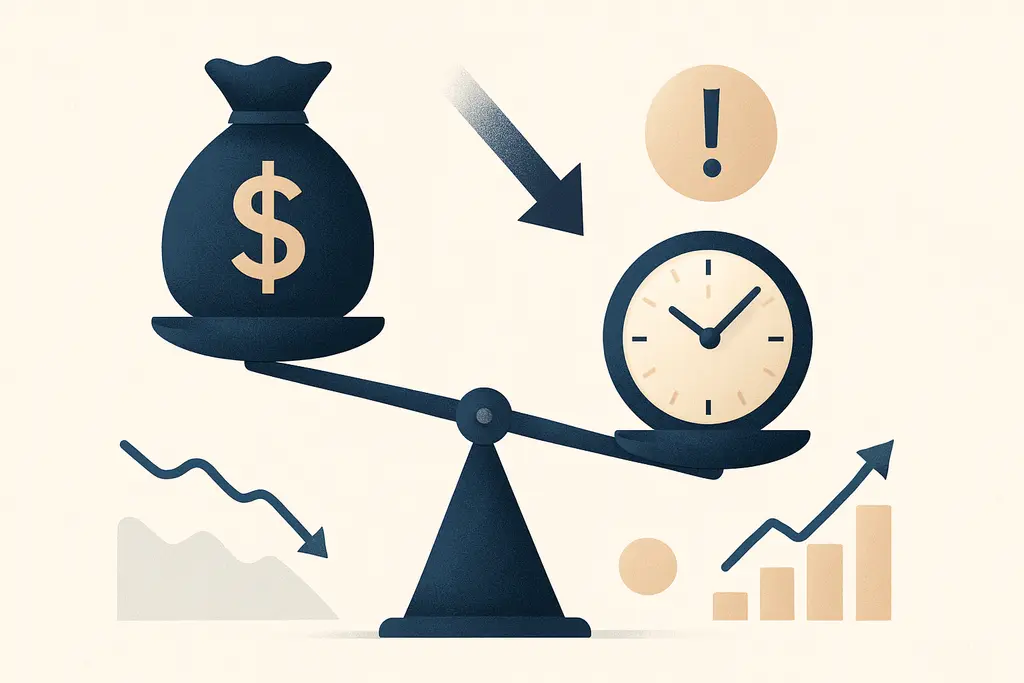
This pattern is a timing-driven spike in personal financial concern tied to salary cycles, bill due dates, or benefit cliffs. It is not simply 'anxiety' in the abstract; it's a predictable rhythm that affects behavior and cognition across roles.
- Workers may become more risk-averse with discretionary tasks or delay work requiring out-of-pocket spending.
- Small decisions take longer as mental bandwidth narrows around immediate expenses.
- Short-term absences or last-minute shift changes increase around the same dates each month.
Seen through the workday, the pattern resembles a calendar-based productivity dip rather than a one-off morale issue. That predictability is useful: it means interventions can be timed and evaluated rather than guessed at.
Why it develops and what sustains it
- Pay schedule exposure: Monthly or biweekly pay cycles concentrate obligations into predictable pressure points.
- Timing of bills: Rent, utilities, and recurring payments often align near month-end, reinforcing the cycle.
- Liquidity gaps: Lack of accessible short-term savings amplifies worry when pay is still several days away.
- Social norms: Expectations around social spending or events toward month-end can increase perceived need.
These drivers feed each other. For example, rigid billing dates plus limited savings mean a missed paycheck or delayed processing immediately raises stakes, which in turn creates more cautious behavior at work (avoiding tasks that could produce small unexpected costs or require overtime approval). Addressing a single driver helps, but persistent stress is usually sustained by several interacting factors.
Operational signs
These behaviors are measurable: attendance spikes, support tickets, or quality metrics often show a repeating pattern when plotted against payroll dates. Understanding the timing converts anecdote into data that teams can act on, rather than attributing effects to vague 'motivation' or 'culture' problems.
More frequent requests for cash advances, early payroll, or schedule swaps near pay dates.
Increased errors on routine tasks that require concentration (data entry, compliance checks, complex customer interactions).
Hesitance to accept optional assignments that may involve incremental costs or time away from paid work.
Higher rates of short-notice absenteeism and use of personal days.
A quick workplace scenario
A customer-service team shows a steady drop in first-call resolution during the last three days of each month. Supervisors notice more time-off requests and increased escalation calls. Rather than assuming training gaps, an operational review maps those quality dips to payroll timing and to a client-billing cycle the team handles at month-end.
In this case a short-term staffing adjustment and temporary shift in meeting schedules arrested the immediate quality decline while longer-term measures (see below) were planned. The edge case: some individuals had similar dips but on different dates — those were linked to personal bill cycles and required individualized conversation, not a one-size schedule fix.
How this pattern is often misread or oversimplified
- It's not always poor engagement. Mistaking timing-driven attention lapses for laziness or culture problems can lead to the wrong interventions.
- It's not identical to burnout. Burnout is chronic and broad; end-of-month stress is cyclical and often tied to liquidity timing.
Common misinterpretations include blaming team morale or work design alone. Managers who respond by increasing controls or adding mandatory reporting during month-end can worsen the problem by increasing friction at precisely the time people have less bandwidth.
Related patterns worth separating from it
- Scarcity mindset: a broader cognitive shift when resources are persistently low. End-of-month stress is a cyclical trigger that can contribute to scarcity, but they are not the same.
- Burnout and chronic stress: long-term exhaustion and disengagement. End-of-month spikes are periodic and often resolve once cash flow timing changes.
- Peak workload effects: genuine increases in operational load near month-end (billing cycles, reporting deadlines). These can coincide with money stress but require different solutions.
Separating these patterns prevents conflation: a payroll-cycle response is operational and schedule-focused, while scarcity or burnout require deeper, longer-term support strategies.
Moves that actually help
Many of these steps are simple to pilot and measure. Start with one small operational change tied to a clear metric (like call resolution or on-time attendance), run it for two months, and compare the month-end deltas. Transparent, low-stakes experiments both signal care and produce evidence for broader policy choices.
Review timing: map quality, attendance, and request data against pay and billing calendars to confirm the pattern.
Reduce friction: shift non-urgent tasks and meetings away from predictable pressure days when possible.
Low-cost operational fixes: stagger critical deadlines, offer flexible shift swaps, and allow asynchronous check-ins around month-end.
Communication clarity: remind staff about available support options (e.g., payroll queries, EAP) and keep messages concise and action-oriented.
Questions worth asking before reacting
- Is the pattern calendar-based or tied to a particular team or client cycle?
- Have we checked objective data (attendance, quality, requests) against pay dates?
- Are we introducing controls that add cognitive load at known pressure points?
These questions guide proportionate responses and reduce the chance of shifting blame onto individuals for a systemic timing effect.
Search-intent queries people use
- how does pay cycle affect employee concentration at work
- signs of end-of-month money stress in the workplace
- why do attendance issues spike at month end
- examples of payroll timing affecting productivity
- low-cost ways to reduce financial stress effects at work
- difference between payroll-cycle dips and burnout at work
- how to spot calendar-based financial stress in a team
- scheduling adjustments for month-end productivity dips
Related topics worth exploring
These suggestions are picked from nearby themes and article context, not just a flat alphabetical list.
Year-end bonus spending remorse
Why employees feel regret after spending year-end bonuses, how it shows up at work, what sustains it, and practical organizational steps to reduce its impact.
Tax season stress for freelancers
How seasonal tax-related anxiety shows up for freelancers at work, why it recurs, common misreads, and practical, small workflow changes to reduce last‑minute disruption.
Money avoidance: why I won't check my bank balance
Why some employees avoid checking bank balances, how that shows up at work, why it develops, and practical, non-blaming steps managers and teams can use to reduce it.
Salary negotiation fear
Fear of asking about pay that leads people to accept offers or stay silent; explains causes, everyday signs, misreads, and practical workplace fixes.
Lifestyle Creep Trap
How small pay and perk increases become permanent workplace expectations, why incentives and social signals fuel them, and practical steps leaders can use to stop rising baseline costs.
Investment paralysis
Investment paralysis is the habit of repeatedly postponing resource commitments at work, causing stalled projects, lost momentum, and missed learning opportunities.