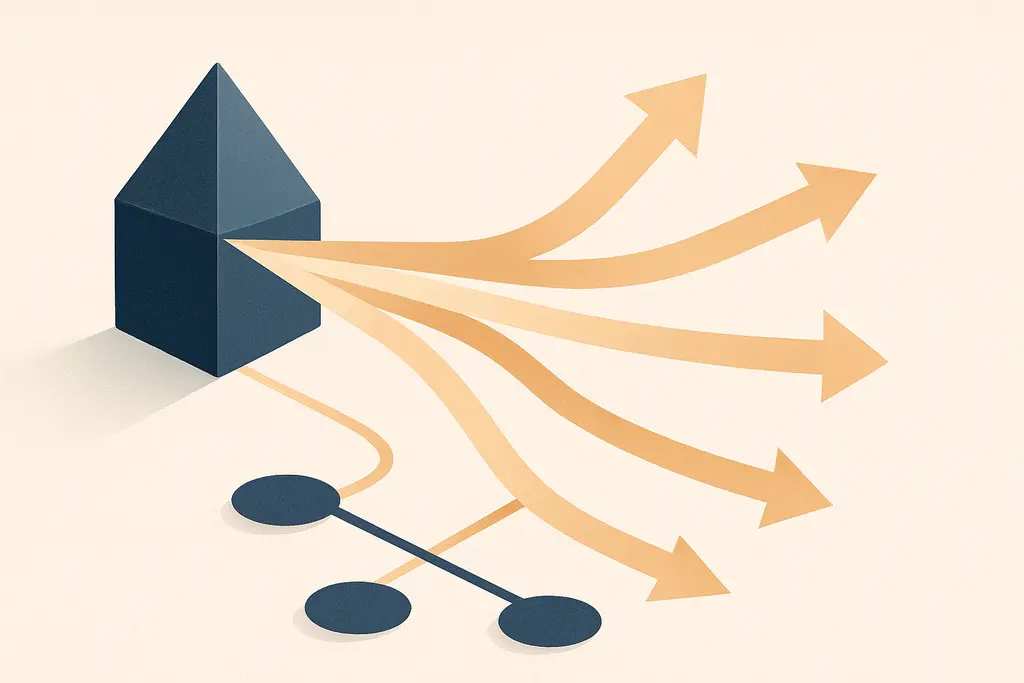
What it really means in group settings
In teams, escalation of commitment is less about one stubborn person and more about a pattern: the group doubles down on a failing course of action to protect identity, reputation, or previous investments. The dynamic is social — people watch one another for cues, and collective choices amplify individual tendencies to avoid loss or blame.
This is distinct from healthy persistence. Teams escalate when continued investment is driven primarily by the desire to justify past choices rather than by updated evidence that success is likely.
How the pattern gets reinforced
These drivers often combine. For example, a leader’s optimistic framing plus bonuses tied to milestones can lock a team into defending a course of action even as performance data worsens.
**Social pressure:** team members fear looking incompetent if they reverse course.
**Sunk-cost signalling:** prior investments are used as moral arguments for continuing (we've already spent X months/money).
**Leader anchoring:** a directive from a senior person sets a default that others follow.
**Identity and pride:** teams identify with projects; abandoning them feels like losing status.
**Reward structure:** incentives that praise persistence or penalize changing plans.
**Information cascades:** early vocal supporters shape the interpretation of new data.
How it shows up in meetings and everyday work
- Repeated approval of incremental fixes instead of a stop-and-review decision.
- Meetings focused on excuses and rescue plans rather than dispassionate evidence review.
- Overemphasis on prior investment (“we can’t stop now — look at how much we’ve done”).
- New metrics introduced that redefine success to match outcomes.
- Quiet dissenters withdraw or cease raising concerns.
In daily work this looks like extra sprints, patch releases, or marketing boosts designed to prove the original decision rather than to test alternatives. It creates cycles where resources are poured into diminishing returns and legitimate signals of failure are ignored.
A workplace example and an edge case
A product team launches a feature that falls far short of engagement targets. After three months of poor metrics, the team holds weekly “rescue” standups proposing design tweaks and more promotion. Leadership reacts by extending the launch timetable rather than pausing to run a quick A/B test of abandoning the feature. The team keeps committing engineering hours because stopping feels like admitting the original roadmap was wrong.
A quick workplace scenario
A small edge case: a cross-functional team that values learning deliberately keeps a low-performing experiment alive — not out of pride but to collect data on failure modes. The key difference is explicit criteria: the team set limits (time, budget, metrics) and agreed in advance to stop. That boundary prevents escalation.
Moves that actually help
Clear rules and procedural protections are the most practical levers. When teams have written exit conditions and an independent checkpoint, decisions become easier to reverse. Likewise, normalizing post-mortems reduces the reputational cost of stopping a failing effort.
Set explicit stop/go criteria and decision gates before major commitments.
Rotate the role of devil’s advocate or assign an independent reviewer.
Separate the decision authority from the team doing the work (e.g., review panel).
Encourage private dissent channels so people can raise concerns without social cost.
Reframe ‘failure’ as learning: reward fast, transparent course corrections.
Use pre-mortems and external audits to surface hidden assumptions.
Where escalation is commonly misread or confused
- Escalation vs. healthy persistence: persistence seeks evidence before continuing; escalation ignores disconfirming evidence.
- Escalation vs. sunk-cost fallacy: sunk-cost describes an individual's reasoning; escalation describes how that reasoning scales socially.
- Groupthink and confirmation bias are close relatives: groupthink creates conformity that enables escalation, while confirmation bias filters information to favor the original choice.
Teams frequently explain continued investment as "commitment" or "persistence" when the real driver is reputational protection or reward structures. Untangling these near-confusions matters because remedies differ: coaching for individuals won’t fix perverse incentives, and process changes won’t help if the issue is toxic leadership.
Quick questions teams can use before doubling down
- What specific metric would make us stop?
- Whose perspective is missing from this meeting?
- What outcome would justify reversing this decision?
- Are we protecting a person’s reputation or the project’s evidence-based value?
Answering these prompts openly redirects the group from defending past choices to testing present assumptions. Over time, small procedural habits — like requiring a brief written justification for continued investment — reduce the social momentum that sustains escalation.
Related topics worth exploring
These suggestions are picked from nearby themes and article context, not just a flat alphabetical list.
Pre-mortem planning
A practical guide to running pre-mortem planning in team meetings: imagine failure, identify causes, and turn insights into tests, owners, and early mitigations.
Present bias at work
How present bias at work leads teams to choose quick gains over long-term value — why it happens, how managers misread it, and practical fixes to nudge better decisions.
Recency bias in reviews
Recency bias in reviews is the tendency to overweight the latest events when evaluating performance or products — learn how it shows up at work and practical ways to reduce its impact.
Prediction Anchoring
Prediction anchoring is when an early forecast or number shapes later estimates and decisions—learn how it shows up in meetings, why it sticks, and practical ways to reduce it.
Sunk Opportunity Bias
How past missed chances (not just spent costs) distort team decisions—why it happens in meetings, real examples, and practical steps to reduce reactive fixes and overcompensation.
Sunk Cost Resilience
How teams and leaders defend past investments and what practical steps reduce the pull to keep pouring time, money, and political capital into low‑value work.