What it really means
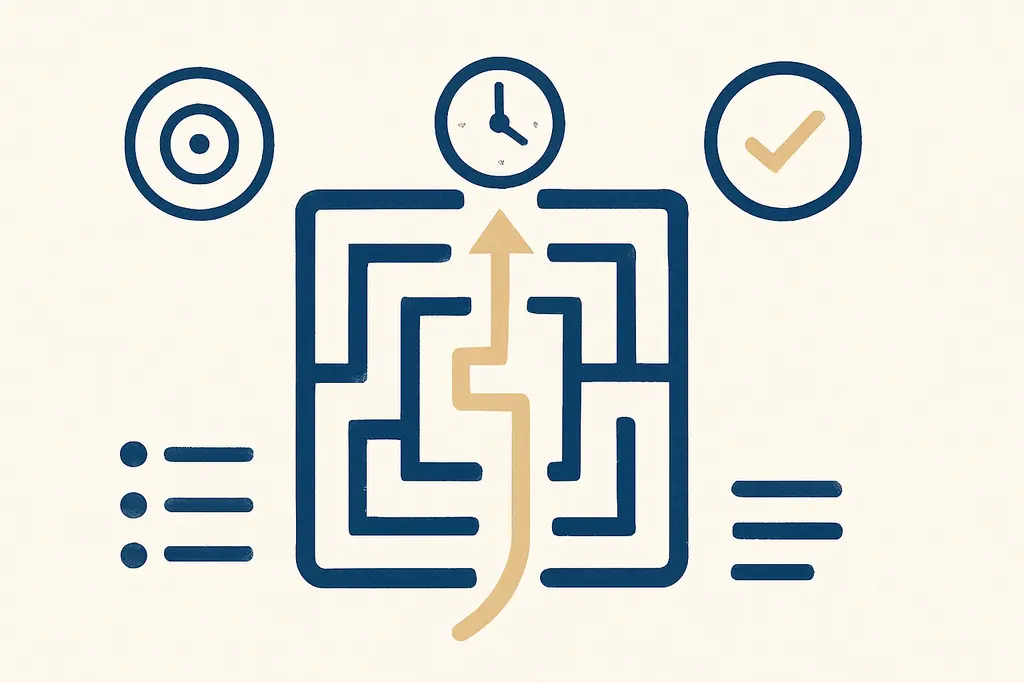
A focus transition ritual is any deliberate, repeatable cue that marks the end of one mental context and the start of another. Rituals can be physical (standing up), digital (clearing the inbox), verbal (saying “wrap-up”), or temporal (a two-minute buffer). They are not necessarily elaborate; their power comes from predictability and meaning for the person or team using them.
Underlying drivers
Teams and individuals adopt transition rituals because they solve real coordination and cognitive problems. Typical drivers include:
These drivers often work together. For example, a team that uses instant messaging heavily will build short verbal or emoji-based rituals because social signaling and tool affordances converge. Over time the ritual becomes self-reinforcing: it reduces friction, so people keep using it.
**Cognitive cost:** switching tasks is mentally expensive; a ritual makes the switch less jarring.
**Social signaling:** rituals communicate readiness or closure to colleagues without long explanations.
**Time pressure:** when schedules are tight, short rituals provide a compact way to reset.
**Tool affordances:** calendar invites, status indicators, and notification settings encourage specific end/start behaviors.
**Habit formation:** repeated cues become automatic, which reduces decision fatigue.
How it shows up in everyday work
- People who close their laptop lid and stand to stretch before switching from heads-down design to collaborative review.
- A project lead types “TL;DR” or posts a summary to signal the transition from brainstorming to decision mode.
- A team uses a Slack reaction (thumbs-up) to mark task ownership at the end of a handover.
- Individuals start a playlist or run a short breathing exercise before high-focus work blocks.
These behaviors can be microscopic (a single action) or ceremonial (a five-minute round-robin recap). They reduce ambiguity about who is doing what next and create predictable windows of attention.
What makes it worse (common pitfalls)
- Frequent interruptions that break rituals before they complete.
- Unclear goals so the ritual becomes performative rather than functional.
- Mixed signals across teams (one team’s “wrap-up” is another’s “keep talking”).
- Overly rigid rituals that cannot adapt to urgent work and therefore get skipped.
When rituals are inconsistent or misunderstood they can increase friction instead of reducing it. For instance, if a manager models no transition ritual, team members who rely on a signal may hesitate, creating delay and confusion.
Practical responses
Start small. Teams that test a single, observable cue for two weeks get faster feedback than those that overhaul calendars. If a ritual is helping, document it in working norms so new people adopt it quickly.
Create explicit micro-buffers: schedule 5–10 minute gaps between meetings to permit transitions.
Agree on shared, low-cost signals: a brief verbal cue, a status change, or a Slack reaction.
Make rituals visible: a checklist item at the end of an agenda or a shared “handoff” note.
Reduce hidden interruptions: mute non-critical notifications during focus blocks.
Model the behavior: leaders who show their own transition actions normalize them for others.
A quick workplace scenario
A design team found reviews ran long and decisions stalled. They experimented with a three-step end-of-meeting ritual: 1) the reviewer posts a one-line decision, 2) the assignee updates the task status, and 3) everyone changes meeting status to "focus" for the next half hour. That simple sequence cut follow-up confusion and reduced off-thread questions.
Often confused with
Rituals are commonly oversimplified or mistaken for other patterns:
Misreading happens when observers see only the surface: a person tidying their desk might be judged as avoiding work, when they are actually using a ritual to close a project state and free cognitive bandwidth.
Habit formation vs. ritual: habits are individual automatic behaviours (e.g., checking email first thing); rituals are often communicative and structured to mark transitions.
Context switching vs. ritual: context switching is the cognitive cost of moving attention; rituals are the mechanisms people use to manage that cost.
Procrastination vs. transition time: a deliberate five-minute prepare-to-start action is different from delaying work under the guise of “getting ready.”
Questions worth asking before you change or standardize rituals
- What problem is this ritual solving for people right now?
- Who benefits and who might be burdened by a formalized cue?
- Is the ritual primarily social, cognitive, or technological in effect?
- Can we test a small change for two weeks and measure its impact?
Asking these questions prevents well-intentioned rules from turning useful rituals into performative checkboxes.
Related patterns worth separating from focus transition rituals
- Task batching: grouping similar tasks to reduce switches — this reduces the need for frequent rituals but is a different design choice.
- Boundary rituals: end-of-day routines that separate work and personal life; they overlap but operate across different time scales.
- Status signals and handoffs: while part of some rituals, status systems (calendars, ticket queues) are infrastructural and require separate governance.
Understanding these distinctions helps teams pick the right intervention rather than layering solutions that compete with each other.
Related topics worth exploring
These suggestions are picked from nearby themes and article context, not just a flat alphabetical list.
Focus residue recovery
How leftover attention from one task slows the next—and practical steps managers and teams can use to clear it, from short buffers to one‑line handoffs.
Focus momentum
How attention builds or breaks in work cycles, why continuous focus speeds delivery, and practical manager actions to preserve or restore productive momentum.
5-minute focus reset
A concise guide to the 5-minute focus reset: a short, deliberate pause to clear distraction, capture the next action, and return to work with less lost time and fewer follow-ups.
Meeting Warm-up Rituals
How small pre-meeting routines shape team alignment, when they help or hinder productivity, and practical steps to preserve the useful parts or redesign them.
Microbreak efficacy for focus
How short, intentional pauses at work restore attention — when they help, how to recognise them, and what managers can do to support effective microbreaks.
Why I can't focus in open offices
Explains why open offices disrupt attention, how that shows up in daily work, common misreads, and practical environmental and social fixes teams can apply.