What it really means
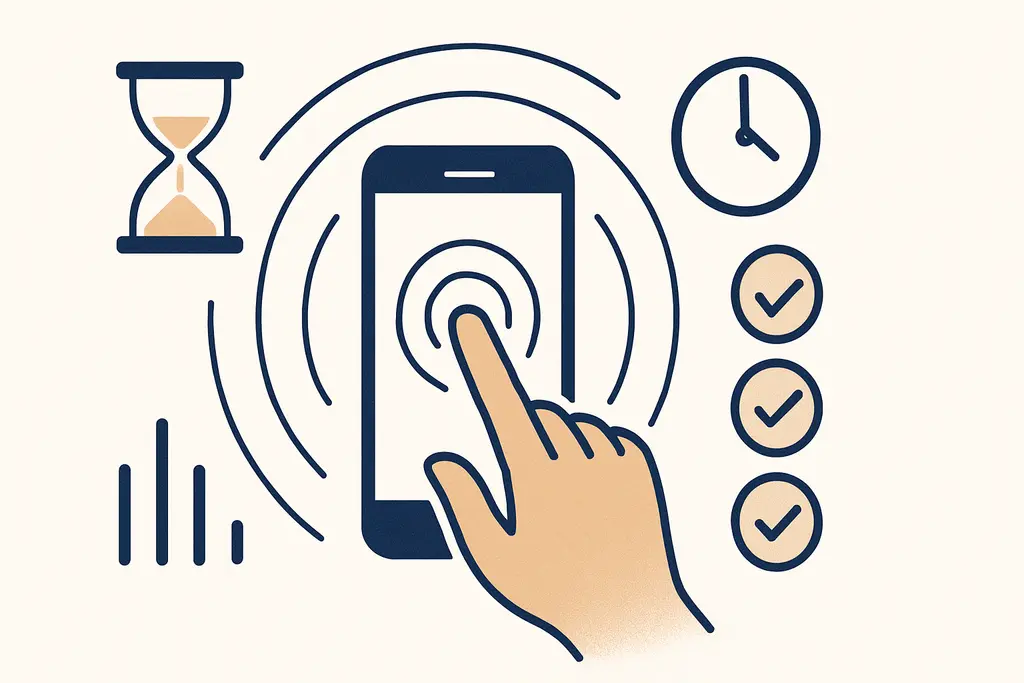
This pattern combines two linked phenomena: a fast, cue-driven action (checking the phone) and a slower cognitive cost (reduced focus, more frequent task switching). The reflex is often covert — a glance, a thumb flick — but the consequence is measurable: longer time to resume deep work, more context-switching errors, and lower sense of control over attention.
Why it tends to develop
These factors interact: a busy person in a noisy space with active notifications experiences stronger pulls to check. Over time the reflex becomes habitual because each check occasionally delivers a valued outcome (information, social reward), which reinforces the behavior.
**Design incentives:** Notifications use intermittent reinforcement and salient cues that hijack attention.
**Social pressure:** People feel obliged to be responsive to managers, clients, or teammates.
**Cognitive overload:** Tight schedules and multitasking increase reliance on quick digital checks for relief or information.
**Environmental cues:** Visible phones, frequent meeting pings, and open-office noise make checking easier.
How it looks in everyday work
- Quick glances during meetings that lead to missing agenda items.
- Repeated minute-long checks between email threads that fragment a morning of writing.
- People leaving collaboration tools open and reacting to every banner, slowing decision cycles.
Managers often see surface behaviors — slow replies, missed deadlines, or disengaged faces — without realizing these can stem from rapid micro-interruptions. Small checks add up: five interruptions an hour multiply recovery time and reduce deep-work blocks.
A quick workplace scenario
A product manager schedules a 45-minute planning meeting. Halfway through, two attendees keep looking down. The manager assumes disengagement and interrupts to reassert control. In reality, those people may be handling urgent customer messages or using the phone to pull up a document. The reflex both signals a coordination mismatch and creates one: the meeting loses momentum and future meetings will feel less productive.
What helps in practice
These steps reduce both the environmental cues and the social drivers that sustain the reflex. Norms and structural changes are more effective than shaming or blanket bans because they address why people check, not only the behavior.
**Set explicit norms:** Announce device expectations for meetings (e.g., phones on mute and face-down unless needed).
**Designate check windows:** Build short 5–10 minute breaks in long sessions for messages, reducing the urge during focused segments.
**Control notifications:** Encourage teams to turn off non-essential push alerts during deep-work blocks.
**Adjust workload signals:** Clarify which channels are for urgent items vs. routine updates so people don't treat every ping as critical.
**Create friction for non-work checks:** Suggest simple habits like placing the phone in a drawer for concentrated tasks.
A concrete workplace example and an edge case
At a sales team stand-up, reps were habitually checking phones to update CRM notes. Management introduced a rule: use a shared tablet at the end of the stand-up to log notes, and keep individual phones away. Result: stand-ups shortened, attention on discussion increased, and CRM data quality improved. An edge case: someone with client-facing urgency said their phone must remain accessible. The team created an exception protocol (visible badge and a short pre-meeting note) to avoid stigmatizing necessary exceptions while maintaining focus for others.
Where leaders often misread this behavior
- They treat visible checking as disengagement: Sometimes it is engagement with a different task or an accessibility need.
- They assume strict bans solve the issue: Bans can drive covert checking and resentment; people need clarity about priorities.
Misreads matter because punitive reactions push the behavior underground or shift blame to individuals when the problem is structural. A better managerial response is to diagnose triggers, ask simple questions, and design workable expectations.
Nearby patterns worth separating
These distinctions matter because each suggests different interventions: cognitive strategies for mind-wandering, design and timing changes for reflexive phone checks, and structural policy for social incentives.
Task-switching vs. mind-wandering: The phone-check reflex is an external interrupt that forces a task switch; mind-wandering is internally generated and can occur without device use.
Multitasking myth vs. context switching costs: People often call frequent checking "multitasking," but the real cost is the time and error introduced each time attention must be reoriented.
Digital addiction framing vs. habit and design: Labeling it as addiction can stigmatize and obscure practical fixes like notification management and meeting design.
Questions worth asking before reacting
- Who benefits when people respond immediately to that channel? Who loses?
- Which notifications are genuinely urgent, and how do we signal urgency differently?
- Are meeting formats or schedules producing the pressure to check? Could the agenda or timing change?
- What reasonable accommodations should be in place for customer-facing roles or accessibility needs?
Asking these clarifies whether the issue is personal impulse, job design, or signal overload. It also helps craft proportionate responses that improve focus without damaging responsiveness.
Search queries people often use about this at work
- how to reduce phone checking during meetings
- why do I keep checking my phone at work
- signs that phone checking is hurting productivity
- manager response to team members looking at phones in meetings
- simple rules to stop phone distractions at the office
- how notifications break deep work for employees
- techniques to help team focus without banning phones
- difference between multitasking and frequent phone checks
Related topics worth exploring
These suggestions are picked from nearby themes and article context, not just a flat alphabetical list.
Focus residue recovery
How leftover attention from one task slows the next—and practical steps managers and teams can use to clear it, from short buffers to one‑line handoffs.
Focus momentum
How attention builds or breaks in work cycles, why continuous focus speeds delivery, and practical manager actions to preserve or restore productive momentum.
5-minute focus reset
A concise guide to the 5-minute focus reset: a short, deliberate pause to clear distraction, capture the next action, and return to work with less lost time and fewer follow-ups.
Microbreak efficacy for focus
How short, intentional pauses at work restore attention — when they help, how to recognise them, and what managers can do to support effective microbreaks.
Why I can't focus in open offices
Explains why open offices disrupt attention, how that shows up in daily work, common misreads, and practical environmental and social fixes teams can apply.
Energy Management for Peak Focus
A practical field guide to aligning tasks, routines, and team norms so your highest-attention work lands in your natural energy peaks at the office.