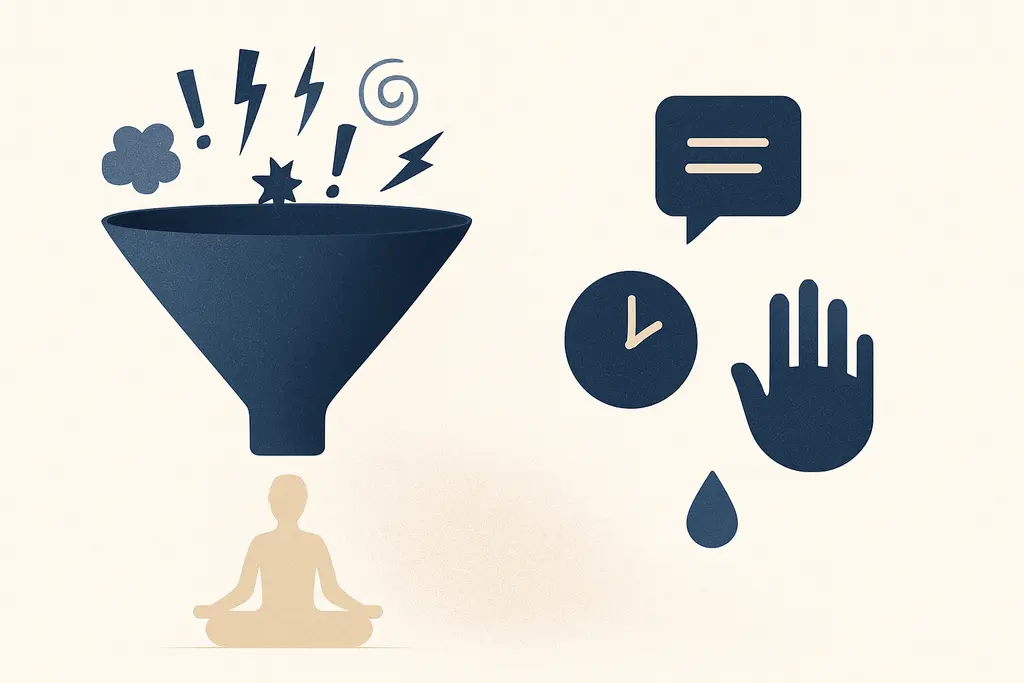
Quick definition
A mental health day is a planned or impromptu absence from work specifically to recover from stress, emotional fatigue, or temporary burnout-like symptoms. It is not a substitute for long-term treatment, but a practical step to prevent short-term difficulties from affecting work quality or safety. The label simply signals the purpose of the absence: rest, recuperation, and managing a mental load so you can function at work.
Key characteristics:
This definition emphasizes practical, work-centered outcomes rather than clinical labels. Using a mental health day is about managing capacity so you can meet role demands more reliably.
Underlying drivers
Excessive workload and unrelieved task pressure
Prolonged low-level stress without recovery windows
Sleep disruption from work-related worry or irregular hours
Emotional exhaustion from high-stakes or people-heavy roles
Lack of psychological safety to take small breaks earlier
Perfectionism and internal pressure to be constantly available
Accumulation of minor setbacks (missed meetings, small errors) that sap resilience
Environmental factors like noisy or crowded workspaces that increase daily drain
Observable signals
These observable patterns indicate capacity strain rather than a single diagnosis. Managers and colleagues often notice the pattern before the person labels it as a mental health day.
**Reduced concentration:** trouble following meetings, drifting attention, or longer time to complete routine tasks
**Lowered motivation:** tasks feel harder, less pleasure in previously routine work
**Irritability:** quicker to snap in conversations or overreact to small problems
**Avoidance:** delaying or skipping meetings, putting off decisions, or declining optional tasks
**Increased errors:** small mistakes in familiar work or missed details in handoffs
**Procrastination spike:** more time spent on low-value activities to delay demanding tasks
**Frequent sick days or mid-day absences:** pattern of taking time off that coincides with heavy stress periods
**Withdrawal from collaboration:** fewer questions, less input in team settings
A simple self-check (5 yes/no questions)
- Do routine tasks feel unusually exhausting today? Yes / No
- Are you making more small mistakes than normal? Yes / No
- Do you feel less motivated to engage with colleagues? Yes / No
- Is it hard to recover after the workday ends? Yes / No
- Would one day off likely improve your effectiveness? Yes / No
High-friction conditions
A heavy project deadline or concentrated period of high demand
Back-to-back meetings with no recovery time between them
A heated conflict with a colleague or manager
Personal life stress piling up alongside normal work duties
Unexpected additional duties or last-minute urgent requests
Poor sleep after work worries or shift changes
Working through illness or caring responsibilities without rest
Major organizational change or ambiguous expectations
Repeated interruptions that prevent flow work
Practical responses
Practical steps focus on minimizing disruption and protecting both your recovery and team continuity. Clear handoffs and simple communication help maintain trust while you take the break.
Schedule proactively: plan a day off after a major deadline or intense sprint to restore energy.
Use brief micro-breaks: short, regular pauses (5–10 minutes) between meetings to reset attention.
Block a no-meeting day: protect a day in your calendar for focused work or recovery when possible.
Delegate or postpone: move non-urgent tasks and ask teammates to cover time-sensitive items.
Set an out-of-office message: clear expectations reduce incoming requests and ease boundary-setting.
Communicate simply: tell your manager or team you need a personal day without oversharing details.
Prepare handoffs: leave one-sentence notes on priority items so work continues smoothly.
Disconnect intentionally: mute email and chat for the day or set specific short check windows.
Plan restorative activities: non-work routines like sleep, exercise, or time outdoors to recharge.
Re-entry plan: schedule a light day after your return to rebuild momentum without overload.
Use available leave types: combine vacation, personal, or sick leave according to company policy.
Often confused with
Psychological safety — connects because feeling safe to request time off increases willingness to take mental health days; differs by addressing team norms rather than individual recovery tactics.
Burnout prevention — overlaps with taking regular recovery days, but burnout prevention is a broader, long-term strategy for workload and role design.
Work–life boundaries — taking a mental health day is a boundary action; work–life boundaries are the ongoing practices that reduce the need for emergency days off.
Presenteeism — related because taking a day off reduces presenteeism (working while impaired) which harms performance; presenteeism focuses on showing up despite reduced capacity.
Time management — connected in that better scheduling can reduce triggers; differs by being a skill set rather than a single restorative action.
Leave policy — connects practically (how to take a day), but differs as a formal HR framework while a mental health day is the personal decision to use leave for recovery.
Micro-recovery practices — these are short daily techniques (breaks, stretching) that reduce the frequency of needing full mental health days.
When outside support matters
Speaking with a qualified mental health professional or occupational health resource is recommended when distress is significant or persistent. Your primary care provider or employee assistance program can advise on next steps and supports.
- If stress or low mood persists for weeks and interferes with work or daily life
- If you regularly need multiple days off to cope rather than occasional recovery
- If you experience thoughts of harming yourself or a loss of safety
Related topics worth exploring
These suggestions are picked from nearby themes and article context, not just a flat alphabetical list.
Rest guilt
Rest guilt is the anxious feeling that downtime is undeserved; it shows up as skipped breaks, constant connectivity, and over-justifying time off, and can be reduced by clearer handoffs and visible bo
Chronic Task Diffusion
Persistent loss of clear ownership where tasks repeatedly stall between people and processes — how it looks, why it happens, and practical fixes managers can apply.
Busy badge culture
When visible busyness becomes a status signal at work, outcomes suffer. Learn how it forms, how to spot it, and practical steps leaders can take to shift incentives toward impact.
On-Call Burnout
On-call burnout is the cumulative mental and physical strain from repeated after-hours responsibility; learn how it appears, why it persists, and practical fixes for teams.
Vacation guilt
Vacation guilt is the anxiety and behavioral pattern that makes employees check in or avoid time off; learn how it forms, shows up at work, and practical fixes managers and teams can use.
Deadline Creep Anxiety
The steady stress caused by shifting dates and informal deadlines—how it harms team focus, why it happens, and practical steps managers can use to stop the cycle.