What it really means
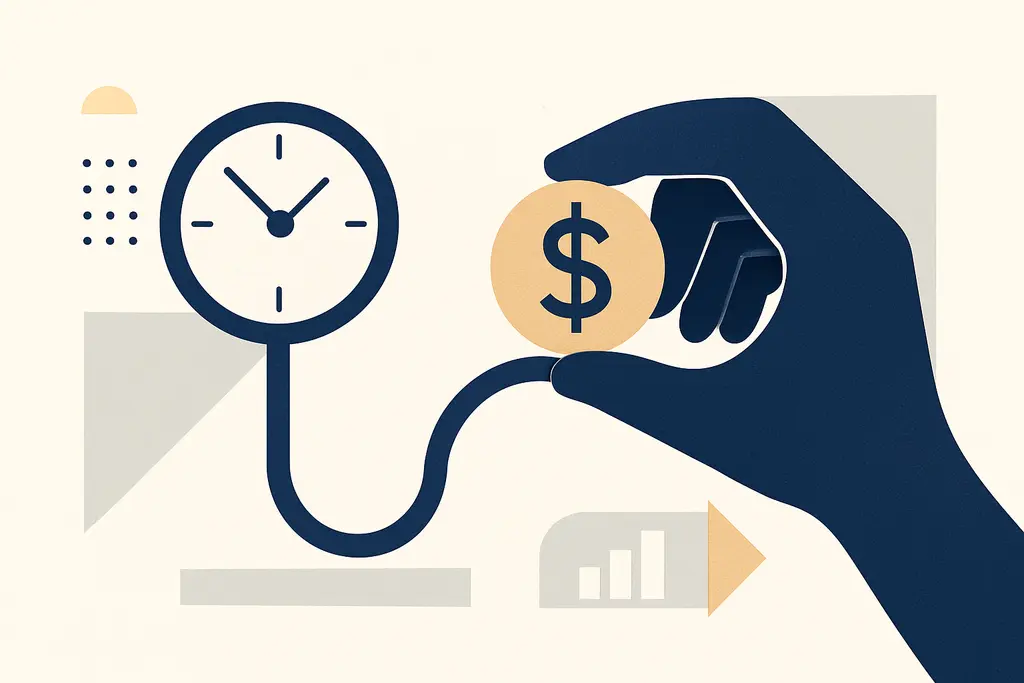
Reward-delay intolerance is not simply impatience. It is a predictable behavioral response to the perceived value of a reward falling off as its arrival is pushed into the future. Practically, someone with this tendency devalues delayed outcomes and assigns disproportionate weight to immediate payoffs (recognition, small tasks, or quick milestones).
When managers encounter this pattern they should think in terms of time preference and experience design: how immediate cues, feedback, and micro-rewards shape decisions more than the eventual big payoff.
Underlying drivers
These factors compound. Without early wins or visible progress, the subjective value of a distant reward shrinks and the person favors choices that supply immediate, certain benefits instead.
**Unclear timelines:** Projects with vague milestones make future rewards feel imaginary.
**Weak interim signals:** Lack of interim feedback or measurement removes the sense of progress.
**Past disappointments:** Repeated experiences where promised future rewards didn’t materialize reduce trust in delayed outcomes.
**Organizational norms:** If the culture celebrates quick wins and short sprints exclusively, people adapt to seek those.
Observable signals
In meetings you might hear requests like "Can we see a quick prototype now?" or "Can my bonus be front-loaded?" These are surface signals of how delay alters perceived value. Repeated appearance of this behavior often signals process or communication gaps, not solely personal weakness.
Preferring shorter tasks over longer strategic work despite higher long-term impact
Requesting frequent check-ins, bonuses, or conversions of future perks into present ones
Abandoning projects when initial phases are slow or when progress isn't visible
Over-indexing on metrics that produce immediate feedback (e.g., daily activity counts) rather than long-term outcomes
Practical responses
Start by creating one visible, short-term milestone within a long initiative and tie a meaningful, immediate form of recognition to it. That single change often increases willingness to engage with the rest of the timeline.
**Clear interim milestones:** Break long projects into short, measurable steps with public progress markers.
**Immediate feedback loops:** Add fast feedback cycles (demos, status dots, short retros) so people feel progress.
**Smaller, frequent rewards:** Use micro-recognition (shout-outs, small perks) that acknowledge forward motion.
**Commitment devices:** Encourage pre-commitments or binding checkpoints that make future rewards more tangible.
**Transparency about contingency:** Explain dependencies and risks so delayed rewards feel less hypothetical.
Often confused with
Managers commonly misread these differences. Treating reward-delay intolerance as laziness or insubordination misses opportunities to reframe time horizons or add progress signals.
**Present bias vs. low motivation:** Present bias (preference for immediate rewards) is about timing; low motivation is about value or meaning. Someone might prefer quick wins because they value immediate feedback, not because they don’t care about the outcome.
**Procrastination:** Procrastination is a failure to start; reward-delay intolerance can produce active choices for short tasks over longer ones even when work is happening.
**Short-termism (strategy level):** Organizational short-termism is a strategic choice often driven by incentives; individual reward-delay intolerance is a behavioral tendency that can exist even inside long-term strategies.
A quick workplace scenario
A quick workplace scenario
A product team is building a major feature expected to drive revenue next year. After three months of foundational work, two engineers ask to be reassigned to a smaller enhancement with immediate user-visible impact. The PM considers this resistance.
- Diagnose: Are interim outcomes visible? Are there demonstrable progress markers or demos? Have past long-range promises been delivered reliably?
- Short intervention: Schedule a demo day for the foundational work, create a short-release alpha with a single visible change, and offer public recognition for completing the foundational milestone.
This approach keeps the long-term work intact while satisfying the need for immediate feedback, reducing the chance of attrition or task-hopping.
Search queries managers might use
- how to keep employees engaged on long projects
- signs employees prefer quick wins over long-term work
- how to give feedback that reduces impatience with rewards
- ways to make future rewards feel real at work
- tactics to break down long initiatives into rewarding steps
- why team members request front-loaded bonuses
- difference between procrastination and choosing short tasks
- how to design incentives for long sales cycles
These queries reflect practical, managerial search intent: diagnosing signs, adjusting process design, and creating immediate, credible signals that future rewards will arrive.
Related topics worth exploring
These suggestions are picked from nearby themes and article context, not just a flat alphabetical list.
Reward crowding
When external rewards reduce employees’ intrinsic motivation and broaden narrow, metric-driven behavior—how it shows up, why it happens, and practical fixes for leaders.
Extrinsic reward erosion
When bonuses, points or public praise lose power or unintentionally shift priorities, extrinsic reward erosion explains why incentives stop working and how to fix them at work.
Time scarcity mindset
A practical guide to the time scarcity mindset at work: how habitual urgency forms, how it looks day-to-day, common misreads, and concrete steps to reduce chronic hurry.
Motivation-Job Fit Gap
When a person's motivation and daily tasks don’t match, performance and retention suffer. Learn how this gap forms, how it shows up, and practical steps to close it.
Grit Fatigue
Grit fatigue is when sustained effort keeps rising but returns fall—people work harder yet adapt less. Learn to spot it, what causes it, and how leaders can recalibrate teams.
Motivation Debt
Motivation Debt is the build-up of deferred work and skipped motivational investments at work; it makes routine tasks harder, creates backlogs, and needs process plus cultural fixes.