Quick definition
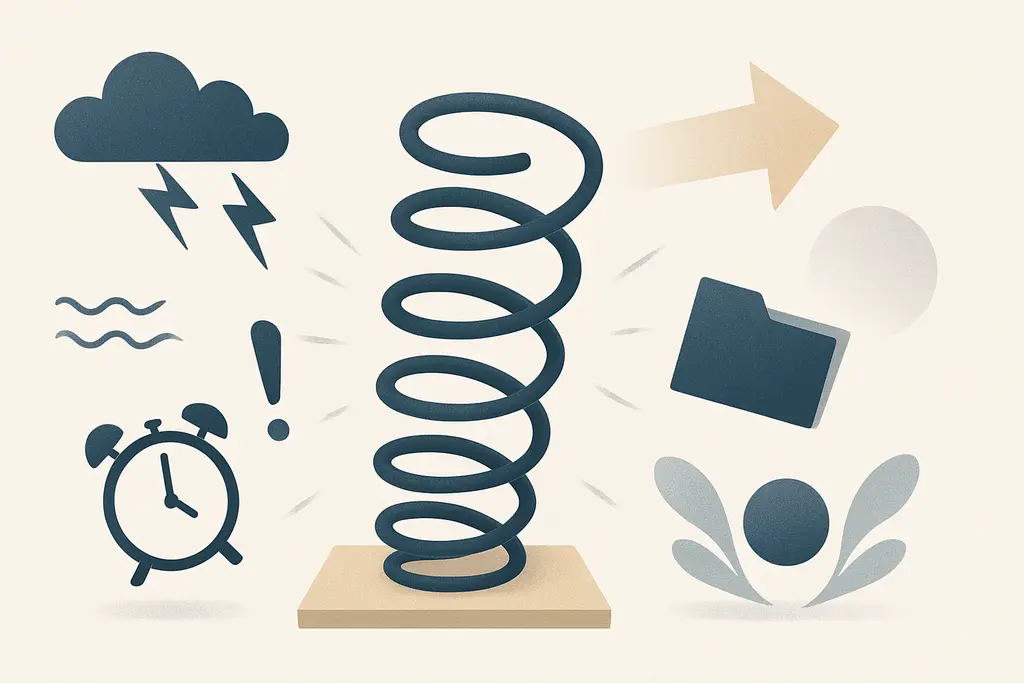
Threshold overload describes a pattern in which small cumulative stresses or interruptions push a person past a tolerance point, producing outsized responses (sharp withdrawal, sudden errors, emotional reactions, or avoidance). This is not a single big shock but the result of many smaller inputs accumulating until a threshold is crossed.
In workplace terms it often looks like a dependable employee who is suddenly less engaged, or a team member who reacts strongly to routine feedback. Managers can see it as a warning signal that workload, communication, or system design is mismatched to capacity.
Key characteristics include:
Understanding these characteristics helps leaders separate surface behavior from root cause, and to design systems that reduce points where overload builds up and then releases unpredictably.
Underlying drivers
These drivers combine cognitive, social, and environmental forces that steadily raise the probability that someone will hit a threshold.
**Cognitive load:** multiple small tasks and decisions add up and consume mental bandwidth.
**Decision fatigue:** repeated choices deplete the capacity to respond calmly or accurately.
**Social pressure:** expectations to be always available or to multitask reinforce accumulation.
**Environmental interruptions:** frequent notifications, meetings, or context switches raise baseline stress.
**Role ambiguity:** unclear priorities make it hard to triage what can wait, causing backlog buildup.
**Inadequate recovery:** no structured breaks or buffers mean there’s no reset before the next demand.
**Poor task design:** tasks that require constant monitoring or rework increase the flow of small demands.
Observable signals
These observable patterns let managers distinguish threshold overload from chronic poor performance by its episodic, reactive nature.
Sudden withdrawal or silence from an otherwise communicative employee
Disproportionate emotional responses to routine feedback
Repeated last-minute errors after a run of small interruptions
Spike in requests for clarification or help over minor issues
Increased absenteeism or requests for short-term leave that follow minor events
Escalations that seem out of proportion to the initiating problem
Reluctance to take on new tasks even if workload has not objectively increased
Narrowed focus: a person concentrates on trivial tasks to avoid the larger source of stress
Frequent task switching and low completion rates for important work
Tension in meetings where small comments trigger heated exchanges
A quick workplace scenario (4–6 lines)
A project lead who normally handles stakeholder calls begins snapping at brief status updates after two weeks of back-to-back meetings and overnight requests. A simple question about timelines suddenly prompts an outburst and an email asking to be left alone — a sign the person’s buffer was exhausted by small, repeated demands.
High-friction conditions
Recognizing typical triggers helps leaders redesign workflows and expectations before overload builds into disruptive episodes.
A stream of short, urgent requests late in the day
Unscheduled meetings or frequent calendar changes
High volume of small correction requests on deliverables
Constant notifications from chat, email, or monitoring tools
Last-minute scope changes on projects
Vague or shifting priority calls from senior stakeholders
Repeated minor disagreements in team interactions
Tight review cycles with minimal time for iteration
Practical responses
These steps reduce the accumulation of small demands and give employees predictable relief points without medical or therapeutic interventions.
Establish predictable buffers: block focus time in calendars and protect it from ad-hoc meetings.
Set triage rules: create simple criteria for what requires immediate action and what can wait.
Limit interruptions: agree team norms for when to use chat, email, or phone for urgent items.
Rotate high-interruption tasks so the same person isn’t exposed continuously.
Create short, structured check-ins to surface accumulating small issues before they compound.
Reduce micro-revisions: batch feedback cycles so the person receives a single consolidated set of changes.
Make priorities explicit: publish a short list of top objectives so employees can defer lower-impact work.
Build “cool-down” practices after stressful stretches (brief transitions between tasks, short no-meeting windows).
Use capacity-aware planning: plan projects assuming some time loss to interruptions rather than perfect focus.
Train leaders to notice abrupt behavior change and respond with curiosity (ask what changed), not blame.
Document and limit late requests from stakeholders with a transparent escalation and compensation process.
Adjust meeting design: limit attendee lists, set clear objectives, and end early when possible.
Often confused with
Linking these concepts helps leaders choose whether to change work design, communication norms, or resourcing to reduce episodes of threshold overload.
Burnout: relates by long-term resource depletion; differs because burnout develops over months while threshold overload can produce abrupt episodes after short cumulative pressure.
Information overload: overlaps on excess input, but information overload emphasizes volume of data, whereas threshold overload emphasizes the tipping effect of many small demands.
Decision fatigue: connected as a cognitive mechanism that lowers tolerance for further demands; decision fatigue is one pathway that produces threshold overload.
Task-switching cost: explains part of the productivity drop; frequent context changes increase the small demands that lead to a threshold event.
Role ambiguity: contributes to accumulation by preventing effective triage; unlike threshold overload, role ambiguity is an ongoing organizational issue rather than the acute tipping pattern.
Emotional labor: relates when managing feelings becomes an added demand; emotional labor can accelerate threshold crossing without changing task volume.
Capacity planning: a systems-level response to prevent overload by aligning resources and demand; capacity planning addresses structural causes rather than individual reactions.
When outside support matters
These steps encourage using qualified professionals who can evaluate workplace fit and supports when practical measures are insufficient.
- If sudden reactions are frequent and are causing significant disruption to work or relationships, consult HR or occupational health to review workplace factors.
- If an employee’s functioning at work becomes persistently impaired (missed deadlines, inability to perform core duties), suggest an assessment with a qualified workplace clinician.
- Use employee assistance programs or occupational health services to explore workload adjustments, reasonable accommodations, or coaching options.
Related topics worth exploring
These suggestions are picked from nearby themes and article context, not just a flat alphabetical list.
Rest guilt
Rest guilt is the anxious feeling that downtime is undeserved; it shows up as skipped breaks, constant connectivity, and over-justifying time off, and can be reduced by clearer handoffs and visible bo
Chronic Task Diffusion
Persistent loss of clear ownership where tasks repeatedly stall between people and processes — how it looks, why it happens, and practical fixes managers can apply.
Busy badge culture
When visible busyness becomes a status signal at work, outcomes suffer. Learn how it forms, how to spot it, and practical steps leaders can take to shift incentives toward impact.
On-Call Burnout
On-call burnout is the cumulative mental and physical strain from repeated after-hours responsibility; learn how it appears, why it persists, and practical fixes for teams.
Vacation guilt
Vacation guilt is the anxiety and behavioral pattern that makes employees check in or avoid time off; learn how it forms, shows up at work, and practical fixes managers and teams can use.
Deadline Creep Anxiety
The steady stress caused by shifting dates and informal deadlines—how it harms team focus, why it happens, and practical steps managers can use to stop the cycle.