What it really means
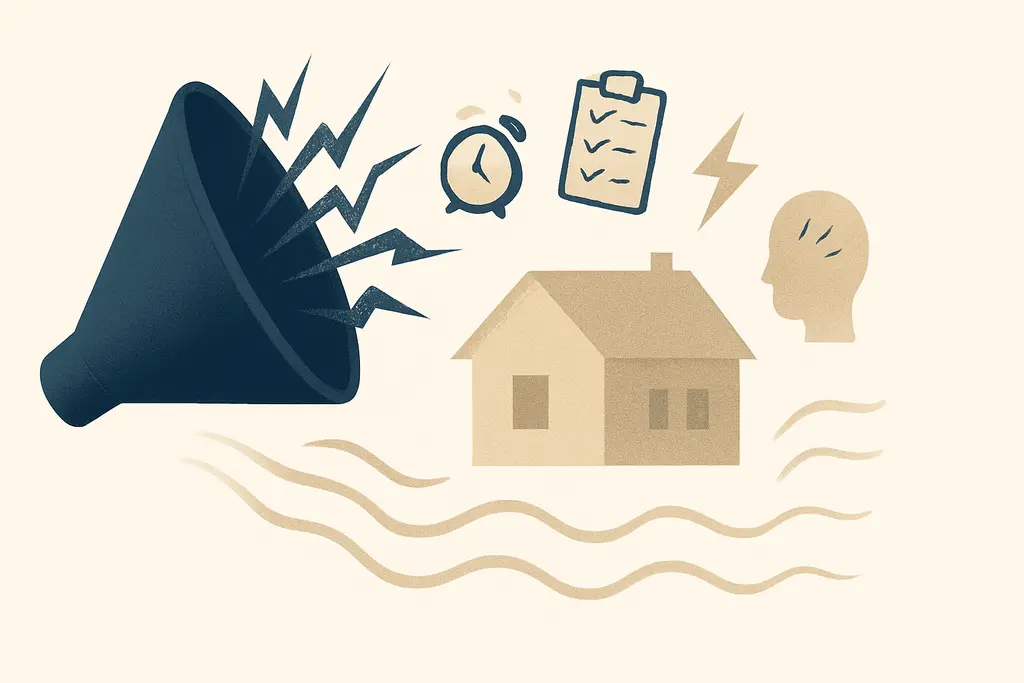
Work-home spillover is the transfer of moods, obligations, or time pressures between an employee's work and personal life. It is bidirectional: stress at home can reduce attention at work, and a heavy project can create tension at home. Spillover is about influence, not intent — a parent’s disrupted sleep or an anxious reply to a late email both count.
Spillover may be negative (fatigue, distraction, irritability) or positive (supportive home routines that improve concentration). Distinguishing direction and valence matters because interventions differ: more flexibility helps some negative cases; clearer role expectations help cases that are actually work-driven.
Underlying drivers
These drivers stack. For example, remote work plus a culture of rapid replies turns small home interruptions into chronic workflow breaks. Over time the team normalizes the blurred boundary: people expect constant availability, which sustains the pattern even after the original pressure eases.
Mismatch of time demands and personal schedules (e.g., deadlines during childcare hours).
Unclear boundaries in communication norms (implicit expectation to respond off-hours).
High cognitive load at one domain leaves less capacity for the other.
Social and identity pressures (feeling obliged to be the ‘always-available’ employee or parent).
How it shows up in everyday work
- Late-night checking: messages answered between 10pm–2am, followed by slow starts or missed deadlines.
- Short fuse in meetings: small disagreements escalate because an employee’s cognitive bandwidth is spent on home issues.
- Hidden presenteeism: attendance but reduced contribution, e.g., quiet on calls while juggling caregiving.
- Schedule juggling: people take frequent short breaks to handle home tasks, fragmenting collaboration windows.
These surface signs are practical clues managers can use to investigate root causes rather than assume low motivation. Not every missed commit or meeting quietness is spillover, but clusters of these behaviors often point to boundary strain.
Practical responses
Start small: one team rule (e.g., no non-urgent messages after 7pm) and one operational fix (async updates in the project tracker) reduce ambiguity quickly. Track whether the interventions change patterns in meeting participation or deliverable timeliness rather than relying only on self-reports.
Clarify norms: set explicit expectations about response times and meeting hours.
Recalibrate deadlines: align deliverables with known team constraints and buffer for personal peaks.
Offer predictable flexibility: fixed core hours, compressed workweeks, or asynchronous options.
Reassign temporarily: redistribute tasks when someone's home load is acute; treat it as workload management, not a favor.
Signal permission: managers explicitly say it’s okay to silence notifications or step away for family needs.
Where leaders commonly misread or confuse it
Work-home spillover is often mislabeled. Common near-confusions:
- Work-family conflict vs. spillover: work-family conflict is a broader struggle between role demands; spillover describes the actual transmission of stress or behavior across domains.
- Burnout vs. spillover: burnout is a sustained state of exhaustion and disengagement; spillover can be transient and situational. Spillover can contribute to burnout but isn’t equivalent.
- Presenteeism vs. boundary permeability: presenteeism is showing up despite poor performance; boundary permeability describes how easy it is for home and work to intrude on each other.
Before acting, ask: Is this a temporary load spike or an ongoing pattern? Is the issue time, expectations, or task design? That diagnostic step prevents overcorrection (for example, firing someone for low output that was caused by a one-week caregiving emergency).
A workplace example
A project manager, Priya, noticed a senior analyst, Marcus, missing morning stand-ups and reacting sharply in the weekly review. Rather than assume disengagement, Priya opened a focused check-in. Marcus explained he was coordinating care for an ill parent and responding to late vendor asks from a different time zone.
A quick workplace scenario
- Immediate fixes: Priya shifted some synchronous reviews to later in the day and moved routine status updates to written async notes.
- Medium-term fixes: the team adjusted on-call rotations so Marcus had a two-week reprieve and set a rule limiting non-urgent vendor messages after 6pm.
After these changes Marcus returned to regular participation. The example shows a pattern: surface irritability + schedule slips often respond faster to workload and norm adjustments than to coaching alone.
Questions worth asking before reacting
- Is the behavior new or long-standing?
- Which domain (work or home) is the primary source of load right now?
- Can short operational changes reduce the friction without formal HR moves?
These questions help managers act clearly and proportionally. The goal is to restore team functioning while respecting privacy and avoiding assumptions.
Related patterns worth separating from this
- Role overload: too much work overall; requires resourcing changes rather than boundary work.
- Boundary management style: individual preference for integration vs. segmentation — some people intentionally blend domains and perform well that way.
Separating these patterns prevents one-size-fits-all fixes. A policy that enforces strict segmentation may help boundary-preferring employees but harm those who thrive on integration.
Quick checklist for managers (operational)
- Review communication norms with the team this week.
- Map deadlines against known personal constraints (e.g., school holidays).
- Offer at least one temporary workload reallocation when spillover is acute.
- Track whether meeting participation and on-time deliveries improve after changes.
Actionable steps and brief diagnostics keep the focus on systems and schedules rather than assumptions about resilience or commitment.
Related topics worth exploring
These suggestions are picked from nearby themes and article context, not just a flat alphabetical list.
Sleep debt spillover: when poor sleep reduces work resilience
How accumulating sleep shortfalls quietly reduce employees' ability to recover from stress, how it shows up at work, common misreads, and practical steps managers can take.
Rest guilt
Rest guilt is the anxious feeling that downtime is undeserved; it shows up as skipped breaks, constant connectivity, and over-justifying time off, and can be reduced by clearer handoffs and visible bo
Chronic Task Diffusion
Persistent loss of clear ownership where tasks repeatedly stall between people and processes — how it looks, why it happens, and practical fixes managers can apply.
Busy badge culture
When visible busyness becomes a status signal at work, outcomes suffer. Learn how it forms, how to spot it, and practical steps leaders can take to shift incentives toward impact.
On-Call Burnout
On-call burnout is the cumulative mental and physical strain from repeated after-hours responsibility; learn how it appears, why it persists, and practical fixes for teams.
Vacation guilt
Vacation guilt is the anxiety and behavioral pattern that makes employees check in or avoid time off; learn how it forms, shows up at work, and practical fixes managers and teams can use.