Quick definition
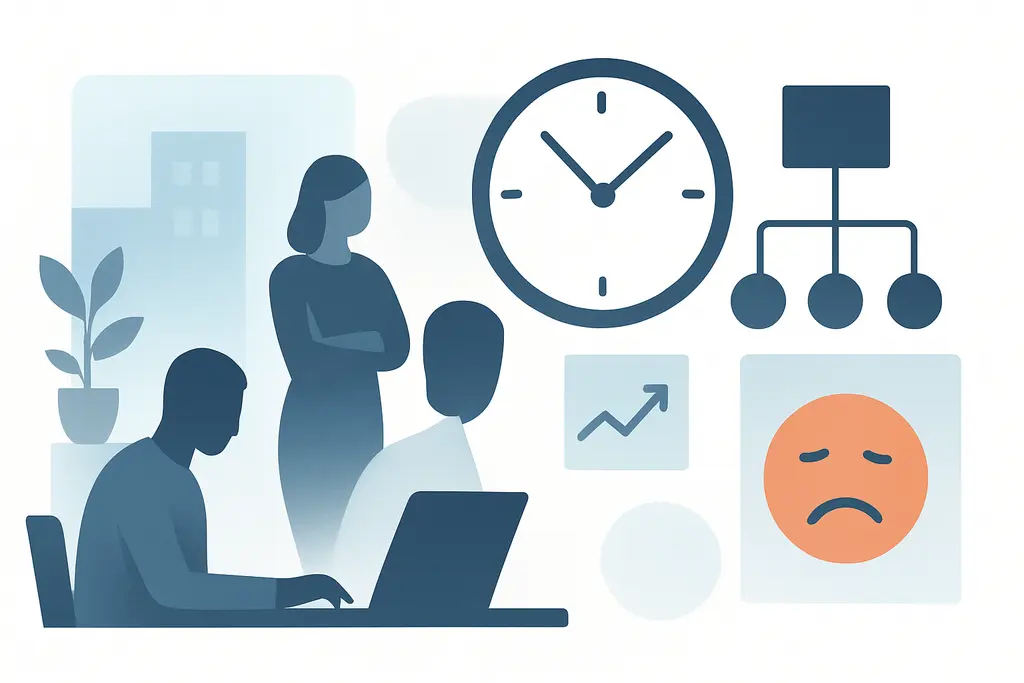
Presenteeism Psychology refers to the patterns of thought and behavior that make attending work feel more important than being fit for work. It captures the interplay between individual decisions (staying despite impairment) and the surrounding signals—policies, peers, and expectations—that reward visible presence over sustainable performance.
It is not only about illness; it also covers working while mentally distracted, exhausted, or otherwise unable to perform at typical levels. The focus is on why people choose presence and how that choice influences group outcomes and workplace norms.
Key characteristics include:
This pattern is distinct from simply having high commitment: it’s the mismatch between presence and productive capacity that makes it costly for teams and organizations.
Underlying drivers
These drivers combine cognitive, social, and environmental pressures that make staying at work feel like the safest choice even when it isn’t the most effective.
**Job insecurity:** fear that absence will threaten one’s position or promotion chances
**Norm reinforcement:** seeing others come in when unwell signals that doing the same is expected
**Reward structures:** attendance-based recognition or visibility-driven incentives
**Identity and role beliefs:** viewing being constantly present as a marker of dedication
**Cognitive bias:** underestimating how impairment reduces actual performance
**Practical constraints:** limited paid leave, rigid schedules, or poor backup plans
**Social costs:** worry about burdening coworkers or harming team reputation
Observable signals
Visible attendance often masks performance declines; focusing solely on headcount or hours worked misses hidden costs to productivity and morale.
Frequent in-person attendance during contagious illness or major fatigue
Key people doing visible tasks but missing deadlines or producing lower-quality work
Last-minute cancellations of sick leave or use of vacation days to cover illness
Quiet presenteeism: people physically present but disengaged (low eye contact, slow responses)
Increased short-term coverage needs because people avoid taking recovery time
Informal norms like “powering through” praised in meetings or messages
Teams repeatedly rework tasks completed under strain
Higher teammate frustration when presenteeism shifts burden without clear communication
High-friction conditions
Upcoming performance reviews or promotion cycles
Tight deadlines or unplanned project crises
Public praise tied to visible effort rather than outcomes
Limited or punitive sick-leave policies
Small teams with no clear backup for critical roles
Cultural stories that reward “heroic” sacrifice
Recent layoffs or restructuring that raise job insecurity
Client-facing events where absence would be highly visible
Practical responses
These steps focus on changing ambient signals and practical structures so that healthy absence is treated as part of reliable performance rather than a liability.
Clarify expectations: set outcome-focused goals instead of hours logged
Normalize recovery: model and communicate that appropriate absence supports team performance
Build redundancy: cross-train staff so tasks can be covered without penalty
Make time-off easy: simplify notification and approval processes for short-term leave
Reward results: use metrics that capture quality and output, not just presence
Share visible data: track and discuss productivity patterns to expose hidden costs of presenteeism
Create return-to-work plans that ease reintegration after illness or absence
Train people who oversee work to notice signs of impairment beyond attendance
Use staggered shifts or flexible schedules to reduce pressure to appear at full capacity
Address stigma: invite conversations about workload and capacity in one-on-one and team meetings
Often confused with
Burnout: a longer-term state of exhaustion and cynicism; presenteeism can accelerate burnout when people repeatedly work despite needing rest
Absenteeism: missing work entirely; while related, absenteeism is visible time away, whereas presenteeism hides reduced functioning
Psychological safety: environments where people can speak up about capacity; higher psychological safety reduces the social pressure to attend when impaired
Performance measurement: when measures emphasize hours or visibility, presenteeism is reinforced; outcome-based measures counter that
Role overload: having too many responsibilities can drive presenteeism as people try to keep everything afloat
Stigma about leave: cultural beliefs that taking time off equals low commitment; presenteeism is a behavioral outcome of that stigma
Return-to-work policy: practical plans for re-entry after illness; good policies reduce the need for premature returns
Cognitive load: high mental load makes recovery harder; presenteeism under high cognitive load lowers decision quality
Team norms: shared rules and stories about ‘‘how work gets done’’ that either discourage or permit presenteeism
When outside support matters
When distress or performance impairment is significant, encourage people to speak with qualified professionals (occupational health, HR, or licensed clinicians) for tailored guidance.
- If persistent workload or attendance patterns are causing severe impairment in team functioning, consult occupational health or human resources
- If an individual’s stress or capacity is causing safety risks, engage workplace health and safety experts
- For complex interpersonal or legal issues (e.g., ADA accommodations), involve appropriate HR, legal, or benefits specialists
A quick workplace scenario (4–6 lines, concrete situation)
An analyst comes in after a night with flu symptoms because a major report is due. They complete the draft but make errors that require rework. The team lead notes repeated rushed submissions and schedules cross-training and a brief handover protocol so future coverage won’t rely on one person being present at all costs.
Related topics worth exploring
These suggestions are picked from nearby themes and article context, not just a flat alphabetical list.
Rest guilt
Rest guilt is the anxious feeling that downtime is undeserved; it shows up as skipped breaks, constant connectivity, and over-justifying time off, and can be reduced by clearer handoffs and visible bo
Chronic Task Diffusion
Persistent loss of clear ownership where tasks repeatedly stall between people and processes — how it looks, why it happens, and practical fixes managers can apply.
Busy badge culture
When visible busyness becomes a status signal at work, outcomes suffer. Learn how it forms, how to spot it, and practical steps leaders can take to shift incentives toward impact.
On-Call Burnout
On-call burnout is the cumulative mental and physical strain from repeated after-hours responsibility; learn how it appears, why it persists, and practical fixes for teams.
Vacation guilt
Vacation guilt is the anxiety and behavioral pattern that makes employees check in or avoid time off; learn how it forms, shows up at work, and practical fixes managers and teams can use.
Deadline Creep Anxiety
The steady stress caused by shifting dates and informal deadlines—how it harms team focus, why it happens, and practical steps managers can use to stop the cycle.