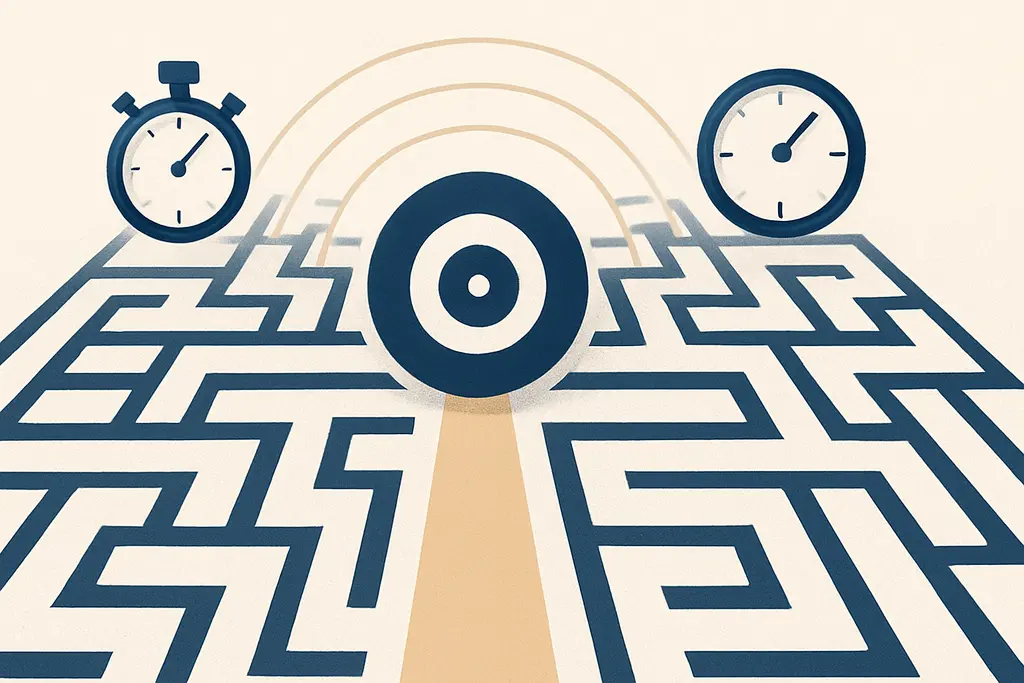
What this pattern really means
Task monotony and focus loss refers to decreased attention, reduced engagement, and performance drift caused by prolonged exposure to repetitive or undifferentiated tasks. It is a behavioral and situational pattern rather than an individual failing; it often emerges where work lacks variation, feedback, or clear meaning.
At the team level, this pattern shows up as predictable quiet periods, spikes in simple errors, and rising requests for clarification on routine steps. It is different from short-lived distraction — it persists across similar tasks or prolonged blocks of work.
Key characteristics:
These features help leaders spot recurring patterns in workflows and design interventions that change the task structure rather than relying on motivation alone.
Why it tends to develop
**Repetition:** doing the same steps over long stretches reduces novelty and arousal, making attention fade.
**Limited feedback:** when outcomes are delayed or unclear, the brain gets less reinforcement to stay focused.
**Monotone environment:** bland physical settings, static lighting, and lack of sensory variation lower alertness.
**Cognitive overload elsewhere:** juggling many priorities causes attention to fragment, making repetitive tasks feel especially tedious.
**Social norms:** teams that treat routine tasks as low-status can normalize disengagement.
**Poor task design:** unnecessarily long sequences without checkpoints or milestones encourage mind-wandering.
**Inadequate autonomy:** strict, micromanaged processes reduce ownership and the incentive to sustain focus.
What it looks like in everyday work
Frequent small errors on otherwise routine tasks (typos, skipped steps).
Slower throughput toward the end of a shift or task block.
Repeated requests for clarification on steps that used to be clear.
Increased task-switching or attempts to multitask during repetitive work.
Lower participation in regular meetings and fewer suggestions for improvement.
Spike in after-the-fact corrections or rework on simple deliverables.
Higher variance in performance across similar tasks (some done well, others rushed).
Informal avoidance behaviors: deferring repetitive items, passing them on, or clustering them.
Reliance on shortcuts or unofficial hacks to make monotony bearable.
A quick workplace scenario (4–6 lines, concrete situation)
A team processes invoices each morning. For two weeks a manager sees the last hour before lunch produce twice as many errors. Staff report the task feels "samey," and several ask to switch to customer calls. The manager rotates two team members into a different task for the afternoon and shortens the morning batch size; errors drop the next week.
What usually makes it worse
Long uninterrupted blocks of similar work (e.g., data entry for hours).
Large batch sizes without natural breaks or feedback loops.
Repetitive meeting agendas (weekly check-ins that never change).
Lack of visible impact or delayed results from completed tasks.
High-pressure quotas that prioritize speed over variety.
Overly narrow job roles with little task variety.
Monotonous physical environment (poor lighting, little movement).
Rigid processes that remove decision-making or autonomy.
What helps in practice
Implementations that change the task structure and feedback, rather than relying solely on willpower, tend to produce more durable improvements in attention and quality.
Introduce task rotation: schedule short rotations so people alternate between task types.
Chunk work: break long runs into smaller, time-boxed sprints with clear goals.
Inject feedback loops: provide immediate, visible outcomes (dashboards, acknowledgements).
Schedule micro-breaks: short, structured pauses between repetitive blocks to reset attention.
Vary task modality: alternate between cognitive, verbal, and hands-on activities when possible.
Redesign workflows: add checkpoints or decision points that require brief reflection.
Increase autonomy: allow team members to set order or pace within safe boundaries.
Use gamified metrics carefully: small incentives or progress markers can sustain attention if aligned with quality.
Rotate meeting formats: swap a report round-robin for a problem-solving session.
Enable job crafting: invite staff to reshape repetitive tasks or suggest small process changes.
Pilot automation for drudgery: automate simple sub-steps so people focus on higher-value parts.
Monitor and adjust workload: reduce batch sizes or redistribute tasks when patterns of drift appear.
Nearby patterns worth separating
Boredom at work — shares the subjective feeling of under-stimulation, but task monotony refers specifically to repetitive task structure that erodes focus.
Decision fatigue — refers to reduced quality of decisions after many choices; it connects because repetitive decisions or constant micro-decisions accelerate attention loss.
Attention residue — when switching between tasks leaves leftover focus on the previous task; relates when frequent switching is used to cope with monotony and worsens efficiency.
Flow state — the opposite experience: deep focus on challenging, meaningful tasks; monotony prevents flow by removing challenge and feedback.
Job crafting — proactive changes employees make to their tasks; this is a practical method to reduce monotony by changing scope or sequence.
Cognitive load — the total mental effort required; monotony can feel easier but still reduces effective cognitive resources for sustained attention.
Presenteeism — being physically present but not fully engaged; monotony contributes to this pattern when work is done mechanically.
Task switching costs — the performance loss from moving between tasks quickly; related because frequent switching to escape monotony can produce these costs.
Workflow automation — automating repetitive steps can reduce monotony but needs careful design to keep meaningful work for people.
When the situation needs extra support
- If prolonged focus loss coincides with significant drops in performance that affect safety or contractual obligations, consult HR or occupational health.
- When widespread disengagement affects team wellbeing and internal interventions haven’t helped, consider bringing in a qualified organizational psychologist or workplace consultant.
- If individual employees report ongoing distress or functional impairment tied to work, recommend they speak with their primary care provider or an employee assistance program for guidance.
Related topics worth exploring
These suggestions are picked from nearby themes and article context, not just a flat alphabetical list.
Phone-check reflex and focus loss
Why people reflexively check phones at work, how that fragments focus, and practical manager-friendly steps to reduce interruptions and protect team attention.
Focus residue recovery
How leftover attention from one task slows the next—and practical steps managers and teams can use to clear it, from short buffers to one‑line handoffs.
Visual task queueing
How visible lines of work—sticky notes, Kanban columns, inbox piles—shape focus and coordination at work, why they form, and practical ways to manage them.
Focus momentum
How attention builds or breaks in work cycles, why continuous focus speeds delivery, and practical manager actions to preserve or restore productive momentum.
5-minute focus reset
A concise guide to the 5-minute focus reset: a short, deliberate pause to clear distraction, capture the next action, and return to work with less lost time and fewer follow-ups.
Microbreak efficacy for focus
How short, intentional pauses at work restore attention — when they help, how to recognise them, and what managers can do to support effective microbreaks.